
Leemisa Thuseho
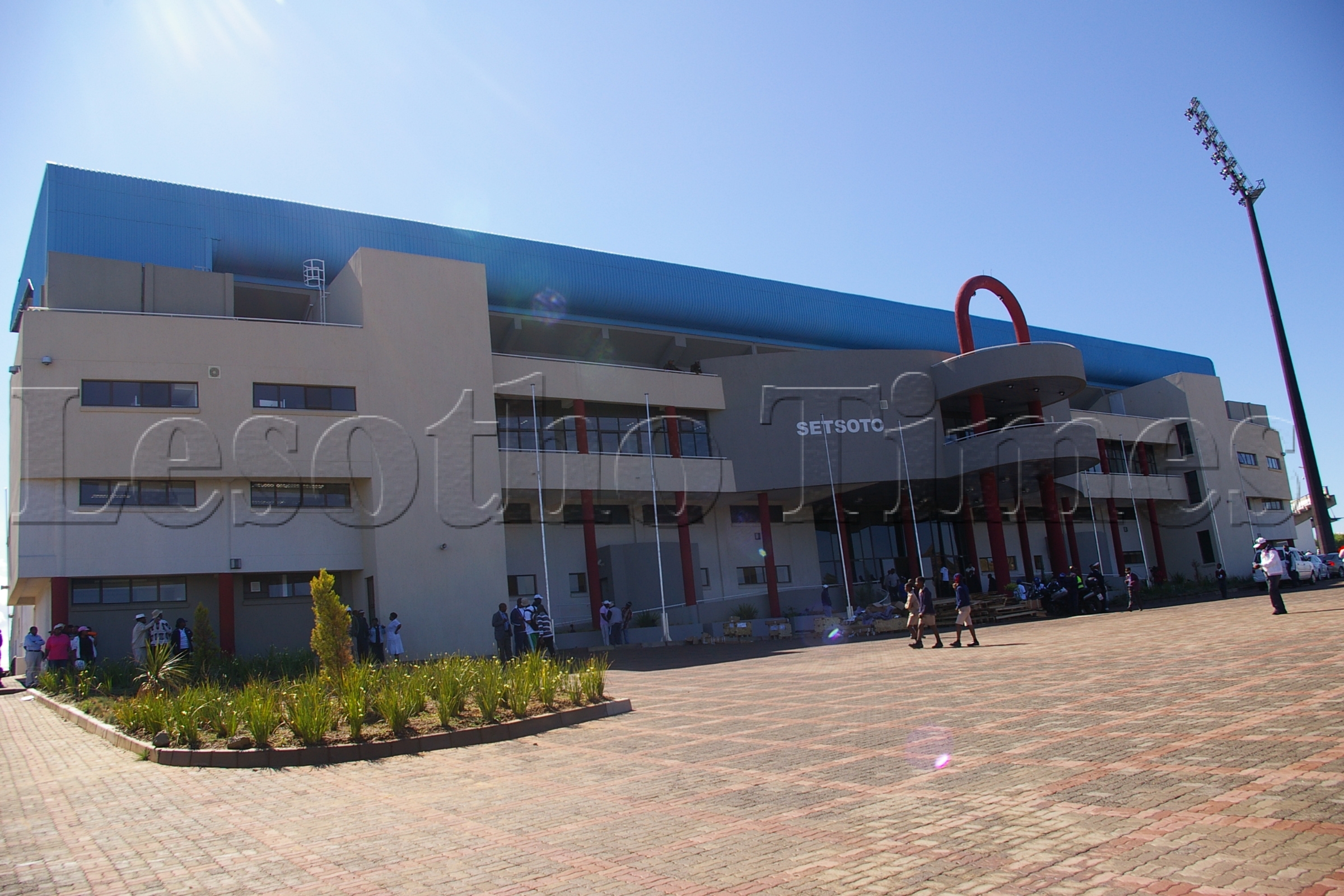
PROLONGED tendering processes have emerged as a major obstacle to the long-awaited upgrading of Setsoto Stadium, leaving the country’s football fraternity uncertain about when the facility will regain its international status.
Lesotho’s main stadium was banned by the Confederation of African Football (CAF) in 2021 for failing to meet the required international standards.
Among the major shortcomings identified was the deteriorating playing surface, which was eventually replaced with new artificial turf earlier this year.
However, several other infrastructure challenges remain, including inadequate team benches, substandard dressing rooms, a malfunctioning drainage system, insufficient sanitation facilities and inadequate floodlighting.
There had been hope that the government would prioritise addressing these shortcomings to bring the facility up to international standards and allow it to resume hosting international matches.
In February last year, the government, through the then Minister of Tourism, Sports, Arts and Culture, Motlatsi Maqelepo, announced plans for a major facelift that would increase the stadium’s capacity from 14 000 to 22 000 seats.
The parliament had previously approved M85,959,888 for the upgrading project, funds the ministry had failed to utilise during the previous financial year. The approval further raised expectations that construction work would get underway.
However, the project has yet to take off, with no visible progress on the ground and the football fraternity still waiting for the promised renovations.
Setsoto Stadium continues to host local football matches, while the national team, Likuena, remains forced to play its home fixtures outside the country, particularly in South Africa.
Just this week, Likuena was forced to play its home game against Gabon in Polokwane, South Africa.
The delay has raised further concerns as the current financial year draws to a close, with uncertainty persisting over when the project will finally get underway.
The Lesotho Times this week approached the Director of Sports in the Ministry of Tourism, Sports, Arts and Culture, Thabo Tsiki, who confirmed that the project was still undergoing tendering processes.
“The tendering process for Setsoto Stadium has not stopped; it is continuing,” Tsiki said.
He said the process was nearing the end of the technical evaluation stage, after which financial proposals would be assessed before further procurement procedures could be completed.
“The process is at the finalisation of the evaluation of technical proposals, which will be followed by the evaluation of financial proposals. Even after that, we will still have to go through the subsequent procedures, as that is how things have to be done,” he said.
The government has previously defended its decision to pursue a comprehensive stadium upgrade rather than simply address the shortcomings identified by CAF.
It argued that a holistic approach would ensure the facility remained compliant with international standards for longer, warning that piecemeal improvements could lead to recurring problems while the stadium’s overall condition remained unsatisfactory.
Meanwhile, the delays resulted in the M85,959,888 allocated for the project during the 2025/2026 financial year remaining unspent.
According to the Consolidated Report on the Annual Budget and Estimates of Revenue and Expenditure for the 2026/2027 Financial Year, the funds were earmarked for the upgrading and expansion of Setsoto Stadium to accommodate 22 000 spectators.
The report was tabled in the National Assembly on 13 March 2026, by the Portfolio Committee on the Economic and Development Cluster and adopted on 17 March 2026.
However, the allocation was not utilised because the Ministry failed to secure a qualified contractor, forcing it to re-advertise the project.
“M85,959,888 was earmarked specifically for the implementation of Lesotho National Setsoto Stadium.
“The budget was needed to finance activities related to upgrading the stadium to have a capacity of 22 000 seats, but it was not utilised as planned due to failure to secure a qualified contractor for the project, leading to the re-advertisement of the project,” the report reads.
