
Rethabile Pitso
DEPUTY Prime Minister, Nthomeng Majara, says her inaugural visit to the Female Correctional Services and the Juvenile Centre was prompted by a parliamentary report tabled last year that painted a harrowing picture of conditions in Lesotho’s prisons.
Ms Majara was referring to a report by Ombudsman Tlotliso Polaki, which highlighted deeply troubling conditions across correctional facilities in the country. The report detailed dilapidated infrastructure, collapsing and leaking roofs, severe overcrowding, and unhygienic conditions marked by poor ventilation in some wards.
Other inhumane conditions cited included underfeeding, inadequate sanitation, shortages of mattresses and blankets, substandard healthcare, overcrowding and poor ventilation.
Lesotho’s prison system is facing what many have described as a humanitarian crisis, as chronic overcrowding and deteriorating conditions continue to strain facilities nationwide, raising alarm among lawmakers, human rights advocates and inmates’ families.
Recent parliamentary disclosures and civil society reports indicate that the combined capacity of the country’s ten district correctional facilities — designed to accommodate about 1600 inmates — has been exceeded by a national inmate population of over 2600, representing occupancy levels nearly 70 percent above design capacity.
Facilities such as Maseru Central Correctional Institution, originally built to house 600 inmates, are reportedly holding far more, while some smaller outlying facilities designed for 70 inmates are accommodating more than 250.
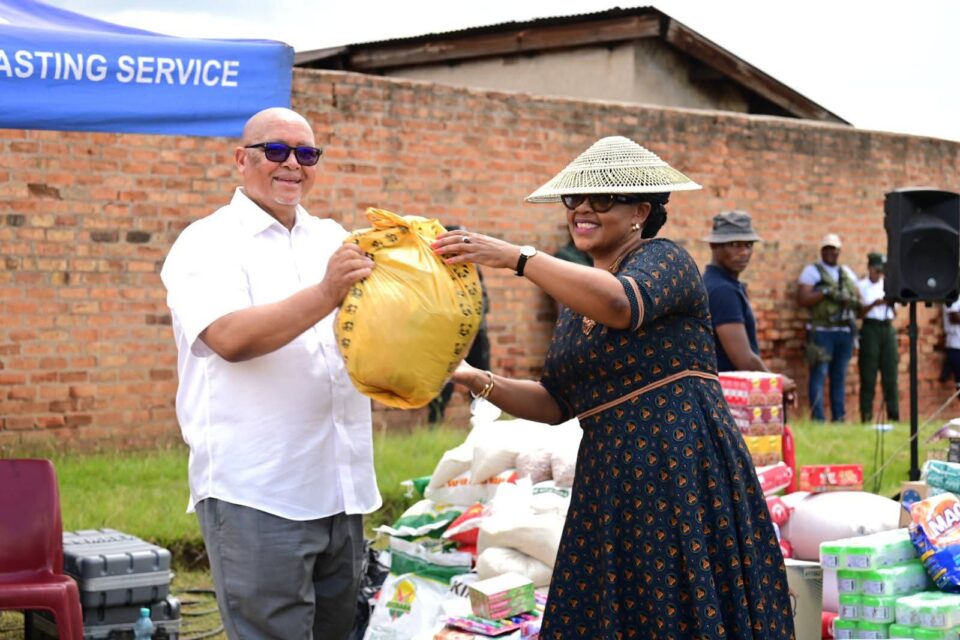
Ms Majara’s weekend visit, held under the theme “Love Without Boundaries”, was marked by the donation of food parcels and essential items to inmates, including 84 women, 111 boys and 12 girls in custody.
The donations included 100 bags of 50kg maize meal, 70 bags of 50kg sorghum, 20 bags of 50kg beans and 10 bags of 50kg wheat. Other essentials provided were laundry and bathing soap, sanitary towels, diapers and seeds.
Addressing inmates and officials, Ms Majara said the donations were meant to ease inmates’ stay in correctional facilities, stressing that denying prisoners basic necessities amounted to subjecting them to double punishment.
“Last year, when Parliament was about to go on recess, a committee presented a report on the state of prisons. That report painted a grim picture, including dilapidated structures that are not habitable. I was deeply touched by that feedback.
“The tour we have just taken has made me hang my head in shame, because I am aware that our prisons are far from meeting international standards, especially in terms of the quality of food that inmates should be provided.”
She said incarceration should not strip inmates of their dignity.
“It does not mean that once your freedom has been revoked, the liberty to meet loved ones or to sleep in comfort should be inaccessible. I have now seen with my own eyes what was reported — inmates standing against walls when it rains, holding their blankets and thin mattresses in an attempt to keep them from getting soaked.
“Despite these low standards, we must be careful not to rob inmates of their basic human right to dignity,” she said.
Quoting a well-known saying, Ms Majara added: “The only difference between inmates and the rest of us is that they have been convicted. If we reflected on the transgressions many of us have committed but were never caught for, we would be in the same place. We are not better than them.”
She said government was considering recommendations to involve the private sector in refurbishing correctional facilities.
“We intend to go back to the drawing board to explore further engagement with private-sector entities to assist with much-needed renovations. Construction companies already have the experience and resources to undertake these projects.
“The private sector has shown support; some of the food parcels presented today were donated by private companies,” she said.
Minister of Justice and Law, Richard Ramoeletsi, welcomed private-sector involvement and partnerships with educational institutions.
“We welcome recommendations that students from technical institutions such as Lerotholi Polytechnic and the Lesotho Opportunities Industrialisation Centre (LOIC) complete their practical training here.
“We are also grateful to institutions such as Botho University, which has provided some of the uniforms worn by inmates today. The European Union has donated sewing machines, enabling us to make our own apparel. The dresses worn by juvenile girls are a product of this initiative.
“The South African High Commission has also donated musical instruments used by the juvenile boys,” Mr Ramoeletsi said.
Lesotho Correctional Services (LCS) Regional Commander, Tšepo Khemi, outlined the challenges facing the institution, while expressing hope that some were gradually being addressed under the current administration.
“We house vulnerable groups who require care and support despite their circumstances. Women are vulnerable by nature, more so expectant mothers.
“Currently, one of the girls was found to be pregnant upon admission. By law, she should be cared for separately, but our facilities do not allow this and she is housed with others.
“We also have women accompanied by their minor children because they are nursing or have no one else to care for them. At present, there are about three such children, and they are underfed as there is no direct provision for them — only for their mothers. Often, they survive on broth from their mothers’ plates,” he said.
