
Moroke Sekoboto
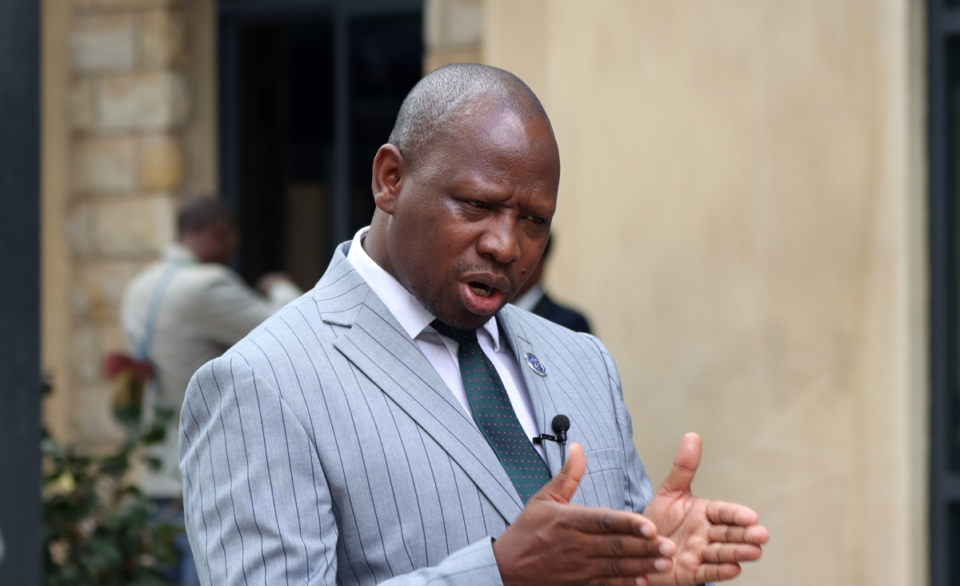
THE European Union (EU) is not shutting down its embassy in Lesotho, Foreign Affairs and International Relations Minister, Lejone Mpotjoane, has said.
Dismissing social media rumours that the EU delegation in Lesotho was closing in November 2026, Minister Mpotjoane told Parliament this week he had recently met with EU officials who clarified the exact situation unfolding.
He said he had been informed that the EU was restructuring its diplomatic presence around the globe.
As part of that restructuring, some services would be delivered at a regional level rather than locally. That means certain services would be accessed through Pretoria, where the EU’s regional office is based. Additionally, some EU staff members from the Lesotho office would be relocated to support operations in Pretoria, while some local staff could be retrenched. All that did not amount to the EU closing its embassy in Maseru.
“I make this statement following rumours circulating on social media that the EU Embassy is shutting down its offices in November 2026. These rumours are not true; the EU Embassy is not closing. The EU came to the ministry in February 2026 warning us that there would be some transformation in certain countries,” Mr Mpotjoane said.
He added that EU embassies in several countries were undergoing changes in “diplomatic presence”, meaning some services would be offered through regional offices. He listed countries affected as Lesotho, eSwatini, South Sudan, Eritrea, Kuwait, Comoros, Trinidad and Tobago, Belarus and Haiti.
Despite the changes, the minister assured the public that the EU’s Ambassador and Deputy Ambassador would remain in Lesotho. However, he acknowledged that the restructuring would affect local employment, with some Basotho staff expected to lose their jobs.
“Our bilateral cooperation and programmes, including Metsi A Lesotho, Renewable Lesotho, Governance, Inclusive and Equitable Lesotho, and Support Measures of Core Cooperation Facility, will continue. Meanwhile, some programmes will be available at EU regional offices in Pretoria. Some EU staff will be working at the regional office following a decision by the European Commission headquarters in Brussels to restructure offices globally. Some EU local staff may be retrenched, which is a sad development for the government,” he said.
Contacted for comment, the EU Ambassador to Lesotho, Mette Sunnergren, said the EU stood with Lesotho and its commitment and friendship remained strong.
Ms Sunnergren said they were making adjustments to their operations, but the EU Delegation would remain in Lesotho, with further details to be shared in due course. She added that together, with the Kingdom’s government, they would continue striving to build a brighter future for Basotho.
“The European Union Delegation to Lesotho wishes to assure all partners and the people of the Mountain Kingdom that it is staying in Lesotho and remains firmly committed to supporting the country’s sustainable development. The partnership with the Kingdom of Lesotho will continue, and collaborative programmes and initiatives will proceed in close cooperation with regional and national partners,” she said.
She added that as the EU adapted to evolving circumstances, it was evaluating how to organise its work on the ground to remain effective, responsive and aligned with shared priorities.
“Lesotho and the European Union are partners not only locally but also on the international stage. Lesotho is one of our like-minded partners, sharing common values, including democracy, the rule of law and human rights, and a shared vision for a more peaceful, just and sustainable world,” Ms Sunnergren said.
She said the EU remained fully engaged in advancing shared objectives with the people and government of Lesotho and looked forward to upcoming engagements.
The EU is one of the few foreign missions with a direct presence in Maseru. Most other countries cover Lesotho from their missions in Pretoria. The EU has been for decades an integral part of Lesotho’s development pouring billions of maloti across sectors from education, health to energy, among others.
