
…says litigation challenging recruitment cannot stop the process
Mohloai Mpesi/Mathatisi Sebusi
THE government is pushing for the finalisation of the stalled recruitment of Independent Electoral Commission (IEC) commissioners despite a pending court challenge by two disqualified applicants.
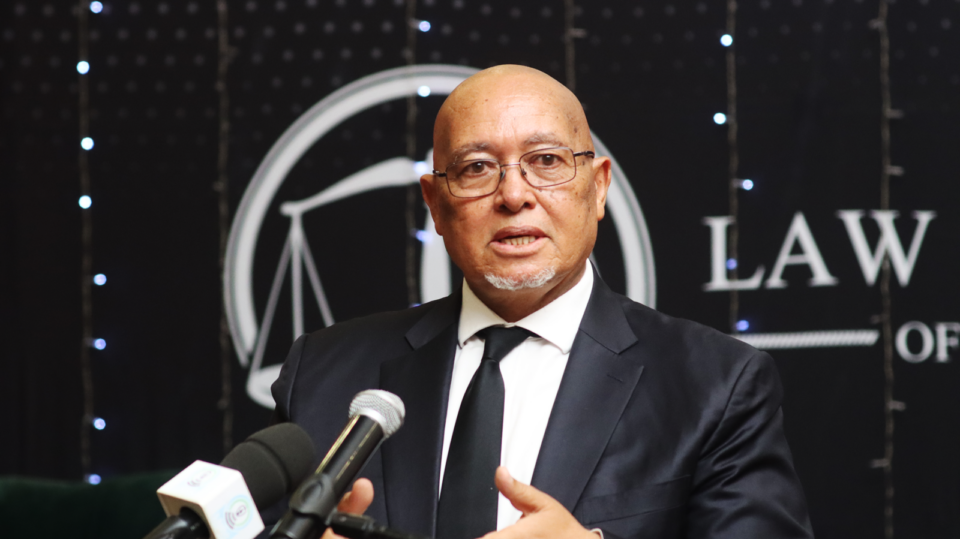
The development was confirmed this week by Minister of Law and Justice, Richard Ramoeletsi, who told the Lesotho Times that the government had communicated with the Council of State to consider the five shortlisted candidates at its next sitting.
This comes amid mounting political pressure from several political parties, including the main opposition Democratic Congress (DC), expressing concern over delays in appointing commissioners.
The DC warned that the continued delay threatens the integrity, legality and effective functioning of Lesotho’s electoral system.
Similar concerns were raised by the Yearn for Economic Sustainability (YES), which wrote to the Senior Private Secretary to the Council of State, arguing that the prolonged delay lacks legal basis and risks undermining constitutional governance.
YES urged the Council of State to advise His Majesty to proceed with the appointments in terms of section 66(4) of the Constitution.
This week, Basotho National Party (BNP) leader Machesetsa Mofomobe also petitioned the Council of State, urging it to advise His Majesty on the appointment of commissioners.
Mr Mofomobe said the Constitution provides in “mandatory and unequivocal terms” that: “There shall continue to be an Independent Electoral Commission consisting of a Chairman and two members…”
“The wording employed is peremptory and admits of no discretion, exception or delay. The phrase ‘there shall continue to be’ imposes a continuous, positive and non-derogable constitutional obligation on all constitutional actors to ensure the uninterrupted existence and functionality of the Independent Electoral Commission,” his petition reads.
He further demanded that the Council acknowledge that the current vacuum at the IEC is unconstitutional and take urgent steps to restore the commission’s functionality.
“In the circumstances, we hereby formally demand that the Council of State: acknowledge, on the record, that the current vacancy at the Independent Electoral Commission is unconstitutional; immediately finalise and transmit advice for the appointment of a chairperson and two members of the Independent Electoral Commission in strict compliance with the Constitution; and take all necessary and urgent steps to restore the Independent Electoral Commission as a fully constituted and functional constitutional body,” he said.
Mr Mofomobe also warned of possible legal action.
“Should this constitutional breach persist without immediate corrective action, the Basotho National Party reserves its full right to approach the courts for appropriate constitutional relief, including declaratory orders, mandatory interdicts and any further relief deemed just and equitable by the courts,” he said.
The controversy stems from a recruitment process initiated in July 2025, when political parties registered with the IEC were invited to nominate candidates for appointment as commissioners. The Forum of Political Parties subsequently submitted five names to the Council of State, from which three commissioners are to be appointed.
The process stalled after two unsuccessful applicants, Attorney Tumisang Mosotho and human rights activist Peshoane Tsikoane, challenged the selection process in court. Their application was dismissed by the Constitutional Court.
Although they have approached the Court of Appeal for redress, no application for a stay of execution or suspension of the judgment was filed. However, the principle of sub judice dictates that no party shall proceed with any business that is still a subject of the courts.
Nonetheless, Mr Ramoeletsi said the appeal does not prevent the appointment process from continuing.
“IEC commissioners are not appointed by the government but by political leaders through their committee. They conducted the interviews and were at the point of submitting five names to the Council of State, which then advises His Majesty to appoint the commissioners,” he said.
“Unfortunately, a case was instituted in the courts and later appealed. However, that case does not hinder us from proceeding. Although they are appealing, they are not holding our hands.”
He said the government had since engaged political party leaders, who requested that it advise His Majesty, through the Council of State, to proceed with the appointments.
“We are currently waiting for the Council of State to advise His Majesty. We realised that appointing interim commissioners would amount to unnecessary repetition. We should proceed with the five shortlisted candidates and forward their names to the Council of State,” he said.
Mr Ramoeletsi added that the focus was now on appointing substantive, rather than interim, commissioners.
“The case before the courts does not stay the process. Communication has been made with the Council of State. It is now for the Council to sit and deliberate,” he said.
On the impending local government by-elections, whose dates are yet to be announced, Mr Ramoeletsi said elections cannot proceed without commissioners.
“The IEC cannot conduct elections in the absence of commissioners. They can only begin the process once the commission is in place,” he said.
Contacted for comment this week, Senior Private Secretary to His Majesty, Nyolosi Mphale, said consultations were under way with Attorney-General Advocate Rapelang Motsieloa KC.
“We are consulting with the Attorney-General to obtain legal advice. Possibly by tomorrow, he will provide guidance on how we should proceed.
“We are not just sitting. The Attorney-General, as the government’s legal adviser, is working on the matter and will respond soon,” Mr Mphale said.
