
…as Lesotho, SA reaffirm commitment to sports infrastructure development
Leemisa Thuseho
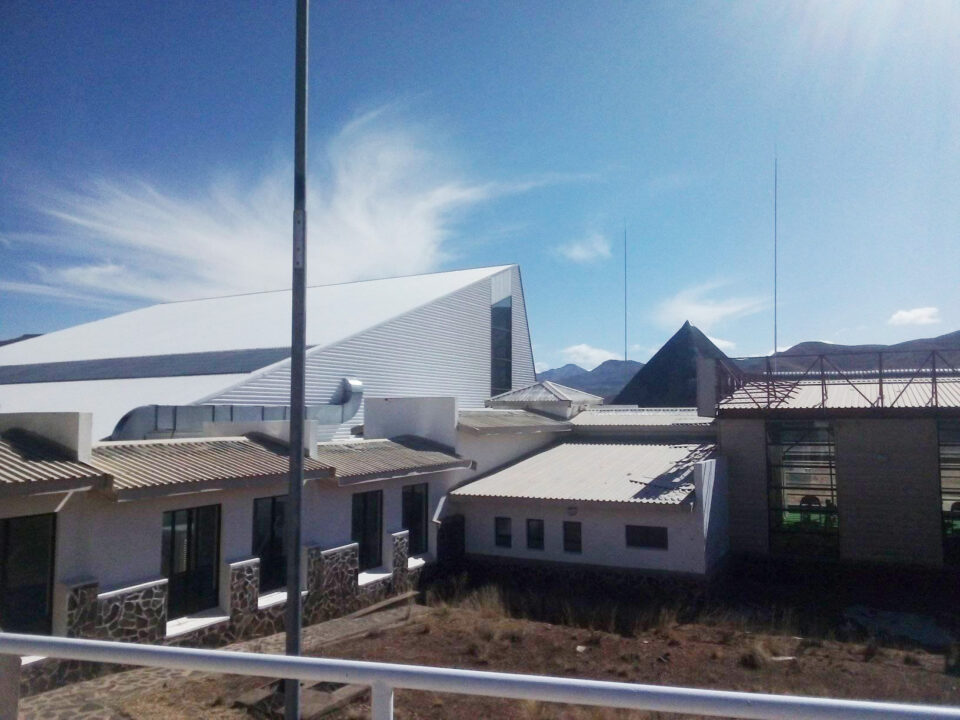
THE Rapokolana High-Altitude Training Centre in Thaba-Putsoa, in the Maseru highlands, has been earmarked for renovation and upgrading under an agreed bilateral sports infrastructure development cooperation deal between Lesotho and South Africa.
Rapokolana, a multi-million maloti project built in 2005, has fallen into a state of disrepair due to neglect and vandalism. The facility has faced persistent challenges related to completion and maintenance.
As a result, it has failed to serve its intended purpose of hosting training camps for local, national, and international teams and athletes in the highlands.
However, there is renewed hope that the facility will be revived after South Africa’s Deputy Minister of Sport, Arts and Culture, Peace Mabe, announced that the two countries had agreed to collaborate on sports infrastructure development, with Rapokolana topping the list of targeted projects.
Mabe made the announcement yesterday while marking the conclusion of her four-day official visit to Lesotho, during which she met with the Minister of Tourism, Sports, Arts and Culture, Motlatsi Maqelepo.
She said the two ministries had agreed to fast-track the signing of the Agreement on Arts, Culture and Heritage and to re-energise the implementation of the Memorandum of Understanding (MoU) on sports and recreation.
The bilateral engagement aims to strengthen cooperation in sport, arts, culture, heritage, and youth development between the two neighbouring countries.
Under sports relations, Mabe said Lesotho and South Africa had also agreed to spearhead joint programmes between their respective sports organisations.
“We have agreed towards the finalisation of the high-altitude centre called Rapokolana for the benefit of the sporting fraternity in both countries and across Africa. The facility will be used as a satellite centre to the existing high-performance centre in Pretoria,” Mabe said during a press briefing Avani Lesotho hotel yesterday.
She added that the two countries were also exploring joint initiatives in cross-border school sports programmes and community sport development.
Meanwhile, in November last year, the Lesotho National Olympic Committee (LNOC) and the South African Sports Confederation and Olympic Committee (SASCOC) signed a cooperation agreement and strategic partnership aimed at boosting high-performance sport, fostering technical exchange, implementing joint programmes, and enhancing athlete development programmes between the two countries.
For his part, Maqelepo said sports cooperation formed a critical pillar of bilateral relations between Lesotho and South Africa.
“We seek to strengthen exchange programmes for athletes and coaches, share best practices in sports development, and revive community sports structures,” Maqelepo said.
“Special emphasis will be placed on the development of high-altitude training infrastructure, including the Rapokolana High-Altitude Training Facility, which offers unique opportunities for elite athlete preparation and regional excellence.
“Infrastructure development will underpin these efforts, with collaboration envisaged in the construction and upgrading of stadiums, training facilities, and museums.
“Our cooperation will also extend to the development of water sports, leveraging Lesotho’s abundant water resources to promote disciplines such as rowing, canoeing, and other aquatic sports.”
He said these initiatives were expected to support athlete development, tourism growth, and regional sports integration.
