
Mathatisi Sebusi
SENKATANA Oncology Clinic is overwhelmed by the rapidly increasing number of cervical cancer cases diagnosed at the facility over the past two years.
In an interview with the Lesotho Times this week, Senkatana’s Nursing Officer, Matselane Motsie, said the clinic recorded a total of 295 cervical cancer cases between 2024 and 2025, all of which were referred to the oncology department for further treatment.
She said some of these patients never made it to treatment as they died due to their already advanced health condition.
“In 2024, we recorded 161 cervical cancer cases, while in 2025 the number stood at 134,” said Ms Motsie.
“These figures are worrying and call for intensified cancer awareness campaigns and stronger encouragement for women to undergo regular screening.”
Despite the high number of diagnosed cases, Ms Motsie said the clinic managed to prevent cancer progression in many other women through early intervention. She said that in 2025 alone, 224 women were saved from developing cancer after receiving pre-cancer treatment.
“It is always advisable for women to test for cervical cancer because early detection means early and mostly successful treatment. Cervical cancer is curable if it is detected on time,” she said.
Ms Motsie explained that the clinic focused on both prevention and early detection of cervical cancer. Established in 2013, the clinic was created after it was discovered that many HIV-positive women admitted to Senkatana Hospital were dying in large numbers, not from HIV-related complications, but from cervical cancer.
“It was then decided that every woman admitted at Senkatana Hospital should be tested,” she said.
According to Ms Motsie, the clinic offers several free preventive services, including Visual Inspection with Acetic Acid (VIA) screening, Human papillomavirus (HPV) testing, and Pap smear tests.
“VIA screening is a simple and cost-effective method that provides immediate results and does not require laboratory support.
“The procedure involves applying diluted acetic acid (vinegar) to the cervix during a vaginal examination. Abnormal tissue temporarily appears white when exposed to the vinegar.”
She added that HPV testing detects high-risk types of the human papillomavirus that can lead to cervical cancer, while Pap smear tests check for precancerous changes in cervical cells.
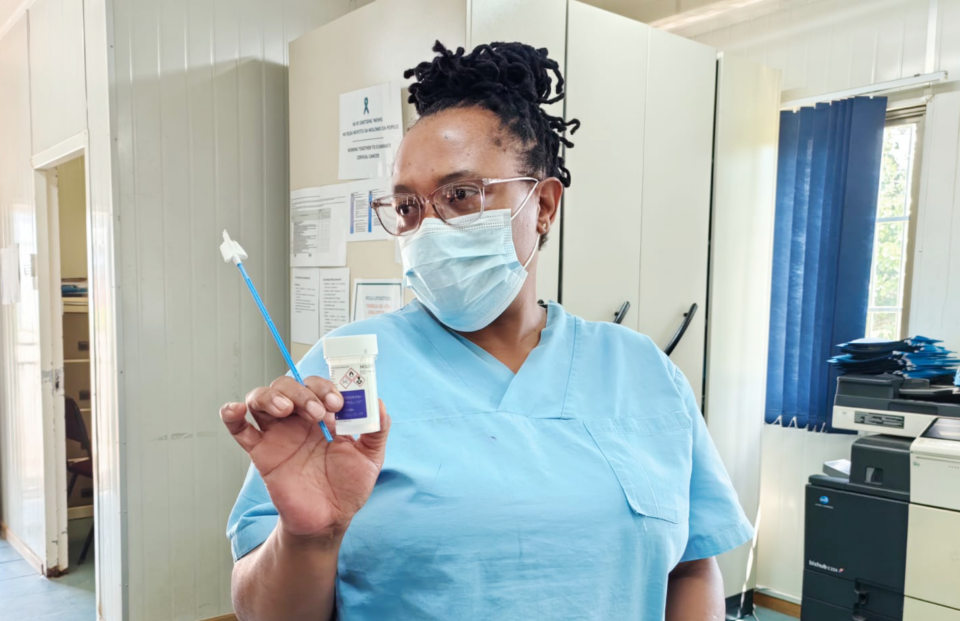
The clinic has also introduced self-cervical cancer screening, which allows individuals to collect samples either at home or in a healthcare setting.
“Since the introduction of self-screening, many people have come forward for testing. Unfortunately, we have run out of stock and are hoping for restocking.
“We were previously sponsored by the United States through the Elizabeth Glaser Pediatric AIDS Foundation (EGPAF), but due to changes in funding, we are unsure whether EGPAF will continue supplying us or if the government will take over,” she said.
Ms Motsie stressed that the high number of cases underscored the need for intensified community engagement to educate people about cervical cancer, its prevention and treatment.
“Some patients come to the clinic at a very late stage and end up dying before receiving treatment. Others are completely unaware that they have cancer. There is still a lot of ignorance surrounding cervical cancer,” she said.
She warned that anyone who was sexually active faced the risk of contracting the virus that causes cervical cancer (HPV).
“Using condoms reduces the risk by about 60 percent. The only person who is completely safe is one who abstains,” she said.
Ms Motsie further explained that the cervical cancer virus could remain dormant for up to 10 years before symptoms appear, making regular screening essential for everyone, regardless of age.
To ensure the elimination of cervical cancer, the Ministry of Health rolled out a nationwide vaccination programme targeting children aged nine to 14 from 2022.
The ministry recorded massive success in the rollout of the Human Papillomavirus (HPV) vaccine. In May last year, the ministry had vaccinated 139 621 girls, representing 93 percent of the population in that age group since 2022.
According to the World Health Organisation (WHO), in the African region, more than 900 000 new cancer cases and over 580 000 deaths were recorded in 2022 alone.
In her message for World Cancer Day 2025 on 4 February 2025), WHO Regional Director for Africa, Dr Matshidiso Moeti, said this was evidence that cancer continued to pose a significant and urgent public health challenge across the continent.
“Cervical cancer remains the leading cause of cancer-related deaths among women in the region, accounting for over 22 percent of all cancer deaths, while breast cancer is the most frequently diagnosed.
“For men, prostate cancer is the most common and continues to rise,” Dr Moeti said.
The organisation further warned that without urgent action, cancer deaths in Africa could increase by over 70 percent by 2040.
