
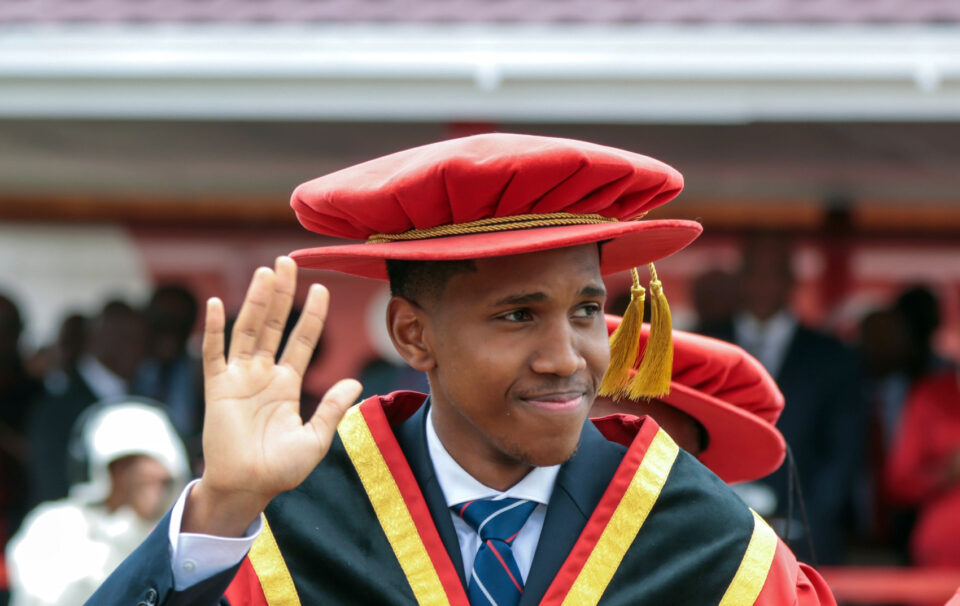
Moroke Sekoboto
THE stage is set for the Spelling A Business Africa (SABA) grand finale – the tertiary edition of the Spelling A Business Challenge – scheduled for tomorrow at Victory Hall in Maseru.
SABA is an educational initiative and competition – often referred to as the Spelling A Business Challenge – launched in Lesotho to promote entrepreneurship, business literacy, and innovation among students
The initiative, launched in 2023 by the Hololo Development Foundation (HDF) for high schools, has expanded into higher education institutions following its success. This marks the first-ever tertiary edition of the competition.
The milestone signals a new chapter in equipping Basotho youth with an entrepreneurial mindset and practical skills to become job creators, innovators and leaders of economic transformation.
The programme has attracted strong support from key stakeholders, with His Royal Highness Prince Lerotholi Mohato Seeiso as patron. Other supporters include the Ministry of Education and Training, the Ministry of Foreign Affairs and International Relations, UN agencies and the private sector in Lesotho.
Nine tertiary institutions will compete, namely Botho University, Limkokwing University, Lerotholi Polytechnic, Lesotho College of Education, National University of Lesotho, National Health Training College, Institute of Development Management, the Agricultural College of Lesotho and the Centre for Accounting Studies.
Held under the theme “Unlocking Potential, Driving Progress, Building Economic Resilience,” the competition goes beyond traditional literacy. SABA aims to cultivate the next generation of entrepreneurs and leaders by challenging students to excel in business communication and critical thinking.
Speaking to the Lesotho Times yesterday, SABA founder, Lejone Mpotjoane, said the initiative contributes to building an ecosystem where education prepares young people to solve real-world challenges and drive Lesotho’s economic resilience.
Mr Mpotjoane said the national top 10 finalists will represent Lesotho in continental competitions under the SABA platform. He added that through spelling, business pitching and mentorship, the inaugural tertiary edition will prepare students not only for employment but also for enterprise creation and leadership roles.
“We want to promote an entrepreneurial culture by encouraging youth to think beyond employment and become innovators and job creators. We intend to bridge theory and practice, translating classroom knowledge into practical entrepreneurial application,” Mr Mpotjoane said.
He added that the initiative seeks to produce career-ready graduates by developing communication, critical thinking and leadership skills, while also strengthening the economy by nurturing local investors and reducing dependence on imports and external employment.
Mr Mpotjoane further noted that the competition promotes tourism and exposure, as participants travel across districts to national finals and later to regional and continental stages.
“This movement boosts domestic tourism, creates new experiences for participants and enhances the country’s international visibility,” he said.
He explained that the challenge targets students who demonstrate academic strength, creativity and an interest in entrepreneurship. It is divided into two levels: the secondary school level, which began in 10 schools in Butha-Buthe and is now expanding nationwide, and the inaugural tertiary level focusing on higher learning institutions.
SABA Executive Director, Tefo Sefothane, said the initiative is more than a competition, describing it as a national movement to nurture the next generation of innovators and changemakers.
“The inaugural tertiary edition is a landmark event, building on the success of the high school programme and expanding opportunities for youth to showcase their potential at national, regional and continental levels.
“With strong government endorsement and private sector collaboration, the programme is a cornerstone in building a productive, self-reliant and resilient economy.”
Mr Sefothane said the initiative is expected to foster the emergence of innovative youth entrepreneurs and strengthen the country’s capacity to produce job creators rather than job seekers.
He added that it will enhance financial literacy and entrepreneurial knowledge among young people while promoting collaboration between the education sector, private industry and development partners.
Winners of the competition will receive cash prizes, with the overall winner set to take home M100,000, followed by M75,000 for second place and M50,000 for third. Fourth and fifth place winners will receive M30,000 and M20,000 respectively.
