
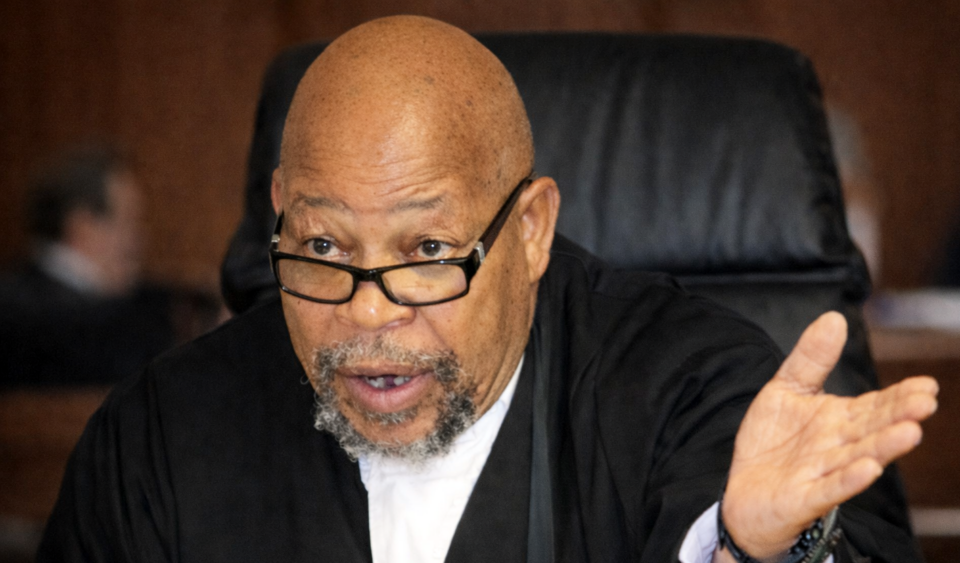
…despite the unacceptable time lapse
THE recent ruling compelling retired Justice Tšeliso Monapathi to return and complete 128 long-outstanding judgments has stirred a mixture of relief, scepticism and cautious optimism across the legal landscape.
At its core lies a fundamental question: can justice, delayed for decades still be meaningfully delivered?
The Constitutional Court’s decision is, without doubt, a watershed moment for the judiciary. It sends a clear and uncompromising message that judicial responsibility does not dissolve at the point of retirement. Instead, it affirms that accountability is inseparable from the office a judge holds, and that unfinished work—particularly work that directly affects the rights and lives of citizens—cannot simply be abandoned.
For the litigants whose cases have languished under Justice Monapathi’s watch, the ruling offers a long-awaited glimmer of hope. These are individuals who have endured years of uncertainty, financial strain, and emotional distress, all while waiting for closure. Some may have lost evidence, witnesses, or even their own ability to fully participate in proceedings due to the passage of time. For them, justice delayed has already come at a heavy cost.
The court’s directive, therefore, raises an uncomfortable but necessary truth: justice delivered late is not the same as justice delivered on time. While the completion of these judgments is essential, it does not erase the years of waiting. Nor does it fully restore what may have been lost in the interim. The legal maxim “justice delayed is justice denied” remains painfully relevant in this context.
Yet, to dismiss the ruling as too little, too late would be to overlook its broader significance. By ordering Justice Monapathi to complete his backlog, the court has prioritised the principle that cases must be finalised, regardless of how much time has passed. It is an acknowledgment that even imperfect justice is preferable to no justice at all.
Importantly, the court has also struck a careful balance between accountability and fairness. While it rejected Justice Monapathi’s claim that completing the judgments amounted to “forced labour”, it nevertheless recognised that he should be compensated for the work he is required to perform. This nuanced approach reinforces the idea that judicial duty is not punitive, but professional and constitutional.
However, there are legitimate concerns. The sheer volume of outstanding judgments – 128 in total, including part-heard matters – raises doubts about how quickly and effectively they can be completed. The passage of time may have dulled recollections, complicated legal issues, and rendered some cases more difficult to adjudicate fairly. Moreover, the credibility of the outcomes may be questioned, given the history of delay that has already tainted the process.
For affected litigants, the return of the same judge who presided over their prolonged wait may not inspire confidence. Trust in the judicial process is built not only on outcomes, but on timeliness, transparency and diligence. Where these have been lacking, restoring faith is no easy task.
Nonetheless, the alternative – leaving these cases unresolved indefinitely – would be far worse. The court’s decision ensures that there is at least a pathway to closure, however imperfect it may be. It also places the responsibility squarely where it belongs: on the judge who was entrusted with these matters in the first place.
Beyond the immediate impact on the affected cases, the ruling carries profound implications for the judiciary as a whole. It sets a powerful precedent that judges cannot evade their duties by simply reaching retirement age. It says judicial office is not a temporary engagement that can be exited at convenience, but a solemn obligation that must be fulfilled in full.
This aspect of the judgment deserves unequivocal commendation. For too long, delays in the delivery of judgments have been a persistent concern within many judicial systems, often attributed to heavy workloads, limited resources, or administrative inefficiencies. While these challenges are real, they cannot justify the kind of prolonged inaction highlighted in this case.
By drawing a firm line, the Constitutional Court has established a benchmark for judicial conduct. It reinforces the expectation that judges must manage their caseloads responsibly and deliver judgments within reasonable timeframes. More importantly, it signals that failure to do so will not be tolerated, even after retirement.
This precedent has the potential to reshape judicial culture in Lesotho. Sitting judges are now on notice that accountability extends beyond their tenure. The prospect of being compelled to return and complete unfinished work may serve as a strong incentive to ensure that cases are concluded promptly and efficiently.
In this sense, the ruling is not merely about one judge or one backlog of cases. It is about safeguarding the integrity of the judiciary and protecting the rights of those who depend on it. It is about restoring public confidence in a system that must, above all, be seen to deliver justice in a timely and reliable manner.
Ultimately, whether Justice Monapathi’s return will bring true justice to those affected remains an open question. For some, the completion of their cases will provide a sense of closure and vindication – no matter how delayed. For others, the damage caused by years of waiting may never be fully undone.
What is certain, however, is that the Constitutional Court has taken a bold and necessary step. It has affirmed that justice is not optional, that accountability is non-negotiable, and that the duty to deliver judgments does not expire with age.
This ruling serves as a turning point which prompts greater discipline, efficiency and responsibility within the judiciary. It will achieve something far greater than the resolution of 128 cases. It will strengthen the very foundation upon which justice stands.
Still, Judge Monapathi must take a hard look at himself in the mirror and do some serious soul searching. This is not the kind of reputation any self-respecting judge wants to carry into their retirement. The least he can now do is ensure he delivers sound and well-reasoned judgments, albeit belatedly, for the sake of the justice system and all these litigants he so terribly let down.

Seeds of discontent