
Ithabeleng Qhasho/Rethabile Pitso/Mohloai Mpesi
THE recently announced high fuel prices are anticipated to adversely affect the already ailing economy, analysts have warned.
The increases stem from the ongoing conflict in the Middle East involving Iran, Israel, and the United States, which began last month.
Prime Minister Sam Matekane announced on Tuesday evening that the government will subsidise fuel for all Basotho following a price hike that took effect yesterday.
Mr Matekane explained that the increases were driven by global factors, including the ongoing conflict in the Middle East, which has disrupted fuel markets.
He said the government would subsidise petrol, diesel, and paraffin to ease the burden on consumers. Petrol 93 increased by M6.70 per litre, but with a M2 government subsidy, the pump price now stands at M22.50. Petrol 95 rose by M7.35 per litre, also with a M2 subsidy, bringing the price to M23.30 per litre.
Diesel 50 went up by M13.10 per litre, and after a M2 subsidy, it now costs M30.50 per litre. Meanwhile, illuminating paraffin increased by M13.30 per litre, with a higher subsidy of M5 per litre, resulting in a new price of M21.30.
Although the government has made efforts to subsidise petrol and diesel, analysts argue that the measures are insufficient. They caution that the prolonged conflict is likely to have far-reaching economic consequences, particularly for struggling small businesses, vendors, and large construction firms that rely heavily on diesel – especially those involved in the Lesotho Highlands Water Project (LHWP) Polihali Phase II in Mokhotlong.
Analysts further note that the fuel price hike will significantly erode consumers’ purchasing power.
The Chief Executive Officer (CEO) of the Consumer Protection Association of Lesotho, Nkareng Letsie, has warned that escalating geopolitical tensions between Iran, Israel, and the United States are contributing to a global energy crisis with serious implications for Lesotho’s economy.
Mr Letsie explained that disruptions in global oil supply chains have created a mismatch between supply and demand, resulting in upward pressure on fuel prices.
“When demand exceeds supply, prices respond by rising,” he said.
He said in such circumstances, suppliers increase prices to balance demand with available supply, as higher prices tend to reduce consumption.
A vulnerable import-dependent economy
In the local context, Mr Letsie said Lesotho’s heavy reliance on imports makes it particularly vulnerable to global fuel price shocks.
“Lesotho is a net importing country. Most goods we use depend on logistics to reach consumers, and fuel is central to that process,” he said.
He added that fuel price hikes are expected to have a broad inflationary effect, warning that inflation could exceed recommended thresholds.
“As a result, rising fuel costs are expected to have a widespread inflationary impact. Under current monetary policy guidelines, inflation is ideally maintained below six percent.
“Almost every product will be affected by fuel costs,” he added. “This will significantly raise the cost of living, especially in a country that imports most of what it consumes.”
Consumer behaviour and misconceptions
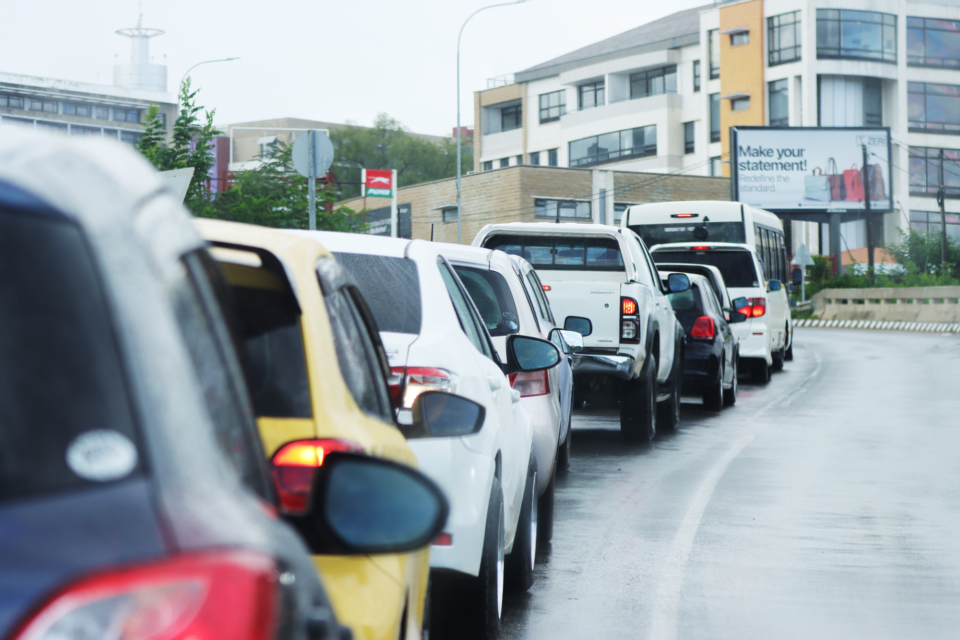
Mr Letsie also addressed consumer reactions to anticipated fuel price hikes, particularly the rush to filling stations. He described the behaviour as unnecessary, noting that stockpiling fuel offers only temporary relief.
“You are simply delaying paying the higher price. Eventually, you will still pay it,” he said.
He added that the hike would have a disproportionate impact on low-income households.
“The impact is expected to be most severe among low-income households, particularly in rural and highland areas where paraffin remains a primary energy source.
“With winter approaching, rising paraffin prices could significantly increase household energy costs,” he said.
Mr Letsie warned that higher prices would erode purchasing power, effectively expanding the low-income population.
“As prices rise, the value of money declines. Households will struggle to afford basic goods, and this has ripple effects across the economy,” he explained.
Pressure on small businesses
He said businesses, especially small and informal traders, are also expected to face mounting challenges.
“Rising fuel costs will increase the price of stock, placing strain on already limited operating capital. At the same time, reduced consumer spending will dampen demand.
“Small businesses face a double burden—it becomes more expensive to operate while customers prioritise essential goods due to limited income.
“This combination of higher costs and declining demand could force some businesses to close,” he said.
A double blow to the economy
Mr Letsie also said the economy faces a “double blow”—rising operational costs and shrinking consumer demand.
“As businesses adjust prices and consumers tighten spending, the risk of closures increases, potentially slowing economic activity further.
“The current global energy crisis underscores Lesotho’s vulnerability as an import-dependent economy. Without mitigating measures, rising fuel prices could drive inflation higher, deepen inequality, and strain both households and businesses in the months ahead.”
Lesotho Chamber of Commerce and Industry (LCCI) Secretary General, Fako Hakane, said the Chamber had hoped for a more robust government subsidy to cushion the impact of escalating fuel prices.
“As the Lesotho Chamber of Commerce and Industry, we had hoped the government would introduce a more reasonable subsidy to mitigate the situation, especially since this is the first time we are experiencing such steep price hikes.
“In the past, increases were minimal—around M1 or 50 cents—not the large margins we are now seeing as a result of the Iran-US conflict.
“This price margin is too wide and has taken everyone by surprise,” Mr Hakane said.
He revealed that the Chamber had warned the government at the onset of the conflict, advising proactive measures, but their recommendations were not considered.
“As the Chamber, we previously attempted to engage the government on what to anticipate when the war began. We aimed to encourage proactive action rather than reactive measures, but unfortunately, that advice was not taken into account.
“Our warning was for the government to prepare a subsidy in advance to shield consumers from the shock. It is well known that salaries in Lesotho are inadequate, so price increases affecting food and fuel place consumers under immense pressure,” he said.
He noted that the ongoing conflict in the Middle East is likely to worsen conditions for low-income earners and businesses, including large construction companies reliant on diesel.
He warned that if diesel shortages persist, some major construction companies could be forced to shut down, leading to further job losses—something the country can ill afford.
“There are large-scale projects, machinery, and construction plants relying on diesel. Consider the volume required to sustain operations at the dam construction site currently underway in the country.
“We have members within the Chamber who operate quarries and transport businesses. If diesel supply remains a challenge, these projects could be disrupted, leading to shutdowns and job losses.
“The country cannot endure further job losses, especially following recent layoffs linked to the withdrawal of United States support under President Donald Trump,” he said.
He added: “As it stands, our country’s GDP remains fragile, particularly given our status as a least developed country striving to transition into a developing economy.”
Mr Hakane said the effects of fuel hikes would extend beyond fuel itself to other sectors such as transport and imported goods.
“The price increases are not limited to petrol and diesel—they will spill over into other areas. We should expect increases in car parts, transport fares, and other imported commodities,” he said.
He further stressed the need to strengthen the private sector as a driver of employment.
“Given the likelihood of continued price increases, it is incumbent upon the government to cushion consumers. Unfortunately, the government remains the largest employer, whereas the private sector should ideally be leading job creation.
“At this point, we can only hope the government finds lasting solutions to address these growing challenges,” he said.
Economic analyst, Thabo Qhesi, cautioned that rising fuel prices are triggering a multiplier effect on the cost of basic commodities, placing increasing pressure on households and businesses.
Mr Qhesi explained that Lesotho’s landlocked position makes it heavily dependent on imports, with nearly all goods transported into the country.
“This means any increase in fuel prices directly affects transportation costs and ultimately the prices consumers pay,” Mr Qhesi said.
Shrinking purchasing power
He said rising prices are already eroding household purchasing power, particularly for vulnerable groups such as pensioners.
“If a pensioner typically spends M1500 on basic commodities, they may now only afford about half of what they previously purchased,” he said.
He emphasised that the impact is widespread, affecting both employed and unemployed individuals.
“Those who are employed must stretch their incomes further, often supporting unemployed extended family members while cutting back on their own needs,” he said.
He added that essential energy sources such as paraffin—used by many households—are likely to become more expensive as winter approaches.
“This creates a compounded effect. Families are already struggling to afford basic goods, and rising transport and energy costs will only worsen the situation,” he said.
Weak demand hits small businesses
Mr Qhesi said the economic strain is also reflected in declining consumer demand, which is severely affecting small businesses and informal traders.
“Vendors have reported poor performance, even during the usually busy Christmas period, largely due to reduced disposable income and factory closures,” he said.
He pointed to changing trends in major retail outlets such as Shoprite, noting a visible decline in customer activity beyond essential goods.
“Retailers are seeing movement mainly in food items, while demand for other goods has dropped significantly,” he said.
He added that previously long queues at money transfer outlets have diminished, indicating reduced cash circulation and a broader economic slowdown.
“This signals a serious contraction in economic activity, compounded by external pressures such as tariffs and rising fuel costs,” he said.
Rising inflation risks
Mr Qhesi warned that prolonged global instability could push inflation beyond the targeted average of six percent.
“The longer the conflict continues, the greater the risk that inflation will exceed expected levels.
“With rising costs, declining demand, and mounting economic pressure, both households and businesses face an uncertain period ahead. The combined effects of global tensions and domestic vulnerabilities continue to test the resilience of Lesotho’s economy,” he said.
