
…as social cluster questions legality of hospital’s status
Mohloai Mpesi
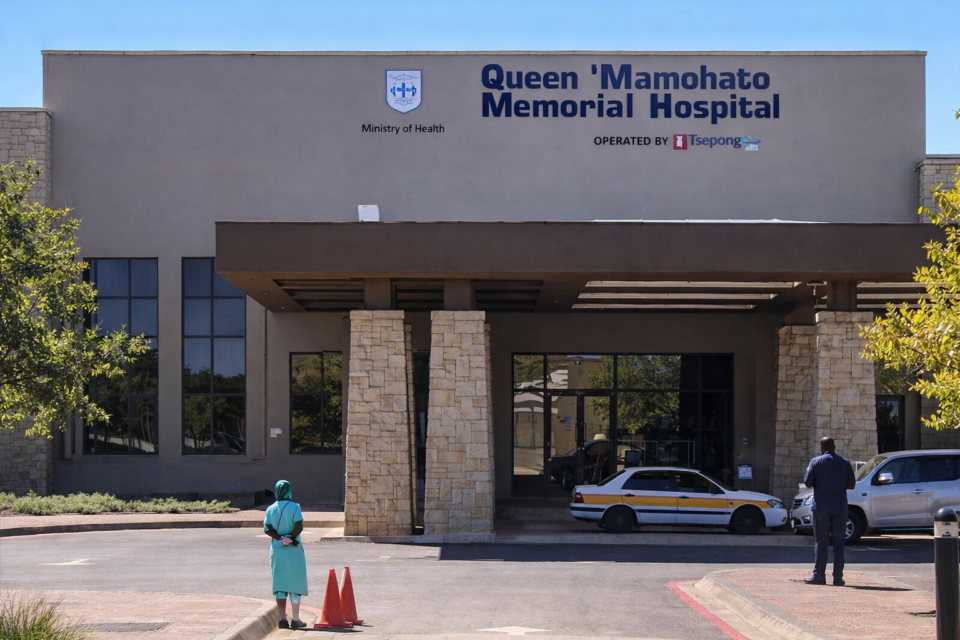
PARLIAMENT’S Portfolio Committee on the Social Cluster has frozen the budget allocation for Queen Mamohato Memorial Hospital (QMMH) pending clarity on the hospital’s legal status and relationship with the government.
The committee summoned officials from the Ministry of Health during consultations on the 2026/2027 national budget, where QMMH’s governance structure came under intense scrutiny.
Committee members demanded clarity on whether the hospital operates as a government entity or a private institution, raising concerns over the legality of its funding arrangements.
The committee argued that if QMMH was a private entity, it should have a signed Memorandum of Understanding (MoU) with the Ministry of Health to justify receiving the government funds.
The meeting was chaired by Mokhothu Makhalanyane, alongside members Moshe Makotoko, Sello Hakane, and ’Machabana Lemphane-Letsie, among others.
QMMH began operating in 2011 following a 27 October 2008 contract between the government and the Tšepong Consortium to design, build, partially finance and operate the 425-bed hospital and a gateway clinic.
The consortium comprised South Africa’s Netcare Hospital Group and local partners Afri’nnai Health, Excel Health Services, Women Investment, and D10 Investments.
The public-private partnership (PPP) project also involved refurbishing and re-equipping three filter clinics in Qoaling, Mabote and Likotsi to manage referrals to the hospital.
At the time, the project was valued at M1.165 billion (US$84 million). Construction was expected to take two years, followed by a 16-year operational period during which the Tšepong Consortium would manage all clinical and non-clinical services.
During that period, the consortium was to receive an annual “unitary fee” of M255.6 million (US$18.4 million) from the government to cover operational costs and returns on debt and equity.
However, the government terminated the agreement in 2021, citing concerns that the arrangement was consuming nearly half of the country’s health budget. The Ministry of Health also alleged that Netcare was benefiting unfairly from the deal.
Following the premature termination, Netcare demanded M1.6 billion from the government for outstanding services.
Despite the termination, lawmakers said it remained unclear whether the hospital is now fully government-run or still operating as a private institution.
QMMH Deputy Managing Director for Human Capital, Thenjiwe Dlangamandla, told the committee that the hospital’s employees are not hired through the Public Service Commission.
“When Queen Mamohato was handed over from Tšepong to the government, it was in a way that we would be responsible under the Ministry of Health.
“Right now, we are not connected in any way with the Public Service Commission. All Queen Mamohato employees are not hired under the Public Service Commission like the government employees,” Ms Dlangamandla said.
Her remarks were echoed by the Principal Secretary in the Ministry of Public Service, ’Makhoabane Lelimo, who said her ministry has no structural oversight over QMMH.
“We don’t have working relations in terms of structures and positions with Queen Mamohato. It is not the ministry that approves them,” Ms Lelimo said.
Ms Lemphane-Letsie challenged both the hospital and the Ministry of Health to present documentation guiding recruitment processes if the institution does not fall under the public service framework.
“The bigger question is, if Queen Mamohato falls under the Ministry of Health, what is the recruitment process and what guides it?
“If it is a Cabinet decision, let that decision be presented. If there is nothing guiding these decisions, then it may be the responsibility of Parliament to provide direction,” she said.
Ministry of Health Principal Secretary, ‘Maneo Moliehi-Ntene, told the committee that QMMH was placed under the ministry through a Cabinet decision after the Tšepong agreement ended.
“According to its recruitment and establishment, the hospital was taken over by the Ministry of Health through a Cabinet decision,” Ms Moliehi-Ntene said.
However, when asked by Mr Makhalanyane whether QMMH staff consider themselves as the government employees, she replied that they do not.
“No, they are not the government officers,” Ms Moliehi-Ntene said.
Ms Lemphane-Letsie said if the hospital is private, it should have a formal MoU with the government before receiving public funds in the form of subventions.
“Other institutions funded by the Ministry of Health receive subventions through signed MoUs. Where are we with Queen Mamohato?
“If it is private, we must know the extent of its independence and the laws governing it. The government cannot simply give money without a formal agreement,” she said.
She further warned that the hospital cannot operate outside established government structures.
“If it is a department of the Ministry of Health, it must operate under the laws governing ministries. It cannot operate in isolation,” she said.
Mr Makhalanyane said the committee’s main concern was how to classify the funds allocated to the hospital.
“When we allocate money to Queen Mamohato, what do we call it? Is it a subvention or something else if the employees are not the government officers?” he asked.
He noted that Parliament had previously withheld funding from the Christian Health Association of Lesotho (CHAL) until an MoU was presented.
Ms Moliehi-Ntene said the matter would require direction from Minister of Health Selibe Mochoboroane, who was absent from the session.
“This is above me. I will need to consult the minister, as the head of the ministry, to provide a way forward,” she said.
Mr Makhalanyane said the committee would hold QMMH’s budget allocation until the hospital’s legal and institutional status is clarified.
“We will hold its budget until it has been clarified where Queen Mamohato is categorised. For now, we are shelving its budget,” he said.
