
…Accuses them of diminishing policing standards…
…By influencing appointment of their unqualified followers into police force
…As 51 police officers were criminally charged in 2025
Rethabile Pitso
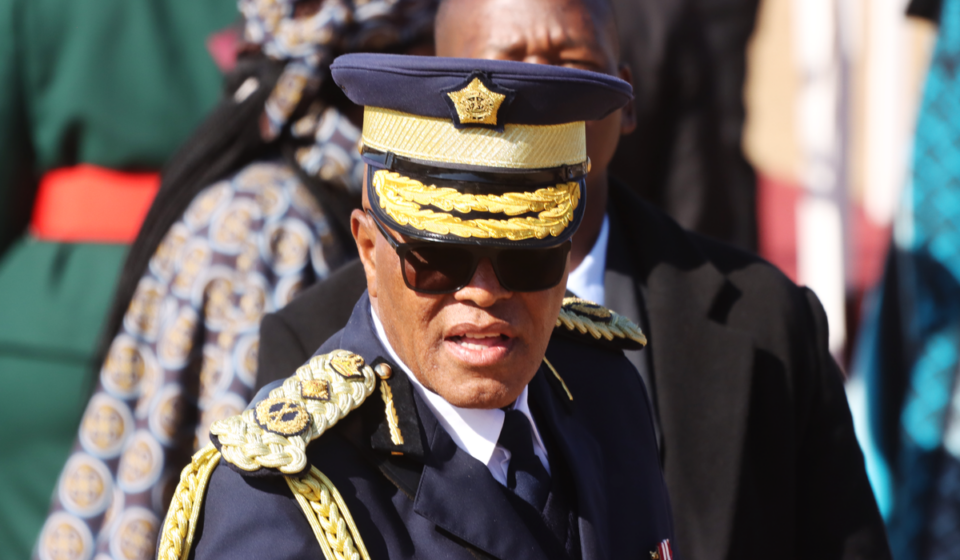
COMMISSIONER of police, Advocate Borotho Matsoso, has condemned politicians for hampering efforts to professionalize the police force by seeking to influence its recruitment procedures.
In unusually frank remarks, the police boss accused politicians of presenting their lists of preferred candidates for hiring whenever recruitment processes got underway.
That behavior in no way enhanced the recruitment of fit for purpose individuals required to mold a professional police service that served the national interests, the police boss said.
Adv Matsoso said once recruited, such political appointees ended up derailing the core functions of the Lesotho Mounted Police Service (LMPS). He spoke as he acknowledged the structural, financial, and operational challenges facing the police force, whose much talked about incompetence has seen crime levels spiral out of control over the years with Lesotho now ranked among the top six most homicidal nations in the world by the World Population Review.
Commissioner Matsoso urged politicians to stop submitting lists of candidates for recruitment, stressing that the LMPS’s mandate was not to create jobs but to protect citizens through qualified personnel.
He made the remarks during the presentation of the 2nd Annual Policing Plan report by Inspector of Police, Adv Motlatsi Mapola, to a gathering of serving and retired officers this week.
Among those in attendance were retired Commissioners of Police Jonase Malewa and Tšokolo Koro—the latter also served as the first Inspector of Police when the office began operations in 2005. Deputy Commissioners Sera Makharilele, Moqhebi Likhama and Dr Mahlape Morai, as well as Ombudsman Tlotliso Polaki were also present.
Structural challenges
The Police Inspector’s report, covering the period from 1 April 2024 to 31 March 2025, revealed that the LMPS had failed to meet its four key targets: reducing stock theft by 35%, curbing serious crimes by 9%, intensifying crime prevention, and eradicating corruption within the force.
The report paints a dispiriting picture of an underfunded and poorly staffed and resourced police service in which some of the officers become criminals themselves with 51 charged for various offences last year alone.
Acting Deputy Police Inspector and Information Analyst, ‘Majane Moliehi Ramonate, highlighted structural challenges as major constraints.
“The main issue with addressing stock theft resulted from officers interpreting the Stock Theft Act differently. In some areas, compliance with the Livestock Registration and Marking Information System (LRMIS) is followed, but in others, it is not,” Ms Ramonate said.
She explained that during livestock markings, LMPS officers required owners to produce a permit, whereas LRMIS officers did not, as long as the owner and Area Chief confirmed ownership. Sometimes police officers were not notified in advance of livestock rounds, leaving them unable to intervene, she said.
“The lack of coordination between LRMIS and LMPS continues to demonstrate that government institutions operate in silos,” Ms Ramonate added.
“Budget constraints also hindered other initiatives, such as conducting productive raids and constructing satellite posts to assist with tracking livestock. Serious crimes remained alarmingly high, with sexual offences and murder being most prevalent.
“While we anticipated achieving at least 50% in each targeted area, we fell short on all except for possession of unlawful firearms, where about 85% was achieved,” she said.
She attributed unsolved murder cases to inadequate forensic facilities, saying some cases dated back to 2014.
The report also revealed police engagement in criminal activities, with 51 officers charged last year for crimes ranging from fraud, housebreaking, and sexual offences.
Discipline
Adv Mapola stressed the importance of proper record-keeping.
“We should be particular about the registers and forms. We do not need explanations from officers when we arrive at the station; we want accurate records that are self-explanatory. That accuracy demonstrates performance indicators.”
He expressed concern over poorly documented cases, makeshift books and non-existent exhibit books.
“Sometimes, an officer created a ‘book’ by stitching together loose pages with a hard cover and labelled it ‘LMPS 5’ for daily incidents. Such improvised practices undermine professionalism,” Adv Mapola said.
He also warned that corruption was not being addressed adequately.
“We suspect that ComPol’s (Matsoso) office is not tackling corruption effectively. Patrolling officers, infamous for accepting bribes, are not supervised despite recent promotions. Officers exercise free will in corrupt practices,” he said.
He added that officers often engaged in personal business during working hours and attributed some behaviours to greed and frustration over promotions. Adv Mapola also raised concerns over officers recruited under political influence, saying some leave the force without contributing meaningfully to policing.
“Such individuals do not represent the LMPS well,” he said, appealing to Adv Matsoso to take the report’s recommendations seriously
In a previous interview with this publication, Adv Mapola had urged the government to equip the LMPS with sufficient resources and to formally recognise the Office of the Inspector of Police as an independent oversight institution operating without interference from the Police Service.
Adv Mapola expressed optimism that the proposed establishment of the Independent Security Sector Oversight, Inspectorate and Complaints Authority, as provided for under the Tenth Constitutional Amendment, would ultimately secure full autonomy for the office.
The Office of the Inspector of Police was established in 2005 in terms of Section 21 of the Police Act of 1998 to monitor the LMPS and report on its efficiency and operational effectiveness.
The Inspector of Police is appointed by the King on the advice of the Prime Minister. Adv Mapola assumed office on 1 May 2025, following a policing career that spanned from 1988 to 2023.
He said despite the existence of the Police Charter, many officers continue to disregard established standards. He said many officers assigned to investigations lack adequate training and qualifications, a shortcoming reflected in the poor quality of reports and investigative methods, which has contributed to a growing backlog of dockets, including serious cases such as murder.
He referred to a recent High Court matter in which exhibit firearms went missing, prompting Justice Tšeliso Mokoko to demand their production. He said his office had to supervise the investigation until the firearms were eventually recovered.
Adv Mapola described it as embarrassing that High Court judges frequently reprimanded police officers for presenting evidence that was obtained improperly or in violation of constitutional provisions.
He also called for a review of recruitment and training practices at the Police Training College (PTC). He explained that in the past, trainees rotated through different units before receiving permanent postings, allowing commanders to assess their strengths and assign them appropriately.
He said current graduates are deployed prematurely to patrol units, where they are exposed to corrupt practices and risk losing the foundational principles of policing. As a result, many officers later struggle with basic procedures such as opening dockets and making arrests.
Adv Mapola further advocated for a clear separation of responsibilities between Traffic Commissioners and the LMPS. He said the routine deployment of police officers to direct traffic during peak hours amounts to maladministration and diverts resources from critical duties such as crime prevention and combating stock theft.
He maintained that traffic management should fall under the responsibility of Traffic Commissioners, with LMPS officers intervening only when traffic-related offences occur. He added that assigning large numbers of officers to traffic control has weakened crime prevention efforts, noting that more officers are currently deployed to traffic duties than are stationed at some district police posts.
Matsoso
Adv Matsoso acknowledged the report’s findings and cited inadequate funding as a central challenge.
“We continue to remain stagnant because of the poor budget allocated to us. We cannot thrive on a M2 million budget every year while expectations are high,” he said, explaining that the police require funds for occurrence books, flags, stationery, patrols, and cross-border operations.
He called out political interference in recruitments as a threat to professional standards.
“Our last recruitment process faced problems because politicians submitted candidate lists. The LMPS is not a job creation institution—it is a training institution for officers protecting the nation. If candidates do not meet eligibility criteria, they should not be employed just because of political connections,” Adv Matsoso said.
He also addressed promotions, the shortage of supervisors, and the need to extend the retirement age to 60 to retain experienced officers.
He highlighted poor conditions at the Police Training College (PTC), including dilapidated facilities, lack of accommodation, and broken electricity systems, calling for determined rehabilitation.
Retired officers
Retired officers; Koro and Malewa, expressed concerns over the “disintegration of the social fabric” of the police. They condemned widespread corruption, officers neglecting duties and the decline of cleanliness parades and inspections.
Mr Koro recommended establishing formal platforms for LMPS and the Office of the Inspector to collaborate.
“There should be structures bringing these two institutions together to achieve seamlessness in fighting crime. This would ensure accountability and prevent the loss of firearms and other resources,” Mr Koro said.
Mr Malewa added: “Discipline is of utmost importance. We cannot fight crime if we are disorganized or morally compromised.”
The gathering concluded with calls for reforms, improved funding, stricter discipline, and insulation from political influence, emphasizing that only an enabled and accountable police service can restore public confidence and operational effectiveness.
The report is due to be submitted to the Minister of Local Government, Chieftainship, Home Affairs and Police, Lebona Lephema, who should in turn table it before Parliament.
