
…as Commercial Court overturns default judgment
Moorosi Tsiane
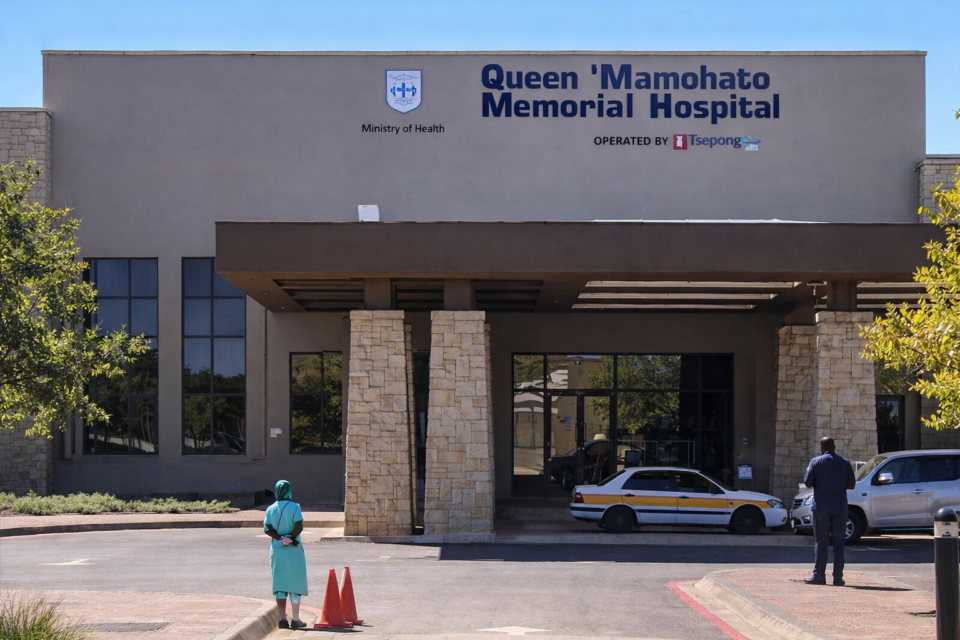
LOCAL shareholders in the now-defunct Tšepong Consortium — former operators of Queen ’Mamohato Memorial Hospital (QMMH) — have secured a major legal victory after the Commercial Court rescinded a default judgment that had allowed South Africa’s Netcare Group to claim consortium debts on behalf of all shareholders.
The shareholders successfully argued before Justice Moneuoa Kopo in the Commercial Division of the High Court that Netcare had failed to properly serve them with court papers, rendering the judgment procedurally defective.
The rescission application was brought by local shareholders; Afri’nnai Health, Excel Health Services, Women Investment and D10 Investments, who sought to overturn a ruling that effectively sidelined them from defending claims brought by Netcare. They allege that Netcare siphoned more than M1.1 billion from the Tšepong Consortium through unauthorised payments to itself and its subsidiary, Botle Facilities Management, between 2016 and 2020.
The local shareholders accused Netcare of abusing its dominant position within the consortium and disregarding their rights as minority shareholders.
In a judgment delivered on 8 January 2026, Justice Kopo overturned an earlier decision by Justice Moroke Mokhesi, finding that the default judgment granted in December 2024 was issued in error and violated the fundamental principle of audi alteram partem — the right of all parties to be heard.
The dispute arose from summons issued on 5 February 2024 by Netcare Hospitals (Pty) Ltd, Netcare Hospitals Lesotho and Botle Facilities Management (Pty) Ltd, collectively referred to as the Netcare Group.
On 21 May 2024, the Netcare Group applied for default judgment, which Justice Mokhesi granted on 5 December 2024. Tšepong subsequently applied for rescission of the order, a stay of execution and leave to file a defence. That application was dismissed by Justice Mokhesi, prompting an appeal.
On 2 May 2025, the Court of Appeal upheld the appeal and ordered that the matter be heard afresh before a different judge, resulting in its enrolment before Justice Kopo.
Before the Commercial Court, the local shareholders argued that they had never been properly served with the summons as required by Rule 4 of the High Court Rules and section 181 of the Companies Act.
Their lawyer, Attorney Qhalehang Letsika, told the court that service had allegedly been effected at QMMH on an advocate who was neither an employee of Tšepong nor authorised to receive service on behalf of the local shareholders.
Mr Letsika further argued that at the time of the purported service, Tšepong had already been evicted from QMMH and was operating from Maseru Private Hospital — a fact he said was known to the Netcare Group, which had previously served documents at the new premises.
The shareholders said they only became aware of the default judgment after their Mr Letsika’s staff at Mei & Mei Incorporated encountered the matter while perusing the unopposed motion roll.
Beyond the issue of service, the local shareholders contended that the Netcare Group had failed to disclose a proper cause of action, had not filed adequate particulars of claim and that they possessed a bona fide defence. They alleged that Netcare itself was indebted to Tšepong due to unlawful transactions, failure to declare dividends despite profits, negligent management and failure to recover substantial debts owed by the Lesotho Government.
They claimed Netcare owed Tšepong more than M686 million, including penalties arising from alleged failures to submit tax returns, and maintained that more than M200 million could be set off against the Netcare Group’s claims.
The Netcare Group, however, argued that proper service had been effected after Justice Mokhesi directed that Tšepong be served at its registered address. It maintained that service was lawfully effected by affixing the summons to the main door after Tšepong’s chairperson allegedly refused to accept service.
Justice Kopo rejected this argument, finding that service on Advocate Khotso Phakoana did not comply with the law.
“It is common cause that service was effected on one Mr Phakoana, who is not an employee of Tšepong, let alone one authorised to receive service,” Justice Kopo said.
“All in all, service was not effected in accordance with section 181 of the Companies Act.”
He added that the manner in which the return of service was drafted created a misleading impression that Tšepong had been properly served — an error that went to the root of the matter.
“There cannot be justice without the other side being given an opportunity to air its case. This conclusion is dispositive of the matter, and I therefore find no reason to consider grounds under the common law.
“The order was granted in error as Tšepong was not served. It is for the aforementioned reasons that I make the following order: the application for rescission is granted with costs.”
The ruling clears the way for Tšepong to defend the multi-million-maloti claims brought forth by Netcare Group.
Background
On 27 October 2008, the government of Lesotho entered into a public-private partnership (PPP) agreement with the Tšepong Consortium to design, build, partially finance and operate the 425-bed Queen ’Mamohato Memorial Hospital (QMMH) and a gateway clinic. The project also included the refurbishment and re-equipping of three filter clinics in Qoaling, Mabote and Likotsi to manage patient referrals to the hospital.
At the time, the PPP agreement estimated the project’s upfront capital cost at M1.165 billion (then US$84 million). Construction was scheduled to take two years, followed by a 16-year operational period during which the Tšepong Consortium would manage all clinical and non-clinical services at the facilities.
Under the agreement, the consortium was to receive an annual “unitary fee” from the government, set at M255.6 million (US$18.4 million), to cover operational costs and provide a return on debt and equity. Access to the hospital’s services was to be free for patients, with only a small co-payment required for certain services, 90 percent of which would be subsidised by the Ministry of Health.
In 2021, however, the government terminated the agreement, citing concerns that the project was consuming nearly half of the country’s health budget. The Ministry of Health also raised objections to Netcare’s role in the consortium, alleging that the company was benefiting disproportionately from the arrangement.
