

Mohloai Mpesi
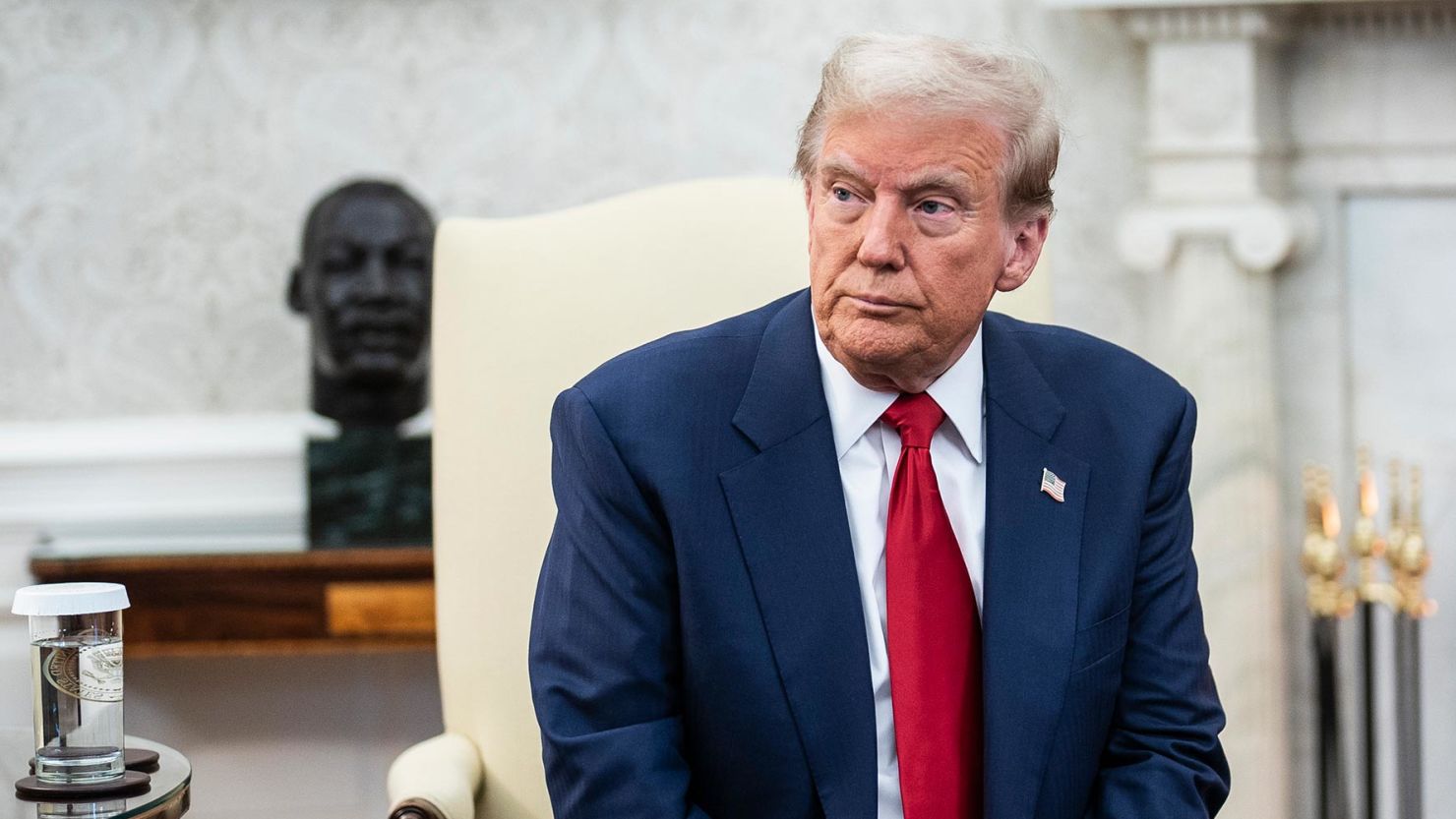
As US President Donald Trump plunges the world into economic chaos, eliminating normal trade practises and cutting aid packages, serious worries have arisen over how these retrogressive measures will impact Lesotho’s growing public debt burden and overall economic growth prospects.
According to the World Bank, Lesotho faces a huge public debt dilemma in view of its small GDP. The bank puts the country’s public debt at M22.8 billion, with external debt accounting for 83 percent of this figure and domestic debt making up the remaining 17 percent.
The International Monetary Fund (IMF) has projected a 100 percent increase in Lesotho’s public debt-to-GDP ratio, driven by the staggering global economic changes wrought by Mr Trump’s policies.
During the IMF’s Spring Meetings last week, Faizaan Kisat from the Fiscal Affairs Department warned that debt levels are expected to keep rising for many countries, potentially approaching 100 percent of GDP by the end of the decade.
He emphasized that “tackling debt risks should be a priority in many countries” as global public debt is projected to increase by 2.8 percentage points this year, more than double the estimates for 2024.
While some experts believe Lesotho’s debt is manageable and the country is unlikely to default, others argue that the rising debt poses a significant economic threat that could stretch the government’s tax efforts.
The IMF notes that the increasing trade uncertainty, elevated geo-economic risks, spending pressures, and tighter financial conditions could further complicate Lesotho’s debt outlook by depressing growth and widening fiscal deficits.
There is therefore a need for the government to prioritize debt management and fiscal prudence in the face of the ongoing global economic challenges.
The World Bank Group’s “Africa’s Pulse” report, released last month, states that African countries heavily rely on external debt, but are constrained by weak tax policy and weak administrations that impede revenue collection.
The report notes that “Weak institutional capacity in domestic revenue mobilization and heavy reliance on the extractives sector have exacerbated the debt burden in Sub-Saharan African countries.”
It underscores the region’s heavy debt dependence, as “weak tax policy and administration continue to constrain revenue collection.”
This challenge is further compounded by a large informal economy, where “nearly 90 percent of the labour force operates outside the formal tax net.”
Speaking to the Lesotho Times this week, Dr Retṧelisitsoe Nko, a development finance specialist, warned that trade uncertainties spawned by US President Donald Trump’s chaotic tariff policies will likely force Lesotho to stretch its tax collection efforts to service its debt.
As people move out of the formal economy, the government will have to divert more resources to cover the lost revenue, exacerbating the fiscal deficit, he said,
This, he cautioned, could lead Lesotho to experiencing its own version of a “great depression” as the government is forced to prioritize debt repayment over supporting key economic areas.
Dr Nko notes that Lesotho’s heavy dependence on foreign aid has “prolonged a redundancy that has prevented the country from exploring opportunities to regenerate domestic income and production”, particularly in manufacturing and investment.
He urges the government to convene a panel of experts to help it fundamentally change its economic mindset and “chart a path out of the crisis, before the country is dragged further down”.
Dr Nko holds a long list of qualifications including a doctorate in governance and transformation, with a specialization in development finance. He also holds a postdoctoral diploma in corporate governance, a diploma in monitoring and evaluation, a diploma in project management, and a postdoctoral diploma in occupational safety and health.
Thabo Qhesi, the chief executive officer (CEO) of the Private Sector Foundation of Lesotho (PSFL) contends that Lesotho is likely to face difficulties in servicing its public debt and securing new loans from international creditors. This because of the government’s approval of a national budget that did not account for the impact of new US tariffs.
“These tariffs have slowed down trade, leading to reduced revenue collection, which adversely affects the budget,” Mr Qhesi said.
The decreased revenue will lead to a reduction in new infrastructure projects, slowing economic growth and impacting the private sector’s ability to create new jobs.
“Lesotho will not be able to service its public debt, and it may not be possible for the country to secure new loans,” he said.
However, ex-Prime Minister Dr Moeketsi Majoro, who served as Minister of Finance and Development Planning between 2017-2020, asserts it is not all doom and gloom for Lesotho. “Lesotho’s debt is not a significant problem,” he asserts. The Lesotho Times interviewed Dr Majoro on the fringes of a news conference he had convened at the American Corner within the State Library on Monday last week.
Dr Majoro, who also served as an executive director at the IMF from 2008-2012, explained that Lesotho had been consistently servicing its M23 billion debt in smaller instalments over the past 40 years as per contractual agreements with creditors like the World Bank and IMF.
“External debt is not a problem for Lesotho,” Dr Majoro said.
“Our national annual budget is about M20 billion, which is around 60 percent of the M23 billion debt. Additionally, we produce goods and services equivalent to 33 percent of our GDP each year, but the debt itself does not grow. We have a manageable timeline of up to 40 years to pay off the debt in small amounts.”
Dr Majoro acknowledged that debt can become an issue if the economy collapses, and he expressed concern over the current signs of economic downturn in Lesotho and South Africa.
However, he emphasized that Lesotho’s debt has been well-managed, allowing the country to avoid a debt crisis.
The former premier cautioned that excessive reliance on private sector debt, which often carries higher interest rates and shorter repayment periods, can be dangerous.
In contrast, he said, Lesotho’s debt is primarily owed to multilateral institutions like the World Bank and IMF, which offer more favourable terms and longer repayment timelines.
“The combination that makes debt very toxic is the infusion of too much private sector debt,” Dr Majoro said.
“We are borrowing from the World Bank, IMF, and others, and the conditions are softer, and the terms are longer to repay. But negotiating a loan from the private sector can be much quicker, and the interest rates are much higher.”
Meanwhile, Kamohelo Dooda, Central Bank of Lesotho (CBL) Economist in the Research Department, emphasized that while the country is likely to be hit by trade uncertainties, Lesotho still has room to take on more loans and service the debt in the near future.
“When we borrow, our debt increases. So, we have to look at our debt sustainability. In the Debt sustainability indicators, there are solvency and liquidity indicators.
With solvency indicators we look at the sustainability of that debt level over a longer period, while liquidity is where we look at the government’s ability to honour its obligation and whether they are able to pay their debt,” Ms Dooda said.
“The indicators have thresholds, which are alarms that you cannot go beyond a certain limit, as long as you are below those thresholds you are safe, but when you are beyond, your debt risk is not sustainable. Our GDP is going to be affected because we were exporting but now, we export less.
She added that as of March 2025, the threshold of external debt ratio to GDP is 40 percent, and “we are at 28.3 percent. This means we have a room to increase our debt without affecting our debt sustainability”.
“This means Lesotho has the capacity to increase its debt, provided the funds are used to finance development,” she said.
Although the country will be affected by trade uncertainties and geo-economic conditions, Ms Dooda said Lesotho was still well-positioned to service its debt, “both now and in the near future”.
“We don’t foresee a situation where we have a challenge to service our debt,” she said.
However, the trade uncertainties spawned by Mr Trump’s tariff policies are expected to impact the country’s revenues from the Southern African Customs Union (SACU). Lesotho had received only M2.3 billion from SACU in the current fiscal cycle, compared to the previous year’s M9 billion collection, indicating a decline in trade.
Ms Dooda explained that if the economic performance of SACU member countries declined, leading to reduced trade, Lesotho would receive even less money from SACU.
Furthermore, Ms Dooda said, if investors left due to struggling businesses and reduced exports, it would lead to job losses, decreased purchasing power, and lower tax revenues for the government.
“When businesses struggle because they are exporting less, it means the government is going to get less income tax. Some people would lose their jobs, meaning the government will also lose personal income tax,” Ms Dooda said.
She added that a decline in consumer spending would also result in a fall in VAT revenues.
“We will see our revenues declining,” she warned.
Mr Dooda further cautioned that increased borrowing will lead to a rise in public debt, which will, in turn, impact the country’s economic growth.
“Our growth is going to be impacted, meaning we are going to have a problem with our GDP. Our numerator (debt) will increase, then our denominator, which is the GDP will decrease because the economy would be affected. …”

2 comments
I believe that avoiding processed foods will be the first step to help lose weight. They might taste excellent, but refined foods currently have very little nutritional value, making you feed on more just to have enough power to get over the day. For anyone who is constantly ingesting these foods, moving over to grain and other complex carbohydrates will aid you to have more power while having less. Interesting blog post.
very interesting details you have mentioned, regards for posting.