
…as govt celebrates industrialisation of Johane Garments
Seithati Motšoeneng
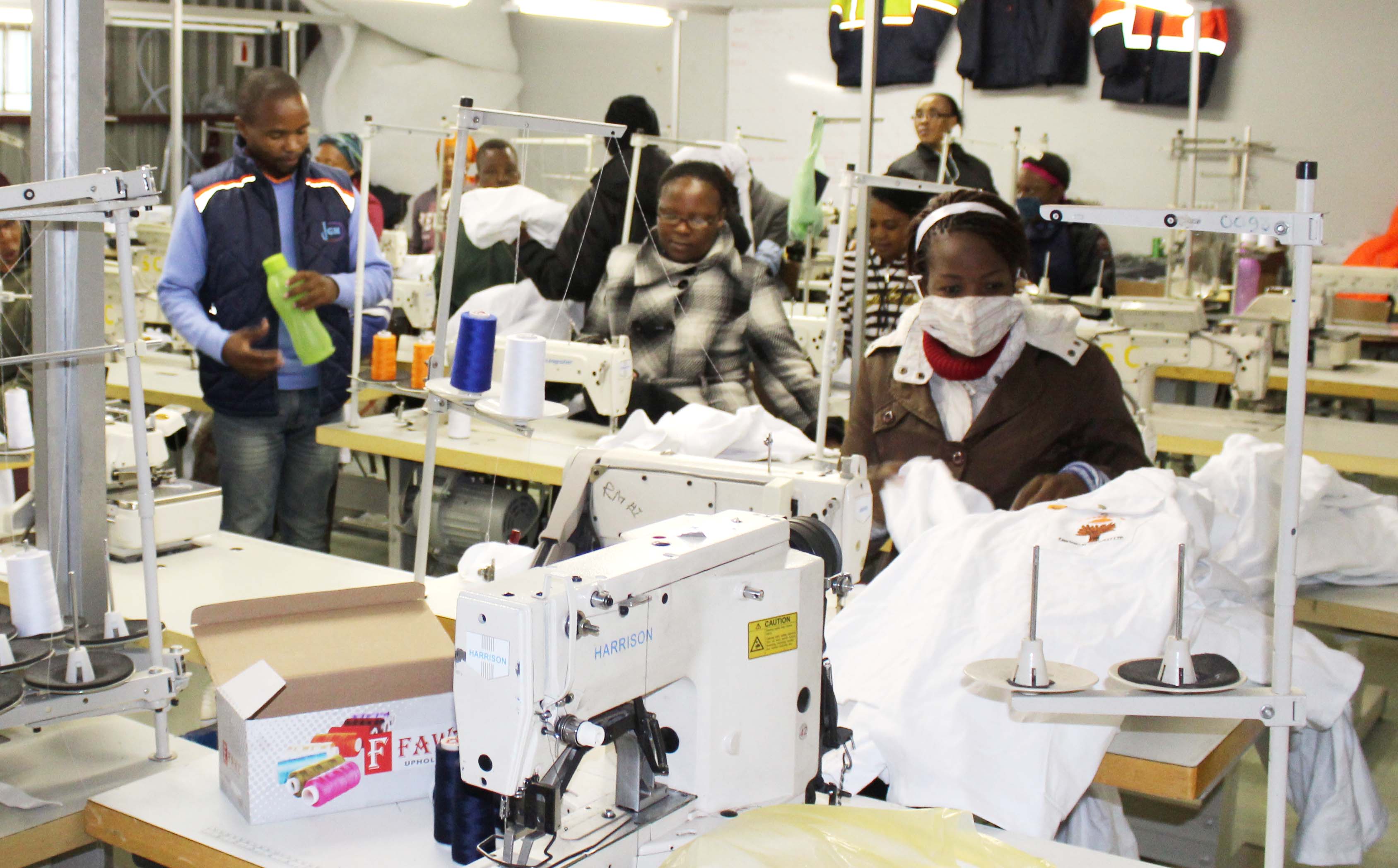
TEXTILE factory, Johane Garments, has transitioned from a small and medium-sized enterprise (SME) into a fully-fledged industrial operation, now known as Johane Industrials.
Owned by Mosotho entrepreneur Tšepo Johane, the factory is moving into full-scale industrial production after years of battling debt, compliance hurdles and other challenges.
Johane’s journey, which began at a skills development centre, was celebrated yesterday at an event held in Ha Thetsane.
Speaking at the launch, Trade, Industry and Business Development Minister, Motlatsi Maqelepo, said the milestone represented more than the growth of a single factory. It was a testament to what could be achieved when a Mosotho entrepreneur remained determined in the face of adversity.
“The evolution of Johane Industrials from one milestone to the next is a monumental achievement,” Mr Maqelepo said.
He revealed that he had met Mr Johane a few months ago, when the businessman explained his challenges with the Lesotho National Development Corporation (LNDC), including outstanding debt that had brought his enterprise to the brink of closure.
Although some of the challenges had been self-inflicted, Mr Maqelepo said he had recognised a passionate and resilient Mosotho entrepreneur who refused to give up.
“I am glad you did not succumb to the challenges you faced and were able to withstand the arduous process,” he said.
“Many Basotho are unable to endure the gruelling trials they must go through.”
Mr Maqelepo said Johane’s achievement demonstrated the government’s commitment to supporting business growth through funding and the provision of infrastructure for innovation.
He said manufacturing was central to Lesotho’s economic development and called for greater recognition of the sector.
“The government is intentional in cultivating the manufacturing industry, as it serves as the very backbone of our economy,” he said.
“It is high time that we afford factories the respect they deserve, for we have seen that no economy can truly thrive without manufacturing.”
The minister said Lesotho needed to become a vibrant investment hub driven by homegrown industrialists.
“We need Basotho industrialists who will keep their doors open even in times of crisis, unlike foreign investors who simply pack up and leave when the going gets tough,” he said.
He also lamented Lesotho’s position at the bottom of the textile value chain, saying the country continued to rely on imported threads and fabrics, limiting its ability to maximise the benefits of the industry.
Mr Johane said the launch was a deeply personal milestone, as it took him back to the skills development centre in Station where his entrepreneurial journey began.
“I am absolutely thrilled by the growth of my company,” he said.
“I am deeply grateful for this journey, which began at the skills development centre in Station, where everything was just a dream. I will double my efforts to ensure that this enterprise achieves lasting success.”
He said the factory represented an investment in local job creation and the long-term sustainability of his business.
“As a Mosotho businessman, I am wholeheartedly committed to uplifting the lives of my fellow Basotho,” he said.
Mr Johane acknowledged that the journey had not been easy, revealing that he had struggled to meet industry standards and that the LNDC had temporarily shut down the factory over compliance issues.
“At times along the way, the overwhelming challenges made me feel as though I had chosen the wrong path; nevertheless, I refused to give up,” he said.
The Lesotho Textile and Exporters Association (LTEA) also welcomed the factory’s transition.
LTEA representative, ‘Malikhabiso Majara, described the development as a graduation to a new level of industrial production.
“Today marks a graduation from an SMME to a full industrial player,” Ms Majara said.
She said the association’s relationship with Mr Johane began at the skills development centre, where it identified his potential to become an international exporter.
However, she said the ambition had initially been met with several challenges.
The factory’s growth has also been welcomed by its workers, who have witnessed its transformation from a modest commercial workshop into a mass-production facility.
One of the workers, Makatleho Chabeli, commended the evolution from Johane Garments to Johane Industrials, saying the expansion reflected the company’s commitment to creating more jobs.
From a dream nurtured at a skills development centre to an industrial operation, Johane Industrials represents a story of resilience and determination, underscoring the potential of Basotho entrepreneurs to drive Lesotho’s industrial future.
