
Rethabile Pitso
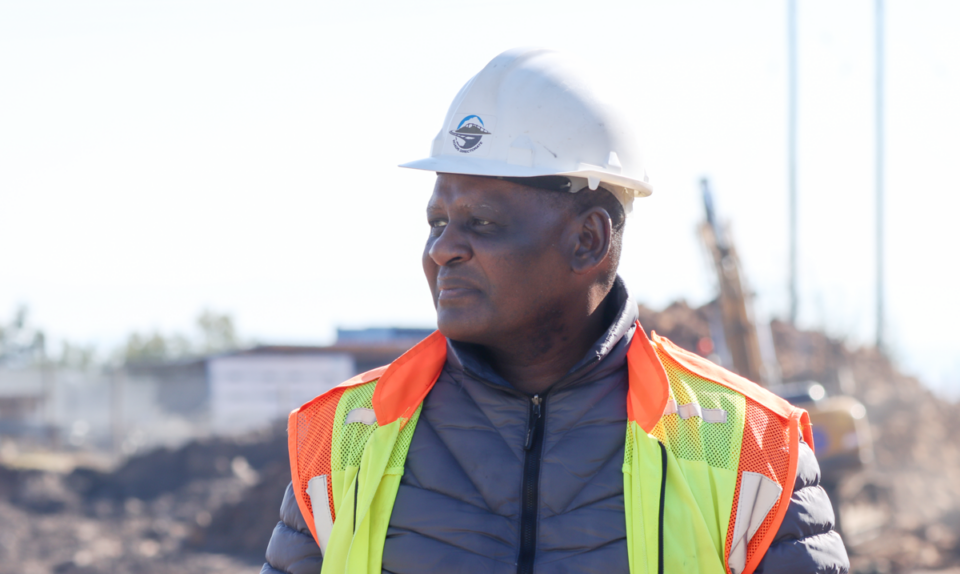
OUTGOING Roads Directorate Director General, Teboho Mokhoane, says his seven years at the institution have been marked by significant progress in road infrastructure, emergency response, staff development and institutional reform, although delayed payments, maintenance backlogs and road-reserve encroachment remain major challenges.
A civil engineer by profession, Mr Mokhoane joined the Roads Directorate (RD) in September 2019 as Director of the Road Network Development Division before becoming Acting Director General in June 2022. He was confirmed as Director General in December 2022.
As his term ends this month, the Lesotho Times reporter, Rethabile Pitso, spoke to Mr Mokhoane about his tenure, achievements and the challenges facing his successor.
LT: What did you find when you joined the Roads Directorate in 2019, and what did you set out to change?
Mokhoane: I joined as Director of Road Network Development, responsible mainly for contract administration and major road and bridge projects. The Directorate was fragmented, with a silo mentality, low staff morale, limited resources and weak strategic coordination.
Following the impact of COVID-19 and the 2021 storms, I was nominated to lead the formulation of the Directorate’s second strategic plan for 2022–2025, later extended to March 2026. We focused on improving coordination, accountability and implementation.
LT: After almost seven years, has the Directorate achieved the objectives for which it was established?
Mokhoane: The merger of the former Roads Branch and Department of Rural Roads created challenges, including perceptions that one side deserved greater recognition. This contributed to fragmentation.
We therefore placed strong emphasis on staff engagement through workshops, retreats and social activities. Staff were consulted during the formulation of the strategic plan and annual work plans. We also introduced a communication policy and strategy.
As a result, morale, teamwork and ownership improved significantly.
LT: More than 200km of paved roads have reportedly been completed during your tenure. Which projects are you most proud of?
Mokhoane: I am proud of all of them because they serve different national objectives.
Marakabei–Monontša was intended to improve connectivity between Butha-Buthe and Qwaqwa in South Africa through the Monontša border post, while Mpiti–Sehlabathebe connects Qacha’s Nek, Thaba-Tseka and Mokhotlong and supports tourism and socio-economic activity.
I also initiated the rehabilitation of Moshoeshoe and Koffi Annan roads, which serve major industrial areas. They previously had potholes, blocked drains and serious encroachment, but rehabilitation and street lighting have significantly improved mobility and safety.
The rehabilitation of the ‘Malesaoana–Butha-Buthe Road was also an important step towards improving the A1 economic corridor. A contractor has been appointed for the Maseru Bridge–Maqhaka section, while design work and spot improvements are continuing on other sections.
LT: How significant have less visible interventions such as re-gravelling, footbridges and emergency response been?
Mokhoane: The 2022 Lesotho Road Management System report showed that 99 percent of unpaved roads were in very poor condition. More than 60 footbridges and drainage structures were also damaged by floods.
There was no effective emergency-response mechanism. Through Road Fund financing, we enhanced re-gravelling, established emergency-response units and expanded the footbridge programme. We also introduced Bailey bridges and other innovative solutions for damaged bridges.
The Rapid Response Unit now operates across the country. Its budget has increased from M20 million in 2022/23 to M160 million in 2026/27 and has created more than 50 semi-permanent jobs for young professionals. Three Bailey bridges have been completed and a fourth is being constructed in Maphutsing.
We have also introduced dedicated funding for snow and rock removal and used the Public Procurement Act 2023 to accelerate emergency procurement.
LT: The Directorate has awarded more than 150 contracts worth over M4 billion. What improved project delivery?
Mokhoane: Procurement takes time because of legal and compliance requirements, so preparation is critical. With World Bank support, we brought in a procurement specialist and recruited CIPS-qualified graduates for two-year internships.
This strengthened the procurement team and enabled us to complete most procurement processes on time, contributing to improved project implementation.
LT: The government funding for the Directorate increased from about M300 million to M1.7 billion. Has this translated into better roads?
Mokhoane: The increased budget was partly a result of improved performance. In our first two years, we requested budget reallocations twice a year because implementation was improving.
In 2025/26, government doubled the capital budget to M1.7 billion, which was challenging because we had planned to spend about M900 million to M1 billion. The increase meant we had to ensure there were projects ready for implementation.
We commissioned designs and tender documentation for additional projects and appointed district engineers to strengthen supervision.
LT: You also helped secure US$120 million in financing for projects including the Thaba-Tseka–Katse road and Moshoeshoe I International Airport. How important was this?
Mokhoane: It was an honour to secure the financing. We appraised the project within eight months and received approval in September 2024.
The Lesotho Integrated Transport, Trade and Logistics Project will finance the upgrading of Thaba-Tseka–Katse road, spot improvements on the A1 corridor, improvements to border facilities at Maseru, Maputsoe and Qacha’s Nek, and the Moshoeshoe I International Airport runway and ground lighting.
LT: How different is the institution from the one you inherited?
Mokhoane: The organisation had outdated or non-existent policies, no performance management system and a stagnant salary structure with limited opportunities for progression. The wage bill was also not aligned with performance.
Following the strategic plan, we reviewed policies and procedures, addressed staffing gaps, upgraded and downgraded positions where necessary and strengthened training and development.
The Graduate Development Programme has also been a major success. With Road Fund support, the number of professional candidates increased from 18 to 30. Some have since been absorbed into established positions within the Directorate.
LT: The Directorate says it needs about M3 billion annually to restore and preserve the road network. Are we spending enough on maintenance?
Mokhoane: Much of the network has deteriorated beyond routine maintenance and requires asset recovery and upgrading. While expanding the network remains necessary, we must also ensure communities have access to essential services.
Given the rate at which government is financing the road sector, I am optimistic that we can restore the network to good condition over the next decade.
LT: Budget utilisation has been an issue, with only about 60–70 percent of a previous M2.3 billion allocation utilised. What went wrong?
Mokhoane: Several factors contributed, including delayed procurement and delayed payments to service providers. These affected project implementation.
We have strengthened procurement capacity and are working with the Ministry of Finance and Development Planning to have funds disbursed quarterly according to our cash-flow requirements, which should shorten the payment process.
LT: Contractors and consultants have complained about delayed payments. How serious was the problem?
Mokhoane: It was a major headache. Payments go through the Ministry of Public Works and Transport and the Ministry of Finance and Development Planning, making the process too long for the current economic environment.
Delayed payments damaged the Directorate’s reputation, increased government costs through finance charges and delayed project completion. In some cases, service providers lost confidence in the Directorate.
LT: Why has road-reserve encroachment persisted?
Mokhoane: The Directorate was initially focused on the institutional reform following the merger, while road-reserve management and maintenance received less attention.
The road-reserve programme began around 2014 but implementation was slowed by governance and financial constraints. Political will is critical, and the Directorate now has stronger government support to address the problem.
The current programme targets all forms of encroachment, not just street vendors. We are engaging land-allocation authorities to revoke permits issued for structures within road reserves and will approach the courts where necessary.
LT: Officials have faced threats, including being confronted with guns, during clearance operations. Should enforcement be strengthened?
Mokhoane: I am disappointed by such conduct. Road reserves belong to the government and are a national asset.
We have signed a memorandum of understanding with the Lesotho Mounted Police Service for assistance. The Directorate still needs to provide office space and resources to enable enforcement operations to be conducted extensively.
LT: What about vandalism of streetlights, road signs and traffic equipment?
Mokhoane: Lack of appreciation for road infrastructure contributes to vandalism, while reckless driving is a major factor. Tertiary student protests have also resulted in the destruction of streetlights, traffic lights and asphalt pavements.
We are conducting education campaigns with communities and educational institutions. The Legal Division is also developing cost-recovery mechanisms so perpetrators can be held liable for damaged infrastructure.
LT: What unfinished business are you leaving behind?
Mokhoane: The connection of Mokhotlong, Thaba-Tseka and Qacha’s Nek by paved roads remains unfinished.
Consultants were appointed in 2023/24 to conduct feasibility studies, environmental assessments and detailed designs. Delayed payments affected progress, but the Directorate is finalising the studies this financial year. Construction will depend on the availability of funds.
LT: The new strategic plan targets 80 percent of the road network being in good or fair condition by 2031. Is that achievable?
Mokhoane: In 2022, less than 20 percent of the network was in fair or good condition. By 2026, that had increased to more than 30 percent.
We now have stronger road-asset management strategies and adequate resources to achieve roughly a 10 percent improvement annually. I believe the 80 percent target is achievable by 2031.
LT: Looking back, what were your three biggest commitments?
Mokhoane: First was road infrastructure development. The country has improved in roads and bridges, and we are responding better to emergencies.
Second was making the Roads Directorate an organisation people want to work for. Our teams are highly motivated through improved communication, recognition, dedication and attention to staff welfare.
Third was recognising that we cannot do it alone. We strengthened relationships with stakeholders through service-level agreements and memoranda of understanding because national infrastructure development requires partnerships.
LT: Finally, what advice would you give your successor, and what mistake should they avoid?
Mokhoane: Investment in human resources is essential. The successor should also maintain adequate budgets for collaboration with regional and international organisations.
It is important to understand what other road agencies are doing and to promote skills and knowledge transfer. For example, we revived the Directorate’s membership of ASANRA so that we can benefit from highly skilled and experienced road agencies across the region.
