
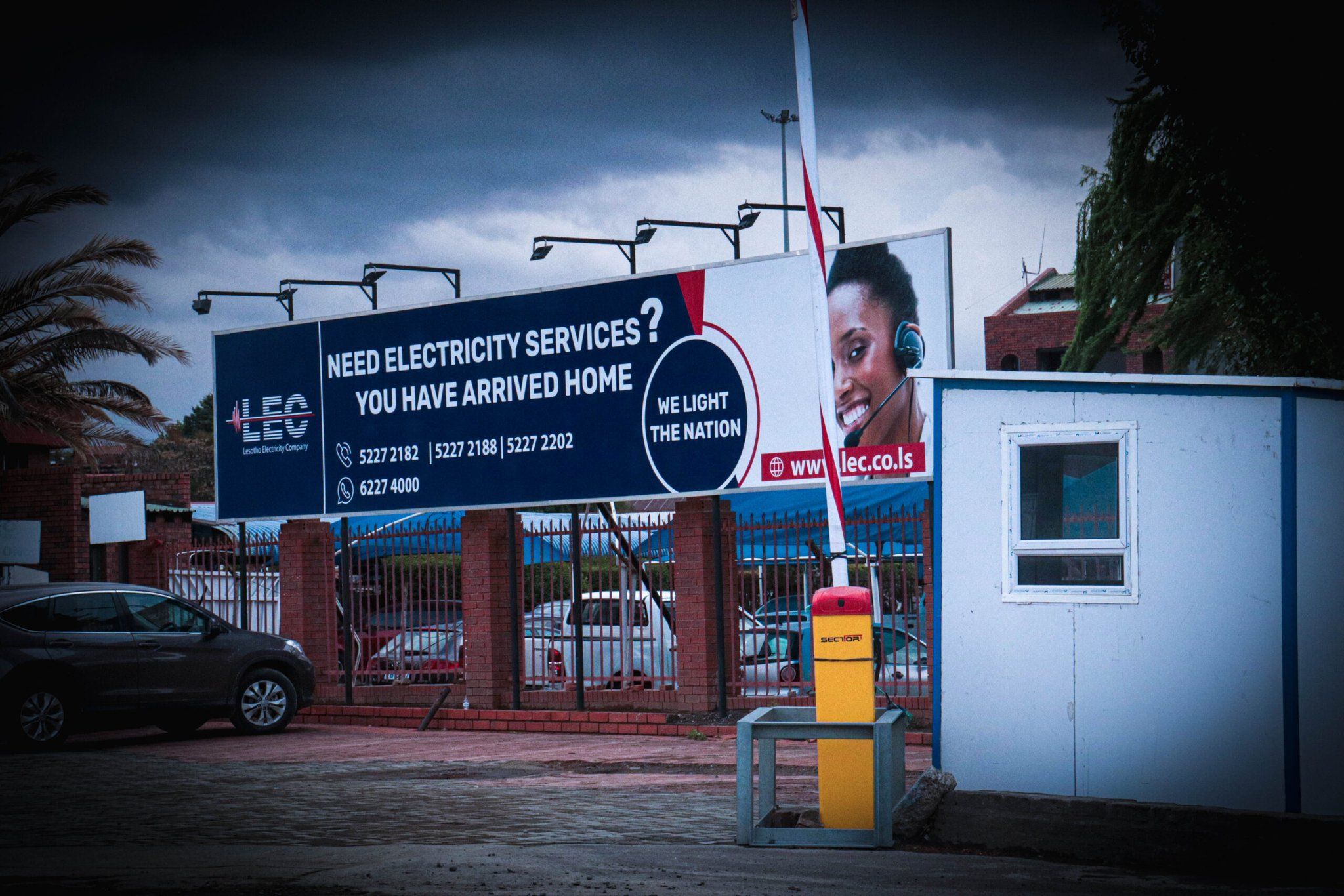
THE prolonged suspension of the Lesotho Electricity Company (LEC) executive management has reached a point where the government must decide what it wants to achieve and bring the matter to a conclusion.
Suspensions are not meant to become indefinite holding arrangements. They are ordinarily a temporary administrative measure intended to allow an employer to investigate allegations and, where necessary, institute disciplinary proceedings without interference from the employees concerned.
But the LEC case has now dragged on for about 18 months since the executive management team was suspended in March 2025.
The government cannot reasonably continue holding executives in limbo over allegations of financial misconduct while failing to complete the disciplinary processes that would either establish wrongdoing or clear them.
This is not an argument that the allegations against the suspended executives should be ignored. On the contrary, allegations involving potentially significant losses at a state-owned utility deserve serious investigation and, where evidence supports it, appropriate disciplinary or criminal action.
Reasonable timeframes
But justice and accountability must operate within reasonable timeframes.
The continued suspension of the executives raises serious questions about the government’s handling of the matter. If there was sufficient evidence to justify suspending an entire 10-member executive management team, there should also have been sufficient urgency to investigate the allegations and determine the appropriate course of action.
Instead, the matter appears to have become stuck in an administrative and legal quagmire.
According to a letter dated 15 May 2026 from the Principal Secretary in the Ministry of Energy and Mining, Tankiso Phapano, to LEC Board chairperson Thabo Khasipe, the company allegedly lost close to M1 billion under the suspended executives. The letter reportedly attributed the alleged losses to outdated policies, weak internal controls and governance failures.
Those are extremely serious allegations. If proven, they could represent a major failure of stewardship at one of Lesotho’s most important public enterprises. LEC provides an essential public service, and its financial health directly affects the country’s ability to provide reliable electricity to households, businesses and industry.
But precisely because the allegations are so serious, they cannot be allowed to remain unresolved indefinitely.
The public deserves to know whether the alleged losses were caused by misconduct, negligence, systemic weaknesses, decisions taken by individuals, failures by the board or a combination of these factors.
What taxpayers should not have to accept is an arrangement in which nobody is held accountable while the government continues to incur costs.
The financial cost of the suspensions is particularly troubling. LEC has reportedly spent more than M20 million paying the salaries and benefits of suspended executives over the past 17 months. That figure does not include acting allowances paid to employees who have assumed their responsibilities.
In other words, taxpayers and electricity consumers are potentially paying twice for some positions: once for executives who remain suspended and again for those performing their duties. That cannot be regarded as sound financial management.
The government has a responsibility to protect public resources, particularly at a time when Lesotho faces severe fiscal pressures and citizens are being asked to accept difficult economic realities.
Every Loti wasted on an unnecessarily prolonged administrative process is money that could have been directed towards improving electricity infrastructure, maintaining the grid, expanding access, paying suppliers or strengthening LEC’s operational capacity.
The irony is difficult to ignore. The same management team is accused of presiding over financial and governance failures that allegedly cost LEC hundreds of millions of maloti, yet the response to those allegations has itself become an expensive exercise.
The government must therefore explain why disciplinary proceedings have taken so long and why only Managing Director Mohlomi Seitlheko has reportedly been subjected to a disciplinary hearing.
According to information available to this publication, Mr Seitlheko was summoned before a disciplinary committee about two or three months ago. However, the proceedings were subsequently halted after the prosecutor, Advocate Salemane Phafane KC, reportedly indicated that he was experiencing health problems.
If that is the reason for the delay, the government and LEC Board should communicate clearly about the way forward.
An individual’s health circumstances should obviously be treated with sensitivity. But an institution as important as LEC cannot be left without a clear process indefinitely.
If the disciplinary proceedings cannot proceed under the current arrangements, alternatives should be considered in accordance with the law.
The same principle applies to the other suspended executives. If they are accused of wrongdoing, they must be given an opportunity to answer the allegations. If the investigations have found no basis for disciplinary action, they should not be left suspended indefinitely.
Two executives, Corporate Secretary Attorney Khotso Nthontho and Head of Finance ‘Makabelo Matsoso, reportedly resigned shortly after the suspensions. The remaining executives include Mr Seitlheko, Head of Corporate Services Moipone Mashale, Head of Strategy and Growth Limpho Mokhesi, Head of Information Technology Sakhele Mapetja, Head of Customer Experience Lebohang Mohasoa, Head of Legal, Risk and Compliance Selebalo Ntepe, Head of Internal Audit Thato Matsoso and Head of Operations Serolo Tikoe.
The fact that such a large portion of the executive management has remained suspended for so long inevitably affects the stability of the institution.
LEC has already faced scrutiny from Parliament’s Public Accounts Committee over financial mismanagement and procurement concerns. The Auditor-General also raised concerns over the utility’s failure to provide supporting documentation during the March 2023 audit, while her 2024 report reportedly found that LEC had failed to account for M568 million.
A forensic audit was subsequently commissioned in 2024 by then Energy Minister Professor Nqosa Mahao amid concerns about financial management at the utility.
These developments demonstrate that the concerns surrounding LEC did not emerge from nowhere. There is a legitimate need for accountability.
Prolonged suspensions don’t achieve accountability
However, accountability is not achieved simply by suspending people.
Accountability means investigating allegations, establishing facts, giving accused persons a fair opportunity to respond and taking appropriate action based on the evidence.
If there was misconduct, those responsible must face the consequences. If there was no misconduct, those affected must be allowed to resume their careers and reputations without being subjected to an indefinite cloud of suspicion.
The government must therefore resist the temptation to allow the LEC matter to become another unresolved administrative saga.
There is also a danger in allowing prolonged suspensions to become politically perceived punishment. The suspended executives have reportedly described the matter as political, while the government has maintained that the suspensions were intended to facilitate investigations into alleged financial irregularities.
The best way to settle that dispute is not through political statements. It is through a transparent, credible and timely process.
The government should set a clear timetable for concluding the investigations and disciplinary proceedings. Where disciplinary hearings are warranted, they should proceed without unnecessary delays. Where criminal conduct is suspected, the relevant law-enforcement agencies should be allowed to act. Where allegations cannot be substantiated, the affected executives should be released from suspension and allowed back into their jobs or move on to other endeavors.
Most importantly, the government must stop allowing taxpayers to carry the financial burden of an open-ended process.
Lesotho’s public institutions cannot afford a culture in which suspension becomes a substitute for discipline.
Close the matter
If the government believes the executives committed serious wrongdoing, it must prove its case through the proper mechanisms. If it cannot, it must have the courage to close the matter and allow these executives to move on with their lives.
The LEC saga has already cost the company millions. Continuing indefinitely will only deepen the financial damage and undermine confidence in the government’s ability to manage public enterprises.
The government must settle the matter, lawfully and fairly, and allow both the LEC and the suspended executives to move forward.
Lesotho needs an electricity utility focused on keeping the lights on, improving its finances and delivering reliable service—not one paralysed by an 18-month-old disciplinary process that appears to have no clear end in sight. Enough is enough. This issue deserves closure to allow everyone to move on.
