
THE National University of Lesotho (NUL) should be the country’s foremost centre of intellectual excellence, innovation and independent thought.
Instead, it has once again found itself in the headlines for all the wrong reasons.
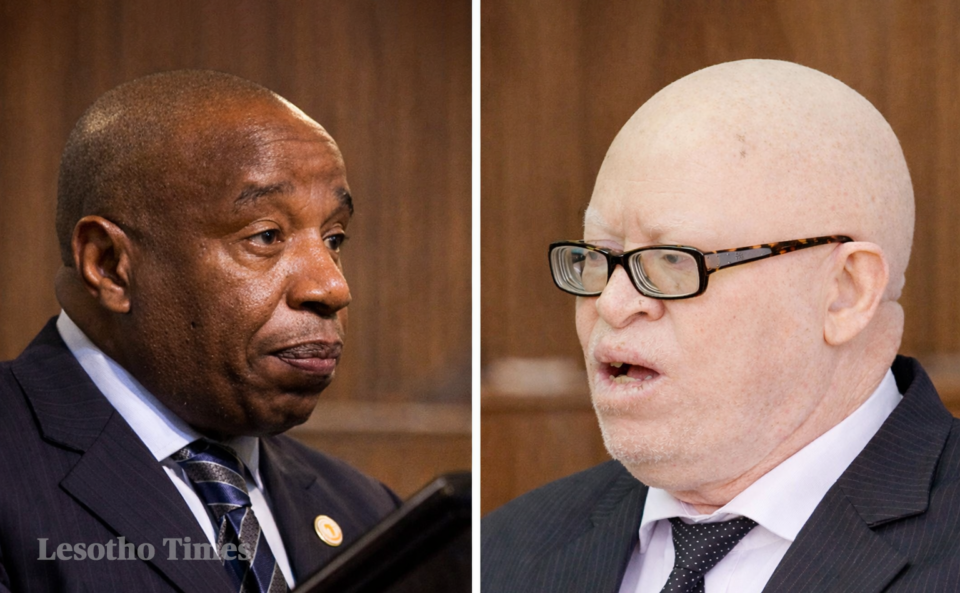
The decision by the NUL Council to appoint Professor Motlatsi Molati as Acting Vice-Chancellor following the expiry of Professor Isaac Olusola Fajana’s five-year contract may have ensured that there is someone at the helm of the institution. However, it has done little to resolve a leadership crisis that has dragged on for months and now threatens to undermine the credibility of Lesotho’s oldest and most important institution of higher learning.
The appointment comes barely days after the now dismissed Pro-Vice-Chancellor Professor Kananelo Mosito was dramatically blocked from entering the university campus after he attempted to assume the office of Acting Vice-Chancellor. Prof Mosito maintains that a Court of Appeal order automatically elevated him to the position once Prof Fajana’s contract expired. The Council strongly disagrees, insisting that the power to appoint an Acting Vice-Chancellor rests exclusively with it.
As matters stand, the university now has two competing legal and governance narratives, each backed by legal opinion and each claiming legitimacy. This is unhealthy for any institution. It is particularly damaging for a university whose reputation depends on certainty, stability and respect for the rule of law.
Universities are unlike ordinary government departments or commercial enterprises. Their currency is credibility. Students, academics, development partners, research institutions and employers expect universities to operate within predictable governance frameworks. Every prolonged leadership dispute chips away at that confidence.
For students, the uncertainty is especially worrying. Thousands of young Basotho have invested their hopes and futures in NUL. Their primary concern should be completing their studies in a stable academic environment, not wondering who legitimately occupies the Vice-Chancellor’s office. Staff members equally deserve clarity about whom they report to and who has lawful authority to make administrative and financial decisions.
The dispute has now evolved beyond a disagreement between individuals. It has become a test of institutional governance.
The Court of Appeal’s interim order, as interpreted by Prof Mosito, appears to suggest that the Pro-Vice-Chancellor assumes the functions of Vice-Chancellor automatically when a vacancy arises. The NUL Council, on the other hand, argues that the judgment did not appoint any named individual and that Prof Mosito’s suspension remains valid until set aside through proper legal processes. Those competing interpretations are precisely why institutions should avoid governing through public statements and competing press releases.
The proper forum for resolving legal disagreements is the courtroom, not university gates.
Equally concerning is the growing perception that NUL’s governance structures are increasingly consumed by litigation. Court cases have become almost routine. Recruitment disputes, suspensions, appeals, labour matters and governance disagreements now seem to dominate discussions about the university more than teaching, research or academic innovation. This is not the image that Lesotho’s flagship university should project.
The Council’s latest appointments of Professor Motlatsi Molati as Acting Vice-Chancellor and Associate Professor Regina Thetsane as Acting Pro-Vice-Chancellor may provide temporary administrative continuity. But they do not eliminate the underlying legal disputes. If anything, they could become subjects of further litigation should the courts ultimately interpret the law differently.
Even more troubling is the broader institutional damage. Universities thrive on collegiality, dialogue and mutual respect. Persistent public battles between senior leaders create divisions that inevitably filter through faculties, departments and administrative offices. Staff become uncertain. Decision-making slows. Academic priorities take a back seat to legal strategy.
NUL has experienced governance turbulence before. Each episode has left scars that take years to heal. The institution cannot continue lurching from one leadership crisis to another without suffering lasting reputational harm. There is also a wider national interest at stake.
NUL produces much of Lesotho’s professional workforce, including teachers, lawyers, engineers, health professionals, public servants and researchers. A weakened university ultimately weakens the country’s human capital. Every month spent fighting leadership battles is a month diverted from improving research output, expanding postgraduate programmes, modernising infrastructure and strengthening academic quality.
Both the Council and Prof Mosito insist that they are defending the rule of law. If that is indeed the case, then both sides must also demonstrate restraint while allowing the courts to pronounce themselves conclusively on the outstanding legal questions.
The Council should continue to communicate transparently with staff, students and the public, explaining not only what decisions it is making but also the legal basis for those decisions. Equally, Prof Mosito should pursue his remedies through the courts rather than allowing institutional confrontations to deepen public confusion.
Ultimately, this saga exposes the need to review aspects of NUL’s governance framework. Where legislation or statutes permit conflicting interpretations about succession, acting appointments or the relationship between disciplinary action and statutory office, Parliament and university stakeholders should consider clarifying those provisions. Good laws minimise ambiguity; they should not become fertile ground for recurring institutional crises. Leadership transitions should never become constitutional crises.
For now, Prof Molati assumes office at one of the most difficult moments in NUL’s recent history. His immediate challenge extends far beyond routine administration. He must reassure staff, students and partners that the university remains functional, focused and committed to its academic mission despite the ongoing legal contest.
The university community deserves certainty. The nation deserves a stable national university. And the law deserves to speak with one clear voice.
The sooner this dispute reaches a final legal resolution, the better it will be for NUL, its students and the nation as a whole.

Govt must avert judiciary crisis