
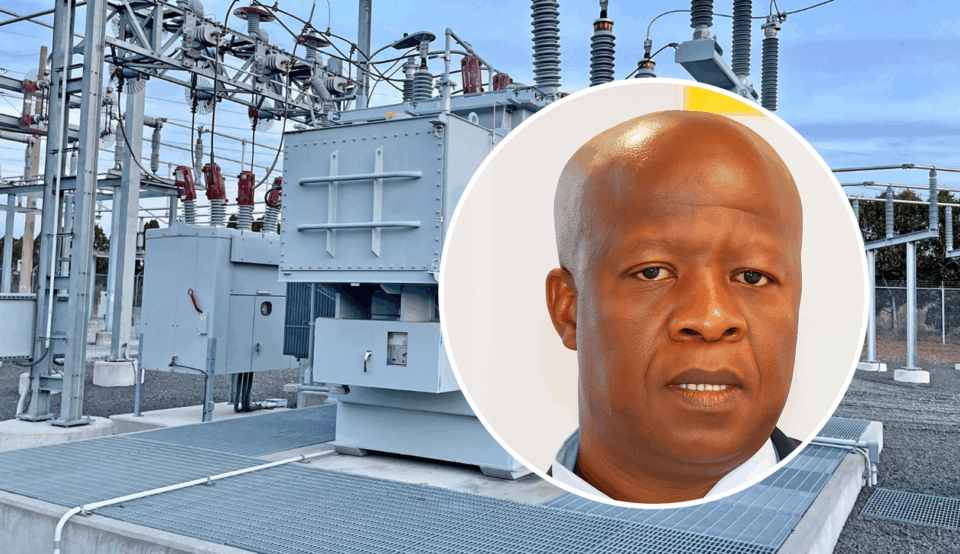
Moorosi Tsiane
THE controversy surrounding the M55 million Ha-Tikoe Substation upgrade has taken a new twist, with project authorities dismissing allegations of procurement irregularities and insisting the award of the contract to Chinese firm Jiangsu Etern was lawful, transparent and fully approved by the World Bank.
The Lesotho Renewable Energy and Electricity Access Project (LREEAP) says every stage of the procurement process complied with World Bank procurement rules and government procedures, rejecting claims that the tender was manipulated, bidders were kept in the dark or that Ministry of Energy Principal Secretary Tankiso Phapano lacked the authority to sign the contract.
The M55,065,019.19 contract has been mired in controversy amid allegations that Mr Phapano awarded the project despite objections from the World Bank, which is financing the project.
The dispute intensified after suspended Lesotho Electricity Company (LEC) Managing Director Mohlomi Seitlheko claimed Mr Phapano had no legal authority to issue the award letter, arguing that only he or the LREEAP-designated project manager could formally award the tender.
Mr Seitlheko has also maintained that both the World Bank and the project’s Steering Committee had directed that implementation of the Ha-Tikoe project be halted until the delayed Ha Belo Substation project was completed.
The Ha-Tikoe project is intended to increase the substation’s capacity from 20MVA to 40MVA to improve electricity supply to industrial areas in Tikoe and surrounding communities, including parts of Thetsane and Semphethenyane.
The procurement process began in 2023 when the Ministry of Energy first invited bids. Companies that submitted bids included LSP Construction, RT Tshabalala Electrical & K Technical Solutions, MM Building & Maintenance Construction and Sky Group Joint Venture, Ikageng Electrical Contractors and E Square Engineering, and Pasgro & Machine Engineering and WSW Tech (Lesotho) Pty Ltd.
The tender was cancelled and re-advertised in 2024.
The second bidding round attracted additional companies, including Tiro Engineering, KR Holdings, Lead-On Technologies, Amulet Group and Jiangsu Etern, which eventually secured the contract.
However, unsuccessful bidders have continued to question the transparency of the process, with some alleging they were never formally informed of the outcome despite more than 18 months having elapsed since the contract was awarded.
Section 74(1) of the Public Procurement Act 2023 requires procuring entities to notify bidders of their right to request explanations or debriefings during the statutory 10-day cooling-off period following the announcement of tender results. The provision allows unsuccessful bidders an opportunity to challenge procurement decisions before the relevant tribunal.
Some procurement experts argue that failure to notify bidders effectively deprives them of their statutory right to seek a review of the procurement process.
But during a joint briefing with LEC Stakeholder Relations Manager, Makhetha Motšoari, and LREEAP Acting Procurement Manager, Lelatsa Makhabane, rejected all allegations of wrongdoing.
Mr Makhabane said the World Bank never objected to Jiangsu Etern being selected as the successful bidder, but merely instructed the project to delay signing the contract.
“We have weekly meetings with the World Bank and they eventually, in November 2025, gave us the go-ahead to continue with the signing of the contract. It should be clear that there was never an issue with who was awarded the tender. Their concern was only that we should delay signing the contract for reasons they communicated to us.
“Once we received the approval in November 2025, we commenced negotiations with the company that had already been awarded the tender,” he said.
Mr Makhabane also dismissed claims that bidders were not informed of the outcome of the re-tendering process.
“The first tender was cancelled and the tender documents clearly stated that the procuring entity reserved the right to cancel the process without giving reasons.
“Following the re-tender, all participating companies were notified of the intention to award the contract on September 19, 2024. We received objections from LSP Construction and RT Tshabalala, and both were afforded an opportunity to present their grievances. Their concerns were addressed and the matter was concluded,” he said.
He further defended Mr Phapano’s authority to sign the contract, saying the project falls under the Department of Energy rather than LEC.
“LEC’s role is to provide technical support through its engineers and specialists. These are government projects funded through the World Bank, which deals directly with governments.
“It is therefore appropriate for the Principal Secretary, as the Ministry’s chief accounting officer, to sign the contracts. LEC cannot do so because it is not accountable to the World Bank,” he said.
Questions have also been raised over Jiangsu Etern’s appointment despite several competing firms submitting significantly lower bids.
Documents seen by this publication show that LSP Construction bid M31.7 million, Tiro Engineering M39.3 million, KR Holdings M41.3 million, Lead-On Technologies M48.1 million, RT Tshabalala M49.2 million, Amulet Group M55.5 million and B&G M57.2 million.
The figures have fuelled questions over why Jiangsu Etern, a company with no known previous LEC project record, was selected over lower-priced bidders with local experience.
However, Mr Makhabane said World Bank-funded contracts are not awarded on price alone or local preference.
“The World Bank has very clear procurement guidelines. Nationality is not a consideration, and neither is price alone.
“The successful bidder was the one that achieved the highest overall score after evaluation of administrative compliance, technical compliance, financial compliance and all other requirements,” he said.
