
Mohloai Mpesi
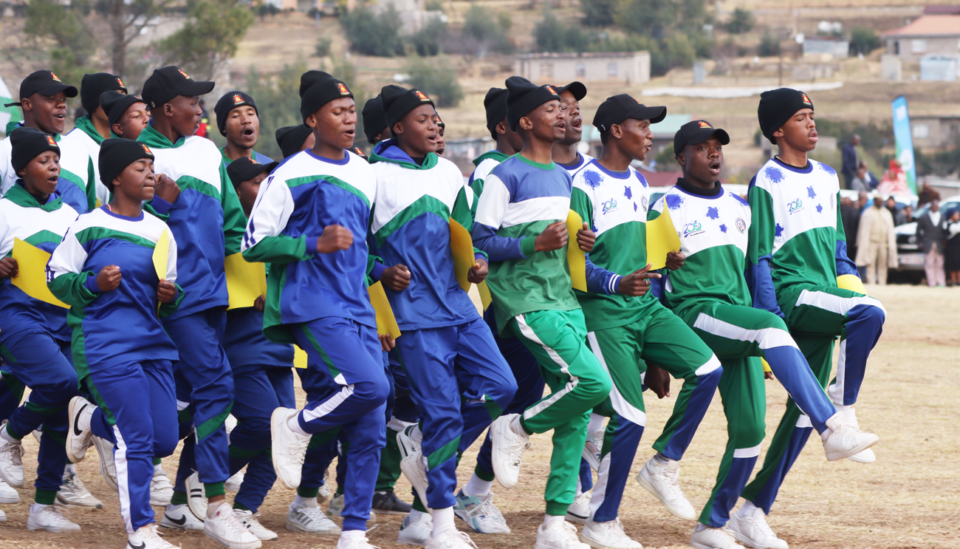
THE Lesotho Defence Force (LDF) Youth Development Programme, popularly known as the Bootcamp, is operating without a legal framework and should be regularised through legislation.
This emerged after the Ministry of Defence was directed by Parliament’s Portfolio Committee on Prime Minister’s Ministries to draft the necessary legal instruments to formalise the programme.
Committee chairperson, Moshe Makotoko, told this publication yesterday that the ministry had been sent back to prepare legal documents that would legalise the initiative.
The LDF Bootcamp was initially introduced as a rehabilitation programme targeting youths from Maseru’s outskirts, including Naleli, Koalabata, Khubetsoana and Mabote, who had become involved in criminal activities.
The youths, commonly referred to as manomoro (gangsters), were linked to offences such as theft, housebreaking, stabbings and other violent crimes that threatened their communities.
Over time, the programme expanded beyond rehabilitation and evolved into a broader initiative aimed at promoting discipline, patriotism, leadership and positive behavioural change among young people.
The Bootcamp now attracts hundreds of participants from Lesotho and neighbouring South Africa. The most recent, 13th edition, held between 14 December 2025 and 2 January 2026, attracted 377 participants who each paid M2500.
The participation fees alone generated M942 500, excluding contributions from corporate sponsors.
Mr Makotoko said the Parliament became concerned that the programme was operating without a recognised legal framework while collecting significant amounts of money.
“The ministry was sent back because the principal secretary was supposed to draft a legal document in order to legalise the Bootcamp because the Bootcamp is not recognised lawfully. It is not registered,” Mr Makotoko said.
“Our meeting was based on the Bootcamp, where we directed the ministry to go back and draft those documents, but it happened thereafter that the ministry’s building got burnt.”
He said the committee intends to follow up on the matter and inspect the ministry’s offices following the fire incident.
“We did not go there immediately to see what got burnt. I have added the place to a list of sites that we have to visit, as well as a follow-up on those that we visited last year. We are also waiting to hear a report on the burnt offices,” he said.
The directive to legalise the programme came shortly before a fire gutted part of the Ministry of Defence headquarters last month.
This publication understands that parliamentary concerns also extend to the financing of the programme.
Economic Cluster chairperson, Sello Hakane, criticised the LDF for using contingency funds to finance the Bootcamp while failing to adequately account for revenue generated through participant fees and sponsorships.
Members of Parliament believe that if properly managed, revenue from participation fees and corporate sponsorships should be sufficient to sustain the programme without reliance on army funds.
Mr Hakane has recommended that the Portfolio Committee responsible for the LDF summon the Ministry of Defence to account for the financial proceeds generated by the programme.
In its report issued last month, Mr Hakane’s committee noted that the ministry had not budgeted for certain projects during the 2025/26 financial year but later sought additional funding.
“The Ministry did not budget for these projects in the current 2025/26 financial year but requested an additional M4,364,454 to complete minor works worth M1,757,775 and M2,606,679 for the Youth Programme and Makoanyane Hospital respectively.
“The revenue collected from the Youth Programme is not reflected in the Consolidated Fund and does not appear in reporting documents submitted to Parliament. The Committee had anticipated that the excess funds would address infrastructure crises, equipment shortages, maintenance, water, electricity and protective clothing needs for LDF personnel stationed at bases,” the report states.
Some reports have suggested that the fire at the ministry was deliberately started to conceal records relating to Bootcamp revenues.
However, in a statement issued on 17 May, the LDF Public Relations Unit attributed the fire to an electrical fault.
“Preliminary reports point out that the source of fire is caused by electricity. Investigations have been conducted. A full report will be made once the investigations have been completed,” the statement said.
Leader of Opposition in Parliament, Mathibeli Mokhothu, has also questioned the circumstances surrounding the fire and called for greater accountability.
“They (government) did not respond when I asked in Parliament what had caused the fire. They only said they are conducting investigations and they would respond after that, but Parliament adjourned without them providing a response.
“I asked the question because in a democratic dispensation, the government is the property of the public, and when things happen to the property of the nation, there is supposed to be a report of accountability.
“They probably burned the building because they are hiding certain things and running away from accountability,” Mr Mokhothu said.
Mr Mokhothu further argued that it was unlawful for the programme to collect and utilise funds outside established government financial systems.
“What they are doing actually is illegal because the collected money is supposed to become a revenue stream. At least a special account should have been created for money collected through the Bootcamp because the law states that all government money should be deposited into an account designated for revenue collection.
“In the first place, the fact that they are collecting revenue for themselves and using it willy-nilly without authorisation by the Ministry of Finance and Development Planning and without Parliament’s appropriation is unlawful.
“It is spending collected government money without reporting how much has been collected,” he said.
He questioned how the funds were being accounted for.
“If it is not appropriated by Parliament, to which item is the money allocated? Also, to whom do they account for the utilisation of the money? It does not appear in the Auditor-General’s audit reports.”
He added: “According to the Constitution, no money shall be spent without being authorised by Parliament.
“You cannot spend government money without being allocated funds by Parliament. You cannot pretend to be collecting revenue without authorisation through a special account.”
Mr Mokhothu said proper financial oversight mechanisms were necessary.
“Even when using such funds, permission should first be obtained so that the money can be monitored. That special account should be auditable by the Auditor-General.
“Here, the LDF has effectively created a government within a government, and what they do becomes difficult to monitor,” he said.
Efforts to obtain comment from the Ministry of Defence and the LDF were unsuccessful.
LDF spokesperson, Colonel Sakeng Lekola, could not be reached on his mobile phone while his substitute, Lieutenant Kelebone Mothibi, did not respond to calls. The Defence Ministry’s Permanent Secretary, Mpopo Tšoele, was also unavailable for comment.
