
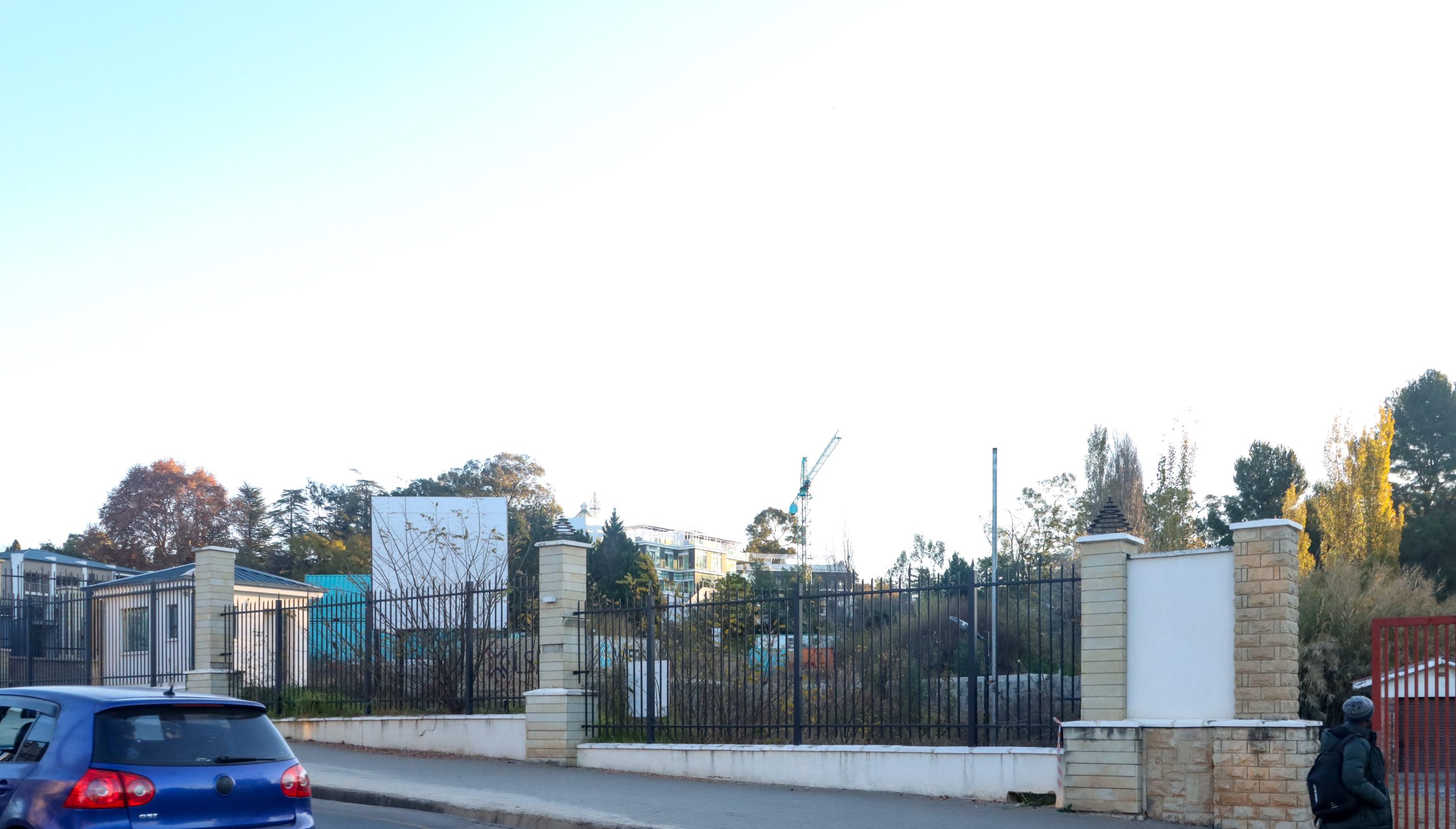
—As the gross incompetence of the BDS department leads to incessant delays and budget overruns
Mohloai Mpesi / Mohalenyane Phakela
THE protracted construction of the new Royal Palace could balloon to over half a billion Maloti due to the gross incompetence and mismanagement by officials from the Ministry of Public Works and Transport, who have overseen the project since its inception in 2011, but failed to oversee its successful completion.
The escalating costs are primarily attributed to the ministry’s Building Design Services (BDS) department, which changed architects three times, resulting in frequent redesigns while work was already underway. These changes forced the contractor, LSP Construction, to demolish and alter already completed structures.
BDS also failed to pay the contractor, consultants and other service providers on time, in violation of contractual terms, thereby accruing millions of maloti in interest.
While a comprehensive audit by the Office of the Auditor-General (OAG) has revealed a litany of administrative, financial, and procedural failures, indicating that costs had skyrocketed from the initial M136.7 million to M355 million, the Lesotho Times has established that this new residence for Their Majesties is likely to cost even more.
Chronology of events
In November 2008, the government engaged a South African firm, Palace Architects, to design the new Royal Palace. In August 2011, LSP Construction was awarded the tender to construct the building. Lethola Cost Associates were appointed as Project Quantity Surveyor, Aurecon Lesotho as Civil and Structural Design Engineer, and Dylec Consulting as Mechanical and Electrical Engineer. The total cost was pegged at M136.7 million.
A source close to the matter told this publication that construction was scheduled for completion within 18 months – by May 2013. However, in April 2013, BDS suspended work following the termination of Palace Architects’ contract.
“At that point, LSP had completed the building shell and was left with roofing and internal fittings. However, they couldn’t proceed because Palace Architects had not issued instructions for the interior works,” the source said.
BDS halted the project until Makeka Design Lab (MDL) was appointed in October 2014 to replace Palace Architects. Construction only resumed on 19 October 2016.
“This was after MDL changed the original Palace Architects’ plan – making the structure bigger and adding new features. For example, when the initial plan was drawn, the royal children – Princesses Senate and Maseeiso, and Prince Lerotholi – were very young. MDL redesigned their rooms to be bigger.”
Princesses Senate and Maseeiso are now 23 and 20, respectively, while Prince Lerotholi is 18.
The source added: “The porte cochère (main entrance) had to be demolished and replaced with a longer, reinforced structure. Their Majesties’ bedroom, offices, and kitchen were expanded. Another room on the top floor was modified to appear suspended in the air. The chapel, which was complete, was deemed too small by MDL. They demanded a new one four times the size and double-storeyed, which had to be constructed on a new site.
“The iconic ‘Basotho hat’ section of the building was initially roofed with metal sheeting, but MDL replaced it with a glass roof. Since glass is heavier, the structure had to be reinforced, further increasing costs.
“You must understand that the palace is built on piles due to an underground water table. A specialist was brought in from outside the country to conduct piling—drilling 12 metres deep and filling with cement. So, every design change required extending the piling, incurring more expense.
“Most materials were sourced from Belgium and Cape Town. These are not off-the-shelf materials. Every modification necessitated additional, costly imports.”
At this stage, the cost had reached about M358 million.
In July 2018, BDS terminated MDL’s contract and appointed in-house architect Peter Ramalitse, who again amended MDL’s plan to include additional features.
BDS also appointed Nyolohelo Mohale as principal (clerk of works) in September 2018, which altered the contractor’s mandate yet again.
“Every architect wanted to leave their signature on the building, leading to constant design changes. But construction could not resume until a new memorandum of agreement was signed with LSP in May 2021.”
By then, the cost had escalated to approximately M411 million.
“Nonetheless, Mr Ramalitse had not issued directives for his changes. LSP only received a recommencement letter in April last year—the same month they were told to suspend work due to the commencement of the audit,” the source said.
Audit report
Auditor General, ‘Mathabo Makenete’s report, tabled before Parliament last Friday by Minister of Public Works and Transport Matjato Moteane, paints a grim picture of a project plagued by cost overruns, overpayments, contract irregularities, and design flaws—more than 13 years after its inception.
The audit findings, based on evidence collected between 2007 and 2024, raise serious concerns about the management of public funds, procurement practices, and project governance, stating that consultants and the main contractor had received M74 million in “unjustified payments”.
According to Ms Makenete, M32,302,028.37 was overpaid to five consultants, while M42,197,693.14 was overpaid to the contractor.
Palace Architects received M3,641,492.66 in retrospective payments for completed design stages. Makeka Design Lab was overpaid a total of M2,883,685.58, comprising M1,293,906.88 due to an overestimation of professional fees for construction supervision, and M1,589,778.70 for deviating from contract terms by charging for full services instead of partial services.
Lethola Cost Associates also received several irregular payments. The firm was paid M78,643.65 for failing to follow procurement regulations on lump sum fixed contracts. An overpayment of M2,546,035.93 was made to the same firm for using an incorrect band of the Tariff of Professional Fees (TOPF-SACQSP) in fee calculations. Furthermore, the company was overpaid M13,576,361.91 for misapplying the variation clause of the TOPF and M625,122.92 for wrongly applying a clause related to multiple procurement contracts.
The report also states that Aurecon and Dyelec were paid a combined total of M1,633,823.99 without any contractual basis. Aurecon received M1,053,772.06 due to irregular computation of professional fees, while Dyelec was paid M580,051.93 for re-design works not stipulated in the contract. These payments were based on methodologies outside of the signed agreements and inconsistent with professional guidelines, making them unsupported, the report states.
The Auditor-General further reports that a total of M3,729,606.38 was paid to two consultants and the contractor without any documented evidence of work progress. Dyelec was paid M1,210,508.45 despite no cumulative progress in works supervision, and Aurecon was paid M186,684.30 without any reported progress during the construction phase. Additionally, the works contractor, LSP Construction, received M2,332,413.63 for work allegedly completed while the project had been suspended.
Delays in consultant payments also resulted in interest charges amounting to M1,039,119.22. Palace Architects received M273,872.60 in interest, while Aurecon was paid M765,246.62. The audit also found that contract prices for several consultants were revised without following the contractual requirements for price revisions. These revisions ranged from 36 percent to an astonishing 2,994 percent, even though the overall value of the work only increased by 160 percent. Such irregular increases, which far exceeded acceptable procurement limits, led to the failure to complete the original project scope.
The report reveals that Palace Architects saw a 170 percent increase in contract payments. MDL’s payments rose by 36 percent. Lethola Cost Associates experienced a staggering increase of 2,994 percent. Aurecon (Civil/Structural) saw an 840 percent increase, Dyelec’s payments rose by 225 percent, and the works contractor, LSP Construction, saw its payments increase by 160 percent.
It also states that MDL, initially hired as the project’s interior designer but later appointed as the project architect without following due procurement process. This decision resulted in a financial loss of M3,683,402.15. The Auditor-General established that BDS had requested a waiver to directly appoint MDL as project architect, a move that disregarded procurement regulations. MDL had not been evaluated for architectural services, and its new role was not directly relevant to the revised scope. Moreover, had a competitive process been followed, the government would have paid only M1,705,182.26, based on the South African Council for Architectural Professionals (SACAP) tariff guidelines—M3,683,402.15 less than what was actually paid.
Physical inspections of the palace conducted between 16 and 31 October 2024 revealed significant defects. These included damaged timber flooring, damp walls, ceilings and floors, cracked walls, improperly plumbed tiling, cracked glass panes on curtain walls and roofscape, voids in plaster work, efflorescence, cracked tiles, damaged ceiling boards, peeling paint, and leaking drainpipes. The Auditor-General emphasized that these issues need to be addressed by LSP Construction to prevent further deterioration.
The report attributes a major portion of the project’s cost escalation to the failure by BDS to freeze architectural designs and define clear project specifications. This led to frequent design changes by multiple architects, resulting in the project cost ballooning drastically.
Illustration of the total payments:
| Contractor/Consultant | Original Contract Value (M) | Total Amount Paid (M) | Difference (M) | % Increase |
| Palace Architects | 3,056,925.13 | 8,243,603.67 | 5,186,678.54 | 170% |
| Makeka Design Lab | 6,142,986.23 | 8,382,606.64 | 2,239,620.41 | 36% |
| Lethola Cost Associates | 826,160.47 | 25,563,479.95 | 24,737,319.48 | 2,994% |
| Aurecon | 1,482,312.00 | 13,929,581.61 | 12,447,269.61 | 840% |
| Dyelec (EM+PA/COW) | 3,508,920.00 | 11,415,551.03 | 7,906,631.03 | 225% |
| LSP Construction | 136,770,300.00 | 354,983,809.01 | 218,213,509.01 | 160% |
Outstanding works
The total cost of the Royal Palace is now projected to exceed M500 million due to incomplete works and necessary repairs.
The four-storey palace remains unfinished. LSP is expected to repair all the damages cited in the audit. A new double-storey chapel still needs to be constructed. Furniture and fittings, initially budgeted for in 2011, must be purchased and installed at current, significantly higher costs. Landscaping has not yet been designed or budgeted for.
Despite the work being suspended, the government continues to bear overhead costs, as the contractor remains on site. These include expenses for plant and machinery, security, electricity, and office space which are covered in the original Bill of Quantities from 2011.
M500 million
Deputy Auditor-General, Paul Letlela, confirmed to the Lesotho Times yesterday that our sources could be correct in estimating that the palace project could now cost the taxpayer more than M500 million.
“It is already heading to over half a billion. If we are at around M400 million but the palace is not finished, that tells you even more expenses are coming,” Mr Letlela said on the sidelines of a press conference he convened to discuss the palace project yesterday.
“The remedial works alone are going to be very costly. During our site inspection, we observed cracked walls and windows, and severe dampness (air fluorescence) within the structure. Engineers from Uganda assessed it and warned that some walls may need to be rebuilt from scratch. That is why we say it could surpass half a billion.
“If these defects are not addressed, the structure could collapse. It poses a real danger to His Majesty and the royal family. The ceilings are leaking, glass and walls are cracked. It is simply not habitable.”
He added that they recommended a professional structural integrity test to assess the building’s safety and advise on the way forward.
Minister Moteane
The Minister was reluctant to comment, saying he would do so only after Parliament had debated the report.
“Please allow the owners of the report, being Parliament, to deliberate and make recommendations. It would be premature for me to comment ahead of them,” Mr Moteane said.
