
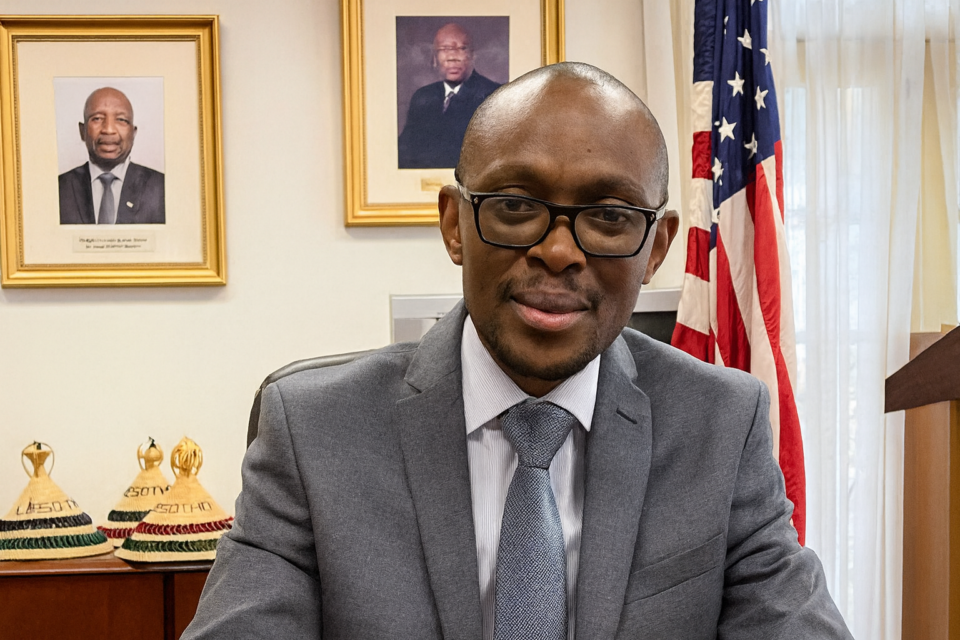
Moorosi Tsiane
ATTORNEY Tumisang Mosotho and human rights activist Tsikoane Peshoane have taken their fight to overturn the Independent Electoral Commission (IEC) recruitment process to the Court of Appeal, arguing that the Constitutional Court effectively impeded their right to a fair trial.
The duo filed their notice of appeal on Tuesday, after the Constitutional Court dismissed their constitutional application challenging the IEC’s recruitment of new commissioners last Friday.
They are primarily contesting the court’s refusal to order the IEC to provide the full compliance records of all 45 registered political parties—information they say is crucial in demonstrating alleged irregularities in the recruitment process.
According to Messrs Mosotho and Peshoane, without access to these records, the court deprived them of the evidence necessary to substantiate their case, infringing on their constitutional right to a fair and comprehensive hearing.
The pair maintain that the IEC must answer whether political parties were properly consulted and whether due procedures were followed in appointing commissioners. They argue that access to the compliance record is essential to prove or disprove the level of consultation and adherence to statutory requirements.
Messrs Mosotho and Tsikoane had challenged the recruitment process in the Constitutional Court, insisting they were wrongly disqualified and that the entire recruitment process was constitutionally flawed.
Mr Mosotho was disqualified on the grounds that he still holds public office, while Mr Tsikoane did not advance past the interview stage.
Their constitutional application was argued by Attorney Monaheng Rasekoai before a panel comprising Chief Justice Sakoane Sakoane and Justices Realeboha Mathaba and Itumeleng Shale last week.
Mr Rasekoai highlighted that Mr Peshoane, who was interviewed, had not received feedback on his performance. He insisted that the recruitment exercise was riddled with constitutional defects and questioned the “unusual procurement” of the consulting firm that managed the process. He asked the court to scrutinise the constitutionality and correctness of the procedures used to determine commissioner appointments.
Central to their case has been whether an active public servant, as defined under Section 154(3) of the Constitution of Lesotho, is eligible to compete for consideration as an IEC commissioner. They argued that it was unlawful for WorkPlace Solutions and the Secretariat of the Forum of Political Parties to disqualify Mr Mosotho, currently Lesotho’s Ambassador to the United States, on the basis that he holds public office.
However, Justices Sakoane, Mathaba, and Shale dismissed the case last Friday, with full reasons to follow in due course.
Messrs Mosotho and Peshoane moved swiftly to appeal, concerned that the recruitment process could proceed at their expense. Their pending appeal now has the legal effect of suspending the appointment of the new IEC commissioners. The Court of Appeal is expected to hear the case in April next year, unless a special sitting is convened beforehand.
Attorney Qhalehang Letsika, representing WorkPlace Solutions and the Forum of Political Parties, has yet to file papers opposing the appeal.
