
Kabelo Masoabi
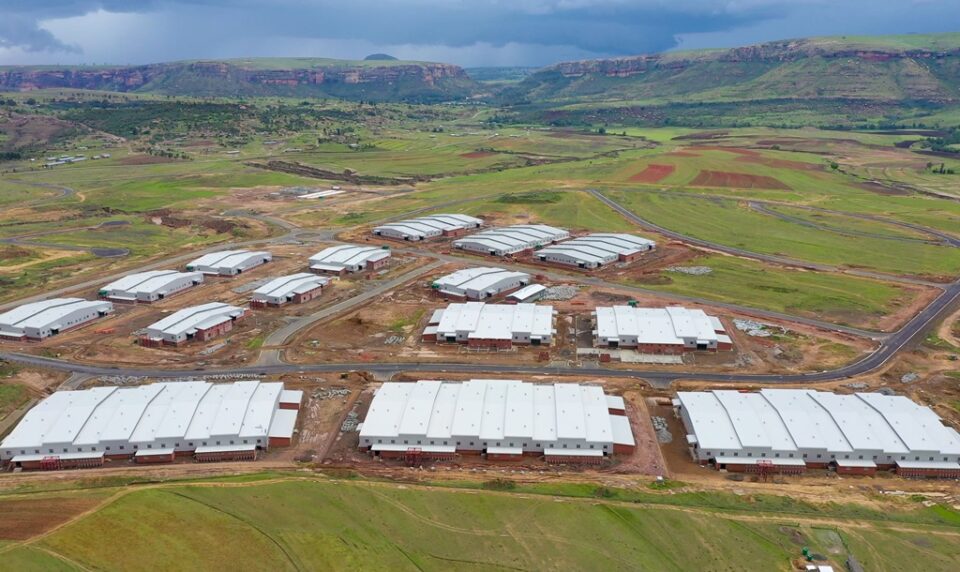
FOR years, the unfinished industrial buildings at Ha Belo in Botha-Bothe, together with the incomplete electricity infrastructure needed to power them, stood as symbols of unfulfilled promises, stalled investment and thousands of jobs put on hold.
The delays in completing the 16 factories left many residents struggling financially. Some had taken out loans to build rental accommodation, anticipating an influx of factory workers, only to struggle with repayments as their properties remained largely unoccupied.
Others had hoped to secure jobs at the factories but were left uncertain about their prospects as the project stalled for about four years. Speculation that some of the facilities had been sold further fuelled concerns about the future of the development.
Now, with the long-delayed electrification project reportedly complete, hopes are rising that the industrial estate could finally become operational, bringing jobs and much-needed economic activity to the district.
The Lesotho National Development Corporation (LNDC) started construction of the M800 million Ha Belo Industrial Estate in Botha-Bothe in 2016. The 16 factory shells were completed in April last year, but their operationalisation was held back by delays in constructing the Ha Belo 33kV substation and associated power lines.
The Ministry of Energy had awarded Phaks JV the contract on 18 August 2021 to construct the Ha Belo 33/11kV substation and 33kV line (Project LS-LEC-190007-CW), with an 18-month completion timeframe. Work began in November 2021 and was expected to be completed by April 2023, at an initial cost of M86.6 million.
However, the project cost later escalated to M121,577,004.21, yet the work remained incomplete.
The project comprised three main components: installing a transmission line from Ha Mopeli to Ha Belo, installing another from Hlotse to Ha Belo, and constructing a substation at the industrial estate.
The electrification project forms part of the World Bank-funded Lesotho Renewable Energy and Energy Access Project (LREEAP), which seeks to expand electricity access in peri-urban and rural areas to stimulate economic growth. It also aims to establish a sustainable framework for rural electrification through mini-grids in remote communities.
But the project became mired in allegations of corruption and financial mismanagement, with funds reportedly siphoned off while little work was completed.
In June 2025, the government refunded M22 million to the World Bank after failing to account for funds intended for the Ha Belo substation.
The Ministry of Energy’s Principal Secretary, Tankiso Phapano, has since distanced himself from the scandal.
In March this year, Mr Phapano explained that the contract had been signed in August 2021 and work began in November of the same year. He assumed office as PS in January 2024, long after the contract had been awarded and funds managed. He said he was briefed about the situation during his first week in office.
His predecessor, Themba Sopeng, was charged in January 2025 with corruption, embezzlement and money laundering in connection with the project.
The Directorate on Corruption and Economic Offences (DCEO) accused Mr Sopeng of unlawfully and intentionally engaging in corrupt practices in June 2021 by abusing his position as chief accounting officer to facilitate the award of the tender to Phaks JV without following proper procurement procedures.
Mr Sopeng was charged alongside Binare Ramochele, Mookho Pule, ‘Mathapelo Silase, Neo Lekhotla, Motsekuoa Phalole, Teboho Mokhethi, Makhabane Leluma, Mojaki Lesenyeho and other representatives of Phaks JV, who allegedly played various criminal roles in the project.
In June 2025, Prime Minister Sam Matekane announced that a further M50 million would be needed to complete the project.
The government subsequently engaged Actom (Pty) Ltd, which had initially been subcontracted by Phaks JV as the project’s equipment manufacturer, to take over the outstanding work.
According to a copy of Actom’s contract seen by Lesotho Times, the Ministry of Energy entered into an agreement worth M49,720,215.42 with the company on 20 September 2025. The contract was signed by Mr Phapano.
In a statement released on 8 October 2025, the ministry blamed the cost overruns on mismanagement and poor administration.
The project is now reportedly complete, with Mr Matekane expected to lead its official handover and commissioning tomorrow.
The renewed progress has rekindled hopes that the long-delayed industrial investment could finally deliver on its promise of creating jobs, stimulating business activity and reviving the district’s economy.
Speaking during a Ministry of Energy and Mining tour of the facility earlier this week, Botha-Bothe District Administrator, Tšepa Chaba, said the opening of the factories would provide much-needed relief to residents who had invested in rental accommodation. It would also create business opportunities for shops, transport operators and other service providers.
“We have hope that investors will be available to occupy these factories. We look forward to seeing not less than 15,000 people employed once the establishment is fully operational,” Mr Chaba said.
He added that the anticipated employment opportunities would help address unemployment, particularly among young people in Botha-Bothe and other parts of the country.
Community member Alice Sehlabi said the factories represented an opportunity to revive an economy that had remained stagnant while residents waited for the promised investment to materialise.
Powering an industrial revival
A major obstacle to operationalising the factories was the absence of the electricity infrastructure required to supply power to the industrial complex.
Energy and Mining Minister, Lejone Mpotjoane, said the reconstructed substation was now ready to supply electricity to the factories.
He said the government had put pressure on the responsible authorities to ensure the infrastructure was completed and remove a major obstacle to the industrial estate becoming operational.
Mr Mpotjoane expressed satisfaction with the current contractor’s performance, contrasting it with that of the previous contractor, whom he accused of failing to deliver as expected.
“This is a big national project that stalled because some people did not do their work accordingly. To dismiss people is not enough. We have to quantify how much the country lost and responsible people have to be held accountable. We still have that journey to complete,” he said.
His remarks suggest that, beyond completing the infrastructure, the government intends to establish the financial losses arising from the project’s initial setbacks and ensure that those responsible are held accountable.
Beyond the factory gates
Alongside the industrial infrastructure, the ministry has extended electricity connections to approximately 800 households in neighbouring villages, including Liseleng, Ha Tumane, Ha Khabele, Tsime, Likhutlong and Ha Belo.
Mr Mpotjoane said the connections would improve living conditions while opening up opportunities for economic activities in communities surrounding the industrial estate.
He urged residents to protect the infrastructure against vandalism and cable theft, incidents that had previously been reported while the factory premises remained idle.
The initiative also forms part of the government’s broader ambition to achieve universal electricity access by 2030.
Under Lesotho’s Electrification Mission 300, implemented through the Accelerating Sustainable and Clean Energy Access Transformation project, the government aims to expand access to reliable and affordable electricity, particularly in rural and underserved communities.
The programme targets households, businesses, schools, health facilities and other public institutions that remain without electricity.
The World Bank has committed M50 million towards this particular electrification initiative.
Mr Mpotjoane said the programme was intended to ensure that every Mosotho, regardless of geographical location or financial circumstances, had an opportunity to access reliable, affordable and sustainable electricity.
Other areas identified by the ministry for possible expansion include Ha Molapo, Ha Rampai, villages stretching from Mabine Valley towards Monontša Border Gate, and communities between Makeneng and Khatibe.
The broader objective is to use expanded electricity access to stimulate economic growth, improve living standards and connect previously underserved communities to the national grid.
Bridging the electricity gap
Despite these interventions, a significant proportion of households in Lesotho still lack access to electricity.
Mr Phapano said a study by the Lesotho Electricity Authority (LEA), received in 2024, indicated that only 51 percent of households nationwide had been electrified.
He said the ministry was yet to engage a consultant to conduct fresh research to establish the country’s current electricity access levels.
The assessment is expected to provide updated data to guide future interventions and determine the extent of the remaining electrification gap.
For Botha-Bothe, completion of the Ha Belo substation marks an important step towards unlocking the district’s industrial potential.
