
…as new strategy seeks to revive industry
…cut US dependence and process wool and mohair locally
Ithabeleng Qhasho
THE government is targeting the creation of more than 70 000 jobs, over US$1 billion (M16.7 billion) in annual exports and more than US$400 million (M4.7 billion) in new investment by 2033 as it moves to revive Lesotho’s struggling textiles and apparel industry.
The ambitious targets are contained in the country’s new Textiles and Apparel Sector Strategy, which was validated during a workshop in Maseru yesterday.
The strategy seeks to take the industry beyond basic assembly towards higher-value manufacturing, diversified export markets and greater local processing of Lesotho’s wool and mohair.
It comes as the sector battles declining orders, job losses and prolonged uncertainty over access to its biggest export market, the United States.
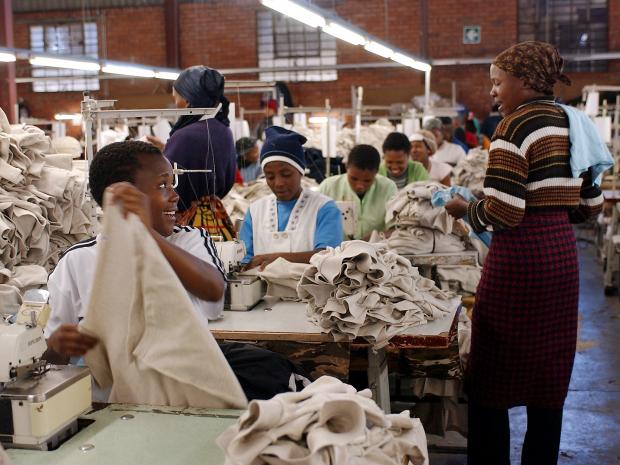
Director of the One Business Stop Facilitation Centre in the Ministry of Trade, Monaheng Monaheng, said textiles and apparel had been at the heart of Lesotho’s manufacturing economy for more than three decades.
At its peak, the sector employed more than 40,000 Basotho, the majority of them women, while apparel accounted for more than 80 percent of manufacturing value added.
“When we talk about factories, we are speaking about the livelihood of Basotho,” Mr Monaheng said.
But the industry has suffered significant losses since the Covid-19 pandemic, compounded by uncertainty surrounding the African Growth and Opportunity Act (AGOA), which has provided Lesotho with duty-free access to the lucrative US market since 2000.
Employment, which stood at between 38 000 and 40 000 workers in 2023, has since declined to lower than 30 000.
The United States last month extended AGOA until 31 December 2028, providing some relief to manufacturers after months of uncertainty over the future of the preferential trade programme.
The uncertainty intensified following Donald Trump’s return to the US presidency in 2024 and his administration’s push for sweeping tariffs on trading partners under its “America First” policy.
Lesotho’s heavy dependence on the US market has left its textile industry particularly vulnerable to changes in American trade policy.
However, Lesotho National Development Corporation (LNDC) Chief Executive Officer, Thabo Khasipe, said the industry retained the capacity to recover.
“What we have lost is orders and confidence, not capability,” Mr Khasipe said.
He said the recovery required a fundamental change in the way Lesotho approached the industry, particularly by reducing reliance on imported fabric and increasing the use of locally produced fibre.
“A turnaround is not a rescue. It is a change of direction,” he said.
“A key pillar of the new strategy is diversification. It seeks to increase the share of textile and apparel exports going to markets outside the US to 55 percent, with greater penetration of South Africa, the wider African market and Europe.”
Mr Khasipe said diversification was critical if Lesotho was to protect its factories and jobs from decisions made in foreign capitals.
“We need to grow sales to South Africa, the wider continent under African Continental Free Trade Area (AfCFTA) and Europe, so that no single decision in one capital can edit our factories again,” he said.
Mr Khasipe said the strategy also seeks to move more than one-third of production from cut-make-and-trim operations to full-package manufacturing, while increasing the proportion of Basotho in management positions to 40 percent.
“Another major focus is wool and mohair, with the government targeting domestic processing of at least 20 percent of the country’s wool and mohair.
“This would create opportunities in testing, scouring, spinning, knitting, weaving, design and branding.”
Mr Khasipe said Lesotho needed to establish stronger links between farmers and local factories so that more of the country’s fibre could be transformed into finished products locally.
He said the ultimate objective was to ensure that a greater share of the value generated by Lesotho’s wool, mohair and textile industries remains in the country.
“Let us leave this room committed to making that next Basotho blanket and the next mohair jersey in Lesotho,” he said.
The strategy’s success, however, will depend on its implementation, according to CAFI Managing Director, Chaba Mokuku.
He said the strategy, developed through the Textiles and Apparel Thematic Working Group, should no longer be regarded as the property of development partners or individual institutions.
“Once it goes to Cabinet in two weeks’ time from today, no one in this room can say it is an IFC strategy or LNDC strategy or CAFI strategy. It will be the sector strategy,” Mr Mokuku said.
The thematic working group brings together the government, LNDC, manufacturers, workers’ representatives, financiers, academia and development partners.
Mr Mokuku said the platform had helped build trust among stakeholders and provided a mechanism for addressing industry challenges collectively.
“The sector is strongest when it speaks with one voice,” he said.
He also urged textile companies to participate in the CAFI-funded revitalisation project, saying only 11 of the 38 companies had so far signed memoranda of understanding with LNDC.
The remaining companies, he said, should sign the agreements and take advantage of programmes designed to improve operational efficiency and productivity.
“This is entirely meant to benefit you and improve your operational efficiency and your productivity as role players within the industry,” he said.
Mr Mokuku further called on LNDC to champion the strategy through its corporate plans, budgets and investor engagement.
This includes expanding plug-and-play factory shells, conducting feasibility studies for textile and wool and mohair industrial parks and strengthening investment promotion campaigns.
The strategy will be implemented in three phases: diversification to 2028, expansion to 2031 and consolidation from the seventh year onwards.
Mr Mokuku said the thematic working group should continue monitoring implementation, with progress reviewed quarterly and reported through the Public-Private Dialogue Forum.
CAFI will also continue supporting textile and apparel start-ups and micro, small and medium enterprises through business incubation, seed financing, technical skills and equipment programmes.
“The strategy contains 28 actions, with government expected to tackle skills shortages, access to finance, infrastructure constraints, VAT refunds and other barriers affecting the industry.”
The broader push to rebuild the textile value chain also featured in Prime Minister Sam Matekane’s account of his recent New York trip.
Speaking at State House last week, Mr Matekane highlighted the Trans-Atlantic Cotton Partnership, saying the arrangement could strengthen the textile value chain and create a stronger link between farmers and garment producers.
Under the partnership, cotton from the United States will be supplied to Lesotho, Kenya and Mauritius to support textile and garment production for the US market.
Mr Matekane said the arrangement was intended to create opportunities for farmers while strengthening cooperation between the three African countries and linking agricultural production more closely to the textile industry.
He said the partnership should go beyond simply importing cotton and contribute to a more integrated value chain in which farmers, manufacturers and exporters benefit from increased trade.
The Prime Minister said the initiative formed part of government’s broader efforts to use international partnerships to create jobs, expand markets and strengthen Lesotho’s textile and apparel industry.
