
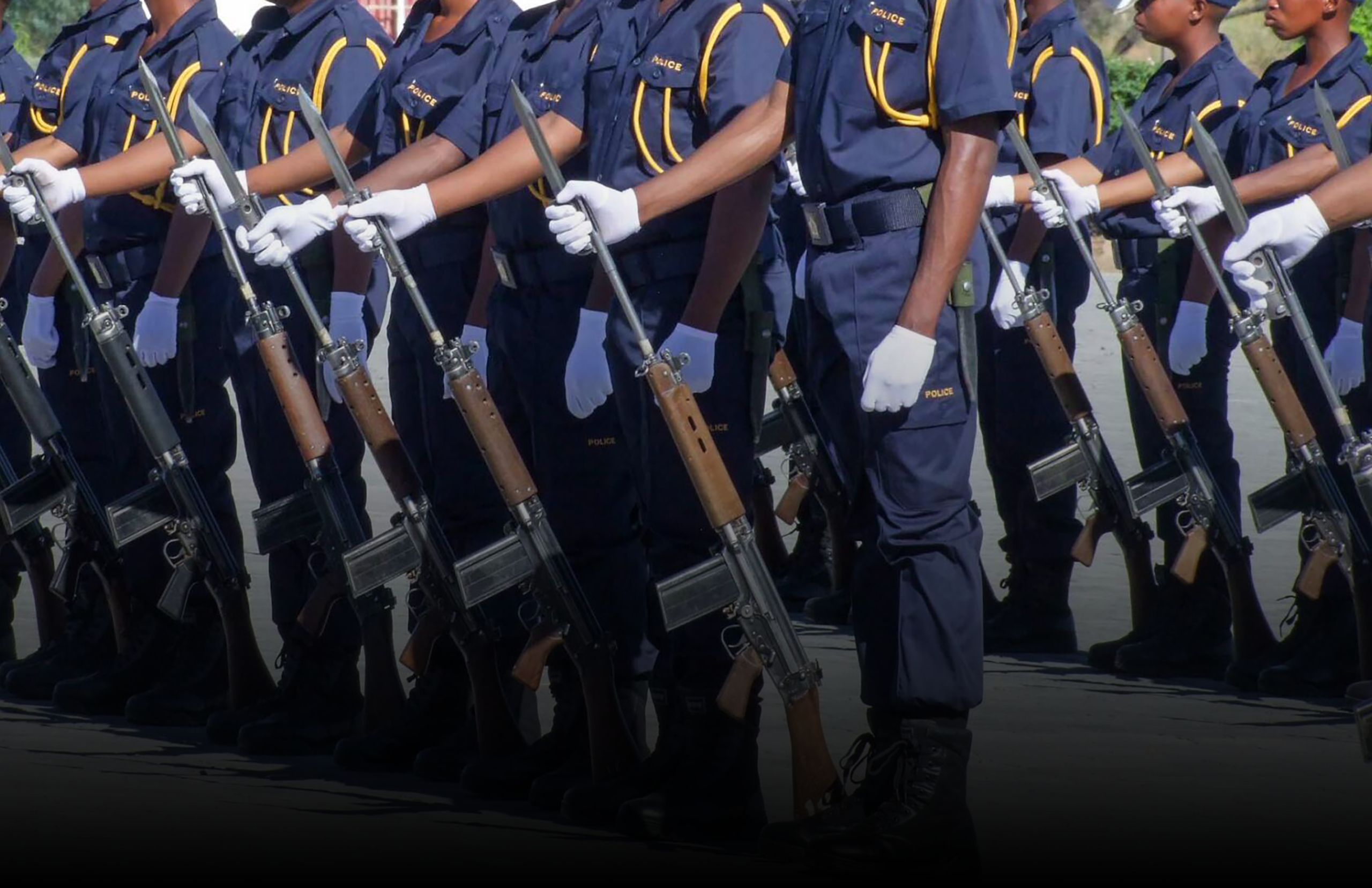
Amid staffing shortage
Rethabile Pitso
CHIEF of Police Borotho Matsoso says preparations are underway for the recruitment of 500 new police officers, with the recruits expected to begin training in January 2027. But Advocate Matsoso has warned that the intake will be nothing more than “a drop in the ocean” against a staffing shortfall he describes as severe.
Advocate Matsoso confirmed the development in an interview with this publication, following remarks by Prime Minister Samuel Ntsokoane Matekane during his visit to the Mabote Police Station grounds last weekend, where he met members of the policing community in the area.
During the engagement, Mr Matekane said his administration was working to strengthen the police service following approval for the recruitment of the 500 new officers.
“Ntate Matsoso, just the other day we gave you an opportunity to employ 500 new police officers in your organisation in an attempt to bridge the gaps in low human resources,” Mr Matekane said.
The recruitment budget has been set at M23,410,200. However, Advocate Matsoso said the allocation would address only a small portion of the police service’s staffing challenges.
“Our police force is supposed to have at least 9,000 members for it to work efficiently, but without revealing our current numbers, we are far below that. We have gone several years without any recruitment, which has only widened the existing gap. Employing 500 more people will therefore not yield any significant results – they are only a drop in the ocean,” Advocate Matsoso said.
He said the recruitment would only make a meaningful difference if similar numbers were brought in every year and sustained for at least the next three years.
“The only thing that would make a real difference is if we took in these numbers annually, and remained consistent with these recruitments for at least the next three years. We are living in different times, where population growth has outpaced the number of officers required in each community, and the capacity to manage various issues has become increasingly difficult,” he said.
According to Advocate Matsoso, the recommended ratio of police officers to community members should not exceed one officer for every 300 residents. He said the current situation was far beyond that threshold, with one officer serving at least 500 community members.
“The most acceptable ratio would be a maximum of 300 members to one officer, but at this rate, one officer is dealing with at least 500, which is too much,” he said.
Despite the scale of the staffing deficit, Advocate Matsoso welcomed the government’s decision to recruit additional officers, and expressed hope that the intake would be accompanied by adequate resources to enable officers to carry out their duties effectively.
Meanwhile, Deputy Commissioner of Police Sera Makharilele said the recruitment process would be conducted in accordance with the Police Act. Applicants will be selected to undergo general police training, with the principal eligibility requirement being that they must be between 18 and 30 years of age.
“We recruit Basotho youth to undergo general training to become officers. They are not selected according to the availability of positions or vacancies within the force – it is only at the deployment stage that their additional skill sets are taken into consideration. The selection, in terms of the Police Act, lies with the Chief of Police, Advocate Borotho Matsoso,” Mr Makharilele said.
He explained that recruitment into the general training programme is therefore distinct from the deployment process that follows, during which recruits’ additional skills and suitability for specific policing functions are assessed.
Mr Makharilele said it would take approximately two years for recruits to progress towards full deployment, following the completion of their initial training and the start of their probationary period.
“The expectation is that a recruit’s next position will be the rank of Police Constable. Once integrated into the system, they are deployed to different police units while on a two-year probation,” he said.
During the probationary period, Police Constables rotate through various units to gain practical exposure to different areas of policing. Mr Makharilele cited the Patrol Unit, and the Investigation and Criminal Investigation units, among the areas to which recruits may be deployed.
“They spend the two years rotating across different units – from the Patrol Unit to Investigations to the Criminal Investigation Unit, for instance. Thereafter, the Police Constable is placed in the unit that best fits them,” he said.
The recruitment of the 500 officers is therefore expected to provide an immediate boost to the police establishment, while also forming part of a broader effort to address the service’s longstanding human-resource shortage.
However, police leadership maintains that only sustained annual recruitment, alongside adequate operational resources, will make a substantial impact on the staffing gap.
