
THERE was a time when universities were places where brilliant minds wrestled with philosophy, economics and scientific discovery.
Today, the National University of Lesotho (NUL) appears to have invented an entirely new discipline: Competitive Leadership Circus.
It is a fascinating subject in which professors, councils and lawyers compete to determine who occupies the Vice-Chancellor’s office this week and then the next.
If the trend continues, the university may soon introduce a postgraduate degree in Acting Leadership Studies, with a minor in Emergency Court Applications (circa). Students need not worry about practical experience because the campus itself has become one giant laboratory.
One almost feels sorry for first-year students. They arrive dreaming of lectures, libraries and intellectual debates only to discover that the most frequently used words on campus are “interdict”, “appeal”, “Council resolution”, “legal opinion” and “court order”.
Before completing their first semester, engineering students probably understand constitutional law better than some practising lawyers. The Faculty of Law, meanwhile, no longer needs hypothetical case studies. It merely has to point students towards the administration building and say, “Observe”.
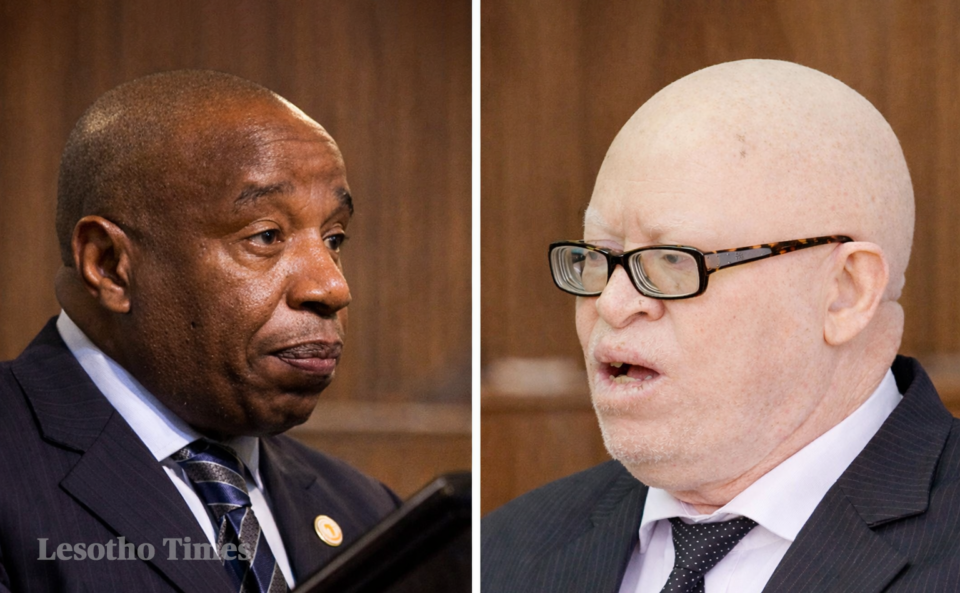
The latest episode has all the suspense of a television soap opera. One senior academic believes a court ruling automatically placed him in charge after the previous Vice-Chancellor’s contract expired. The Council insists otherwise and appoints another professor to the acting position. Another acting appointment follows, another legal interpretation emerges and the nation watches in confusion. At this rate, NUL may soon require an Acting Acting Vice-Chancellor to supervise the Acting Vice-Chancellor, and another one to supervise the other Acting Vice Chancellor until the courts determine who should have been acting in the first place. Eish! Even scriptwriters would reject this plot for being too unbelievable.
Poor security guards at the university gates deserve medals. One can only imagine them reporting for duty each morning wondering which Vice-Chancellor they should salute before lunch.
“Ntate, may I please see your access card?”
“Access card? I am the Acting Vice-Chancellor.”
“But another Acting Vice-Chancellor arrived fifteen minutes ago.”
“Well, he is acting while I am acting.”
“Jo! Ke bomalimabe!”
At that point the poor guard probably wishes he had accepted that transfer to the agriculture department.
The truly remarkable thing is that everyone insists they are acting in the best interests of the university. That may well be true. Unfortunately, while everyone is busy saving NUL, nobody appears to have enough time to run it. Research projects cannot be completed through affidavits. Laboratories do not modernise because lawyers exchange legal opinions.
Academic journals stubbornly refuse to publish themselves simply because another press conference has been called. Somewhere else on the continent universities are establishing artificial intelligence research centres, patenting inventions and competing for international grants. Meanwhile, Lesotho’s flagship university is perfecting the art of institutional musical chairs.
One can only imagine the confusion experienced by international partners. A delegation from abroad lands at Moshoeshoe I International Airport eager to discuss research collaboration. They are welcomed with warm smiles, coffee and carefully prepared presentations. Then someone innocently asks the simplest question imaginable: “Who is your Vice-Chancellor?”
Suddenly the room falls silent. Files begin appearing from every direction. Someone produces a court judgment. Another unfolds a Council resolution. A third starts explaining interim orders. By the time the explanation reaches page seven, the visitors are quietly checking whether there is an earlier flight back home.
“Hela! We only wanted to discuss student exchanges,” one of them whispers.
Perhaps NUL has discovered a lucrative new source of income. Forget tuition fees. Forget research grants. The institution could simply establish a consultancy specialising in acting appointments. Need an Acting Vice-Chancellor? NUL Consulting has years of practical experience. Need advice on leadership succession disputes? They have specialists. Want guidance on balancing court proceedings with administrative appointments? They practically wrote the textbook. The university might even franchise the model across the continent. It would certainly be unique.
The saddest part is that behind all the comedy lies a very serious problem. Universities trade on credibility. Their reputation is their currency. Students choose institutions because they believe they will receive a stable education. Researchers seek partnerships because they trust governance systems. Donors invest because they believe projects will be implemented without endless institutional drama. Every public leadership battle chips away at that confidence. It is rather difficult to convince the world that you are producing future leaders when your own leadership resembles a never-ending episode of As the Campus Turns.
One cannot help wondering whether litigation has quietly become part of the official curriculum. Imagine the prospectus. Bachelor of Arts in Institutional Conflict. Core courses include Introduction to Interim Orders, Advanced Suspension Techniques, Strategic Press Statements, Appeals I and Appeals II, with a compulsory capstone project titled The Socio-Economic Impact of Permanent Temporary Leadership. Students graduating with distinction receive complimentary copies of the university statutes and a voucher for future legal representation.
The greatest tragedy is that NUL possesses everything required to become a genuine centre of excellence. It has brilliant academics, gifted students and proud alumni serving as judges, doctors, engineers, teachers, economists and public servants across the country and beyond. Those achievements should dominate newspaper headlines. Instead, leadership disputes have become so frequent that Basotho barely raise an eyebrow anymore. Another court case? Another acting appointment? Another disagreement over succession? “Ah,” the public says, “it must be another ordinary week at Roma”.
Enough is enough. Ho lekane! Leadership transitions should never resemble constitutional crises. Universities are supposed to generate ideas, not endless litigation.
At the same time, Parliament and the university community should urgently review the governance framework to eliminate the ambiguities that seem to invite recurring disputes every few years. Good laws are meant to provide certainty, not full employment for lawyers.
NUL remains one of Lesotho’s most important national institutions. It shapes the country’s teachers, lawyers, scientists, nurses, economists and future leaders. It should be setting the standard for good governance, not providing weekly entertainment for the rest of the country.
Circuses have their place. They have clowns, acrobats and ringmasters. Universities should have lecturers, researchers and students. Basotho have laughed long enough. It is time for the curtain to come down on this circus before the only degree NUL becomes famous for awarding is a doctorate in administrative chaos.
Optics remain bad
As for Ntate Kananelo Mosito’s argument that the Council should only have started finding a substantive Vice Chancellor when Ntate Isaac Fajana’s term had ended on 31 July 2026, Scrutator ‘s advice to the venerable Court of Appeal president is to learn from Africa;s largest banking group, Standard Bank.
Current CEO Sim Tshabalala’s term ends in September 2027. However, the bank has already started scouting for his successor. Imagine if any of Ntate Tshabalala’s deputies sprang up to claim that the latter can only be replaced after his office has become vacant. In other words, after his contract has actually ended and he has left bank. That would turn Standard Bank into a circus and tank its share price. Fortunately, all serious institutions know that decisions about executive appointments must be made well in advance. Transitions must be well planned and executed to enable proper handover and takeover situations.
So, he might be a well-read lawyer, but Ntate Mosito is wrong on this one. It makes absolutely no sense to demand that recruitment processes be frozen until an office has become vacant and the incumbent has gone. NUL was not wrong to advertise for the post and search for a successor well ahead of Ntate Fajana’s term expiry. Ntate Mosito should have applied if he so wished. Serious institutions must plan coherently for successions to key offices. That means finding replacements well ahead of an incumbent’s quitting, particularly when that incumbent’s term of office is clearly time bound.
The current situation wherein Ntate Mosito now waves a court order passed by the very same court he leads against the same NUL that employs him is untenable. The conflict of interest is obvious. Ntate Matlosa and company are right that this puts the judiciary into disrepute. As lawyerly Scrutator always argues, justice must not only be done. It must also be seen to be done. That is a phrase that lawyers want to wave.
In this case, our judiciary fails the test. NUL’s argument for the recusal of judges that work under Ntate Mosito should have stood. It’s now left for Ntate Mosito himself to decide whether it is right to wave judgments issued by his counterparts or juniors in his favour. Scrutator insists this might return to haunt him at some stage. If I were him, I would not do it.
Achee!!!
