
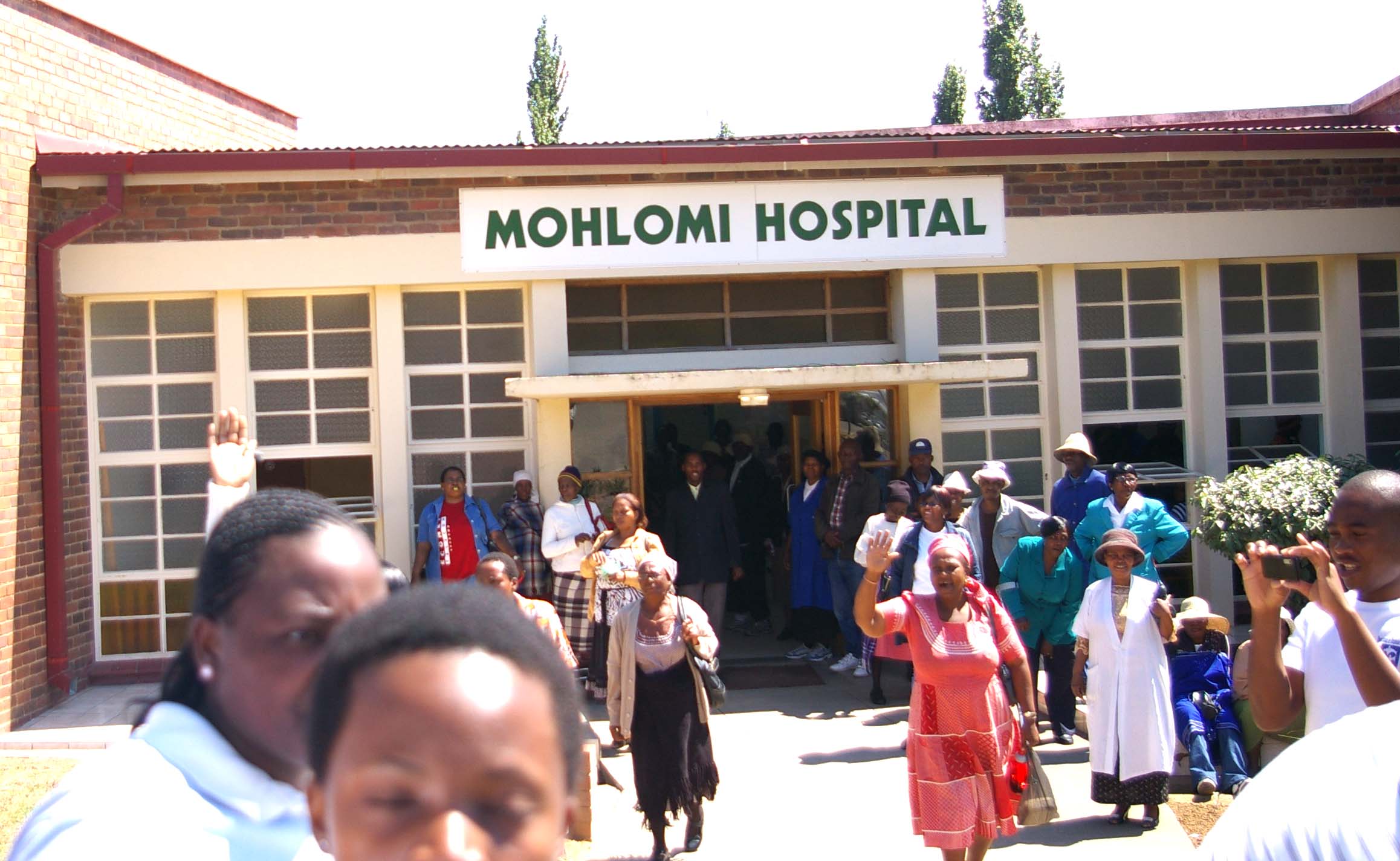
…as Lesotho’s only psychiatric hospital crumbles
Mohloai Mpesi
THE absence of a resident psychiatrist and therapist, crumbling infrastructure, and persistent health and hygiene crises — including lice infestation, scabies, and widespread skin diseases driven by overcrowding – are among the debilitating conditions exposed by the Ombudsman at Mohlomi Mental Hospital.
What emerges in her latest report is not just neglect, but a prolonged collapse of duty by authorities entrusted with the care of some of the country’s most vulnerable citizens.
The country’s only psychiatric facility is effectively operating without the most basic specialist care, the Ombudsman states. The working contract of a Cuban psychiatrist, engaged last year, has reportedly expired. Language barriers – stemming from that psychiatrist’s inability to speak English – hindered effective communication with patients, further compromising service delivery and deepening an already dire situation.
All these findings are contained in a comprehensive Special Follow-Up Report by Ombudsman Advocate Tlotliso Polaki, published this week following a re-inspection of the hospital. The report paints a grim picture of systemic neglect and indifference by the government.
Mandated to investigate maladministration and human rights violations, the Ombudsman found that the government had largely ignored critical recommendations her office had previously issued to improve conditions at the institution.
During a follow up visit, she uncovered devastating living conditions, with little to none of her recommendations implemented by the government through the Ministry of Health.
“What we found was deeply concerning. These conditions are undignified and unacceptable in any healthcare setting,” Adv Polaki said.
The inspection reveals disturbing patterns of systemic neglect, which in many respects have worsened since 2023.
Out of 97 recommendations issued by the Ombudsman, only 12 — representing 12.4 percent — have been fully implemented.
A further 15 recommendations (15.5 percent) remain only partially implemented.
“We have a staggering 70 recommendations — constituting 72.1 percent — that remain unimplemented,” Adv Polaki said.
“This level of inaction is unacceptable; it represents maladministration of the highest order. The Ministry of Health has largely failed to act on critical recommendations aimed at improving the inhumane living conditions of patients at the hospital.”
Shortage of psychiatric experts
She said there is no permanent psychiatrist, but only temporary arrangements that have failed to address the crisis.
“The hospital continues to operate without a permanent psychiatrist. While there was one foreign psychiatrist engaged in early 2025, the situation remained inadequate. The position was temporary, not pensionable, and communication barriers delayed patients’ assessments,” she said.
“To date, fewer than five medico-legal evaluation reports have been completed. This has created a serious backlog, particularly affecting forensic patients.”
Lack of transport
Adv Polaki added that a lack of transportation for social workers had crippled reintegration efforts, leaving patients stranded in institutional care for decades.
“Social workers lack dedicated transport to conduct home assessments, which are essential for patients’ reintegration into society. As a result, there are patients who have stayed at the facility for decades.
“There are patients sitting in the forensic unit — individuals who, at the time of committing offences, lacked mental capacity. They were committed to Mohlomi Hospital for assessment, yet they have remained there for many years.”
She revealed that some patients have been confined at the hospital since 1992.
“When you consider the nature of the offences they allegedly committed, had they been incarcerated, they would have already been released. But because of their mental condition and systemic inefficiencies, they remain institutionalised.”
She said the situation is further worsened by a non-functional advisory committee, which last sat in 2016. This committee is mandated to advise His Majesty on patients eligible for release.
“There is a non-functional advisory committee responsible for reviewing patients detained at His Majesty’s pleasure. It has not been reconstituted since 2016.
“This has effectively stalled patient reviews and recommendations for release and reintegration. Even patients who are now mentally stable have been waiting for over a decade,” she said.
She said one of the major challenges in reconstituting the committee was the absence of a psychiatris required to chair it.
“We really feel that this is an injustice, and something needs to be done,” she said.
Severe overcrowding
Adv Polaki also highlighted severe overcrowding, which she said was contributing to patient relapse and worsening conditions.
The forensic unit, designed to accommodate 35 patients, is currently housing 84.
The hospital’s overall capacity of 110 has been exceeded, with 154 patients currently admitted.
“The overcrowding has profound implications for patient welfare and human rights. Patients who have recovered from acute episodes are forced to cohabit with acutely unwell individuals, leading to relapse,” she said.
She recalled a patient’s words from 2023 that remain painfully relevant today:
“Re folile empa re qetella re boetse re hlanya hape ka lebaka la ho lula le bakuli ba bang
(We have healed but end up relapsing as a result of living with other patients).”
“Sadly, the same patient is still held at the hospital as he awaits assessment and possible pardon,” she added.
“It is inhumane circumstances under which these patients live, and something needs to be done urgently.”
Dilapidating infrastructure
She further exposed the appalling state of the hospital’s infrastructure, which poses a direct threat to patients’ safety and dignity.
“The hospital buildings are in a state of advanced deterioration. Ceilings are collapsing, walls are structurally compromised, and facilities are not designed for mental healthcare. The environment undermines both patients’ dignity and safety.”
According to Adv Polaki, the Ministry of Health has for years indicated that the hospital needs to be demolished and rebuilt. However, little progress has been made.
“I personally feel that they have taken too long to reach a point where we begin to see movement in terms of construction,” Adv Polaki said.
She warned that government’s continued failure to act was not just administrative negligence, but a violation of constitutional and human rights.
“We have a constitutional crisis here. The findings of this report point to more than administrative failure — they reveal ongoing violations of constitutional rights, failure to uphold human dignity, and non-compliance with international obligations on the treatment of persons living with mental illness.
“The continued neglect of Mohlomi Mental Hospital is not merely a health issue; it is a human rights crisis.”
Adv Polaki sternly implored the government to urgently act on the recommendations.
“The time for reports and recommendations, in my view, has passed. The time for decisive action is now.”
Contacted for comment, Ministry of Health spokesperson, ‘Mateboho Mosebekoa, asked that she be sent questions. However, she opted to only answer issues related to the psychiatrist and the new building.
“The psychiatrist was deployed at Mohlomi Hospital in January 2025,” she said.
She said plans to construct a new facility had been cleared, with the concept already approved by the Public Sector Investment Committee.
“For the construction of the new hospital, the Ministry is currently in the process of preparing a full proposal following the approval of the concept by the Public Sector Investment Committee,” she said.
She added that, despite the challenges highlighted in the Ombudsman’s report, government has set aside a budget to ensure the continued operation and maintenance of the existing facility.
“The hospital operations are still ongoing at Mohlomi Hospital, and there is a budget allocated for its maintenance,” she said.
