
Mohloai Mpesi
THE limited budget allocated to the Lesotho Correctional Service (LCS) is placing severe strain on the institution already buckling under overcrowding and shortages of basic necessities, including food and medical supplies.
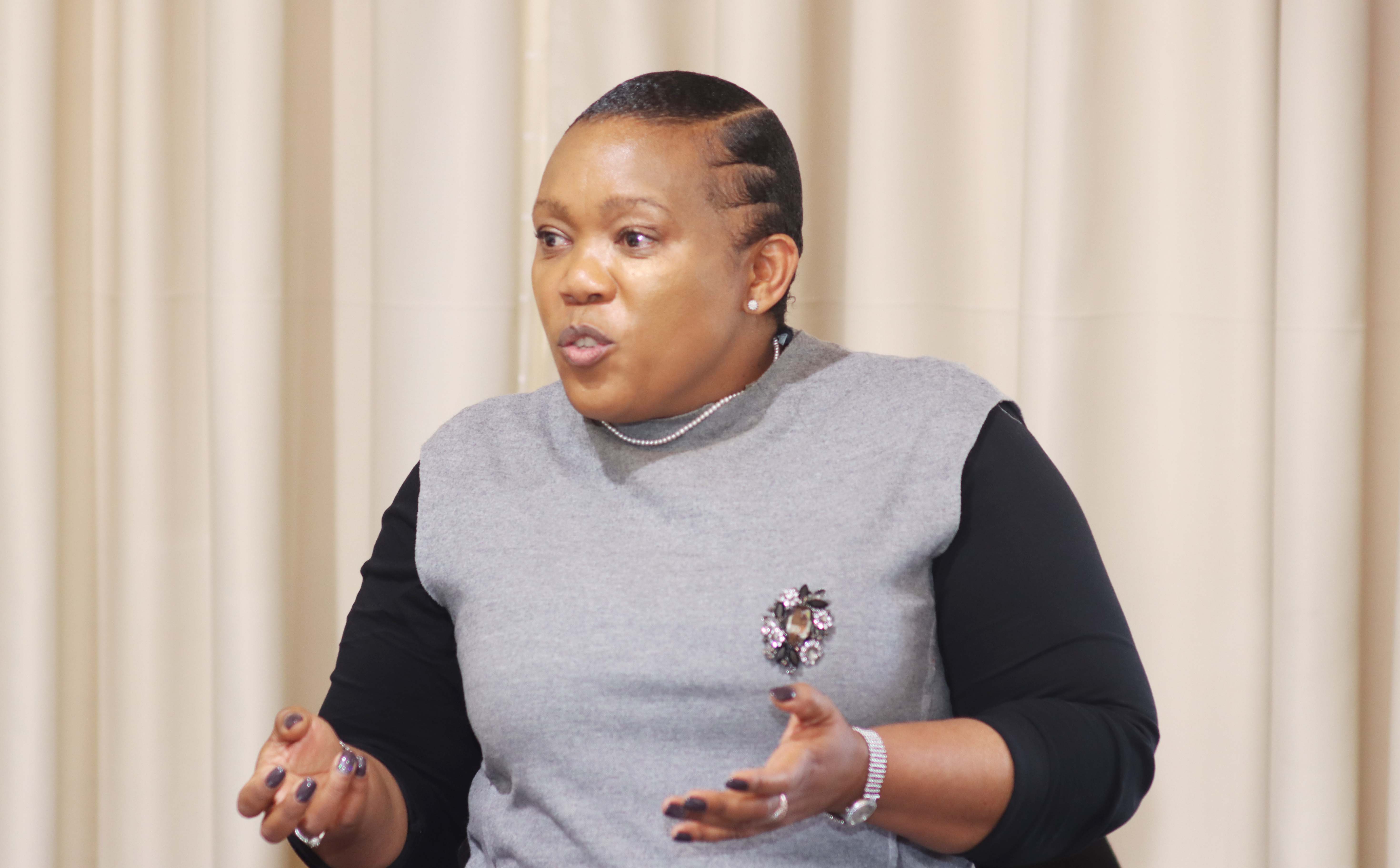
Ombudsman, Advocate Tlotliso Polaki, has attributed the failure to address long-standing challenges crippling operations at the LCS to government’s inability to provide adequate funding.
In her Follow-Up Report on Inspections of Correctional Service Facilities, Adv Polaki revealed that the LCS budget has remained unchanged since 2020, despite a sharp rise in inmate numbers, which had increased by 138 percent since that year.
This, in turn, had forced the department to prioritise food and other basic necessities, leaving no resources for capital expenditure, infrastructure maintenance, or staff development, among other critical needs.
The Ombudsman’s report follows physical inspections conducted by her office in correctional facilities in Maseru, complemented by consultations with the LCS’s leaders across districts.
The findings reflect a national crisis affecting correctional institutions throughout the country.
The primary objective of the follow-up inspection was to assess the extent to which recommendations made in the 2023 Ombudsman report had been implemented, and to evaluate whether current conditions in correctional facilities meet the standards of human dignity and lawful detention.
“The annual budget allocation to the Lesotho Correctional Service has not increased in real terms since 2020, despite a 138 percent increase in the inmate population,” Adv Polaki said.
“In consequence, the proportion of the budget consumed by food and basic necessities has risen, leaving no resources for capital expenditure, infrastructure maintenance, or staff development. It is evident that the Lesotho Correctional Service (LCS) budget requires a comprehensive review.
“Historical funding levels have consistently failed to meet the department’s operational requirements, directly resulting in underperformance and the inability to achieve key strategic objectives.”
She added that the persistent misalignment between the LCS budget and its actual operational needs continues to constrain the department’s capacity.
“The investigation reveals a chronic misalignment between the LCS budget and its actual operational needs. This long-standing underfunding has severely constrained the department’s capacity, leading to unmet targets and operational deficiencies,” she said.
Chronic underfunding
The Ombudsman stated that correctional facilities were failing to meet inmates’ basic needs.
“Correctional facilities lack basic cleaning materials, adequate food, medical supplies, transport, communication and equipment.
“The underfunding, in my view, reflects a failure to prioritise national reform at the highest level. It is a major concern.
“I found a facility where inmates were last provided with bathing soap in November 2025. We are now in April. This is because funds meant for inmates’ soap were diverted to other uses, and there is now no money to purchase it.
“You can imagine the consequences for an inmate who has no visitors. They may be forced to compromise themselves or engage in activities they would not ordinarily consider, simply to access basic necessities,” she said.
Severe overcrowding
Among the most alarming issues raised is the severe overcrowding of inmates. The Ombudsman noted that the inmate population had increased by 922 since 2023.
“The total inmate population nationally has risen dramatically from 1835 inmates in 2023 to 2757 inmates as of March 2026,” she said.
She further revealed that the Maseru Central Correctional Institution (MCCI) has experienced an alarming increase in its inmate population, almost doubling its capacity.
“Facilities such as the Maseru Central Correctional Institution were designed to accommodate 500 inmates, but are currently housing 971 inmates.
“In some facilities, inmates are confined at up to three times the intended capacity,” she said.
Infrastructure collapse
Adv Polaki further pointed out that in her 2023 report, several correctional facilities were declared unfit for human habitation, yet remain in use.
“These include facilities in Berea, Quthing, Qacha’s Nek, the Maseru Female facility and the Juvenile Training Centre.
“They remain operational today. No reconstruction or rehabilitation efforts have commenced to date. These are buildings that pose a serious risk to both inmates and officers,” she said.
Collapse of healthcare services
Of even greater concern is the deteriorating healthcare system within correctional facilities, where there is a critical shortage of medical supplies and personnel.
“When inmates fall ill, they are generally given paracetamol, regardless of the nature of their illness,” she said.
“Correctional healthcare has reached a critical level. There is an ongoing outbreak of scabies, other skin diseases, and pellagra caused by malnutrition. There are also cases of tuberculosis.”
Adv Polaki also highlighted serious concerns regarding inadequate nutrition.
“Inmates subsist on pap and beans or peas throughout the year.
“The only time they are served meat is on Christmas Day, when a single cow is slaughtered, which is clearly insufficient for the entire inmate population.”
She said this practice violates dietary standards set out in the 1959 Prison Regulations.
“Those regulations prescribe a balanced diet, including proteins, milk, eggs and meat. The current situation undermines both the health and dignity of inmates,” she said.
Lack of political will
Adv Polaki stated that the findings point to a systemic failure to uphold constitutional obligations.
She expressed concern over the lack of implementation of her office’s recommendations.
Out of 78 recommendations issued in 2023, none have been fully implemented. Only nine percent show partial progress, while 91 percent remain completely unaddressed.
“Despite repeated presentations of the Ombudsman’s findings to the Minister of Law and Justice, and despite the tabling of the 2023 report in Parliament, no policy directive has been issued to enforce implementation.
“Correspondence between the ministry and LCS demonstrates awareness of the issues, but no commitment to action,” she said.
She added: “Three years after issuing that comprehensive report, I have found little to no meaningful progress. This is no longer a matter of administrative delay; it is a systemic and ongoing violation of constitutional rights.
“The remedial actions we outlined are urgent and non-negotiable. Government must immediately implement outstanding recommendations, address overcrowding through judicial and policy reform, rehabilitate or reconstruct condemned infrastructure, ensure accountability for human rights violations, and restore dignity in healthcare, sanitation and nutrition.”
She warned that failure to act decisively may result in escalation.
“The failure to act will leave this office with no option but to escalate the matter further, including referral to Parliament, judicial intervention, or international oversight bodies,” she said.
Government response
For his part, Minister of Law and Justice, Richard Ramoeletsi, said budget allocations were determined by Parliament and the Ministry of Finance and Development Planning.
“We are allocated a budget by Parliament, which considers the needs of the entire nation. Each ministry is then required to operate within that allocation. There is no way to spend beyond what has been allocated,” Mr Ramoeletsi said.
He acknowledged that correctional facilities are in poor condition and said M20 million had been set aside for rehabilitation.
“We are going to rehabilitate and extend some correctional facilities within the available budget, but not build new ones,” he said.
He said several facilities had previously been condemned, including those in Teyateyaneng, Botha-Bothe, Mokhotlong, Quthing, Qacha’s Nek and Thaba-Tseka.
“We will address some of these within the limited resources available,” he said.
He also indicated that the ministry plans to expand agricultural initiatives to support inmate feeding.
“There is funding under prison industries, which will be used to produce food for inmates.”
Mr Ramoeletsi denied having previously received the Ombudsman’s report.
“I only received the report today via email. To suggest there is no political will from this administration is incorrect,” he said.
LCS perspective
LCS acting Commissioner, Matingoe Phamotse, said the service has historically operated under inadequate funding.
“At no point in my career have we received a budget that fully meets our operational needs.
“The allocated budget does not cover all essential functions, including feeding inmates. However, inmates do receive meat from time to time,” Mr Phamotse said.
