
THE government must account for the missing M3.5 billion illustrated in the Auditor-General’s Report on the Consolidated Financial Statements of the Government of Lesotho for the year ended 31 March 2023.
The issue is too serious to be met with silence or vague responses. To date, there have been no clear explanations, no visible accountability, and no sense of urgency. For a matter of this scale, such inaction is entirely unacceptable.
Although the current administration assumed power in November 2022—months after the financial year had already begun on 1 April 2022—it cannot hide behind timing. Governments do not inherit power without also inheriting responsibility. By the time they took office, they were either in a position to know what was happening within the state’s finances or, more concerningly, may have been part of the system that allowed such discrepancies to arise. Either way, the responsibility rests squarely on their shoulders.
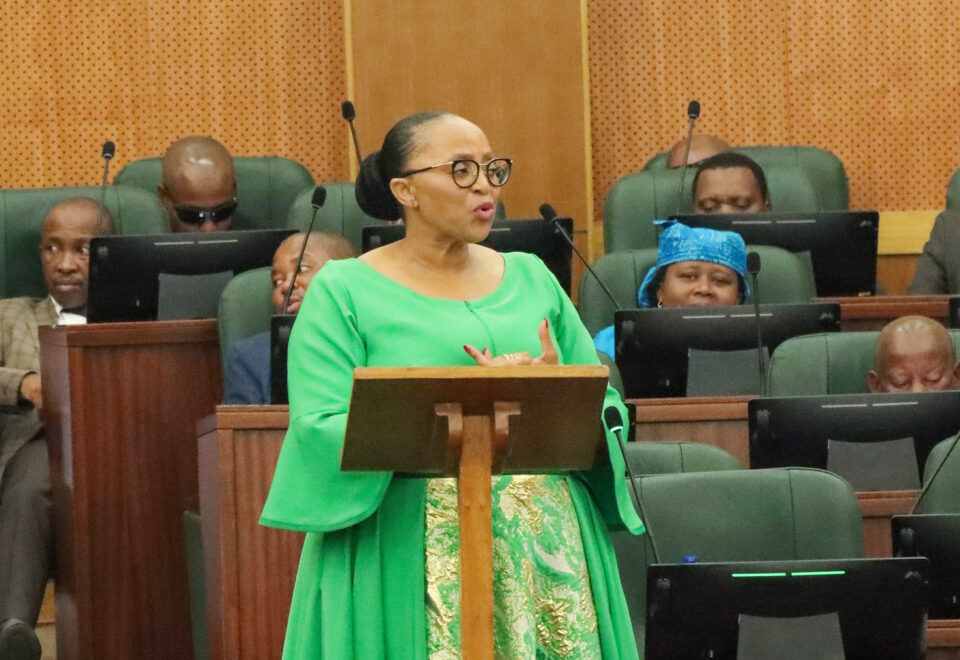
This reality raises an uncomfortable but necessary question: could this be the reason Finance Minister Dr Retšelisitsoe Matlanyane delayed tabling the Auditor-General, Mathabo Makenete’s report? The Constitution is explicit about the timely submission of such reports to Parliament, yet this one sat for months before being presented. In matters of public finance, delays are rarely innocent. They create the impression that there was something to hide.
Ms Makenete’s adverse opinion is the most serious censure any government can receive on its financial statements. It is a declaration that the accounts presented do not fairly reflect the country’s financial position. In simple terms, the numbers cannot be trusted. For a government entrusted with managing billions in public funds, this is nothing short of a governance failure of the highest order.
The discrepancy of nearly M3.5 billion is staggering. It is not a rounding error or a minor misclassification. It is a vast sum that demands detailed explanation. Instead, the nation is presented with a technical narrative of unreconciled accounts and unsupported balances. But behind this language lies a deeper issue: a breakdown in financial discipline and oversight.
This is not an isolated lapse. Ms Makenete’s findings point to systemic weaknesses across the government ministries—poor record-keeping, inconsistent reporting, and a failure to adhere to basic accounting standards. These are not sophisticated problems requiring complex solutions. They are fundamental issues that any competent administration should be able to manage.
The implications are profound. When the government cannot account for its own finances, it undermines public trust and weakens the very foundations of democracy. Citizens are asked to pay taxes, to accept limited resources, and to endure economic hardship. Yet they are given no assurance that their money is being handled responsibly. This disconnect breeds frustration and erodes confidence in public institutions.
It is also worth reflecting on what M3.5 billion could have achieved. In a country grappling with unemployment, under-resourced hospitals, and struggling schools, such an amount could have made a tangible difference. It could have funded critical infrastructure, improved service delivery, and created opportunities for thousands. Instead, it has become a symbol of opacity and potential mismanagement.
The report’s revelations about unsupported transactions and discrepancies in debt reporting only deepen concerns. When large financial adjustments are made without proper documentation, the risk of fraud and corruption increases significantly. Indeed, the existence of a separate fraud case involving tens of millions of maloti suggests that these risks are not theoretical—they are already manifesting within the system.
Equally alarming is the government’s failure to maintain a comprehensive asset register. This is basic governance. Without accurate records of public assets, it becomes impossible to safeguard them or ensure they are used effectively. It is a failure that speaks to a broader lack of control and accountability.
Meanwhile, public debt continues to rise. Borrowing has increased significantly, yet the systems required to manage and account for these funds remain weak. This is a dangerous trajectory. It risks placing the country in a position where debt obligations grow while financial oversight deteriorates, leaving future generations to bear the consequences.
What is perhaps most disturbing, however, is the apparent absence of accountability. Findings of this magnitude should be followed by decisive action—investigations, disciplinary measures, and, where necessary, prosecutions. Instead, there is a sense of inertia. Without consequences, such failures risk becoming normalised.
Parliament must not allow this to happen. Its oversight role is not ceremonial; it is essential. This audit report must be subjected to rigorous scrutiny, and those responsible must be compelled to provide clear answers. Anything less would be a disservice to the public.
Law enforcement agencies must also play their part. If there is evidence of wrongdoing, it must be pursued without hesitation. Financial mismanagement on this scale cannot simply be written off as incompetence. Where there is accountability, there must also be justice.
The executive, too, must confront this issue head-on. This requires more than statements of concern. It demands concrete reforms—strengthening internal controls, enforcing compliance with financial regulations, and ensuring transparency in all aspects of public finance. Most importantly, it requires a commitment to accountability at the highest levels.
Ultimately, this is about more than missing money. It is about the integrity of governance. Public funds belong to the people, and those entrusted with managing them have a duty to do so with honesty and diligence. When that duty is neglected, the consequences extend far beyond the balance sheet.
The unanswered questions surrounding the M3.5 billion cannot be ignored. The delay in releasing the audit report cannot be brushed aside. And the failure to provide clear explanations cannot be excused.

Glimmer of hope as Lesotho celebrates International Women’s Day