
Moroke Sekoboto
AS healthcare costs continue to rise and Lesotho remains heavily reliant on imported pharmaceuticals, local entrepreneur Bokang Matsipa is calling for a bold shift in national policy – placing nutrition at the centre of the country’s health strategy.
Mr Matsipa, founder of Bo Ma World of Worms, believes the solution to many of Lesotho’s health challenges lies not in hospitals and pharmacies, but in the soil.
“The philosophy is simple: Healthy soil produces nutrient-dense food, and nutrient-dense food produces healthy people,” Mr Matsipa said.
At the heart of his proposal is a nationwide vermiculture programme – an agricultural system that uses specialised earthworms to produce high-grade organic fertiliser. Through this approach, Mr Matsipa envisions a transition away from chemical-intensive farming towards a sustainable, natural “bio-factory” model that restores soil health while improving the nutritional value of food.
He argues that such a shift could have far-reaching benefits, from reducing the burden on the healthcare system to creating employment opportunities across the country.
“This is not just an agricultural intervention; it is a national health strategy,” Mr Matsipa said.
Introduced in Lesotho in 2018, vermiculture has steadily gained traction through Mr Matsipa’s company, Bo Ma World of Worms Pty Ltd, operating under the Bo Ma Group of Companies. He said the initiative was presented to various government ministries as a practical solution to declining soil fertility and low agricultural productivity.
Mr Matsipa told the Lesotho Times this week that he engaged extensively with officials in the Ministry of Agriculture and Food Security and held discussions with successive ministers responsible for agriculture. The concept also reached the highest levels of government, with former Prime Ministers Pakalitha Mosisili Thabane and Moeketsi Majoro briefed on its potential to transform rural livelihoods and strengthen food security, he said.
According to Mr Matsipa, the link between agriculture and health has long been overlooked in policy formulation.
“We are spending millions on treating diseases that can be prevented through proper nutrition. If we invest in the soil, we invest in prevention,” he said.
His proposal includes a recommendation for the Ministries of Agriculture and Health to procure organic produce directly from Basotho farmers. He argues that providing patients with nutrient-rich food could accelerate recovery, reduce dependence on medication, and ultimately lower government expenditure on pharmaceuticals.
Scientific evidence, he added, supports the benefits of organic farming. Crops grown using vermiculture – particularly through “worm tea” and organic castings – are believed to contain higher levels of antioxidants, essential for immune support and cellular repair. Unlike synthetic fertilisers, which often prioritise rapid growth at the expense of nutritional quality, organic fertilisers enhance the full spectrum of bioavailable nutrients in crops.
Mr Matsipa maintained that this approach could help curb the rise of lifestyle-related diseases, which continue to place strain on Lesotho’s healthcare system.
Beyond health benefits, he emphasised the economic potential of a nationwide vermiculture rollout. With factory closures, declining opportunities under international trade agreements and ongoing global economic uncertainty, Mr Matsipa believes agriculture presents a viable path towards self-sufficiency.
“We are facing a jobs crisis, but we are also sitting on an opportunity. By establishing community-based vermiculture centres in all 10 districts, we can create employment, improve food production and strengthen our economy at the same time.”
The initiative has already seen practical implementation through nationwide training programmes. Mr Matsipa and his team have worked with farmers and members of the Lesotho Mounted Police Service, conducting training sessions at the Police Training College in Maseru and across eight districts.
He said during the COVID-19 pandemic, the concept was introduced to the National University of Lesotho (NUL), highlighting its relevance to food security and public health. The Prime Minister’s Delivery Unit had also explored its potential contribution to job creation and environmental sustainability, he said.
Through ongoing collaboration with the National Agricultural Research Division, Mr Matsipa said his team was generating evidence to support the model’s long-term viability.
For Mr Matsipa, however, the vision goes beyond a single project. It is about reshaping how Lesotho approaches development—placing local knowledge, natural resources, and preventative healthcare at the forefront.
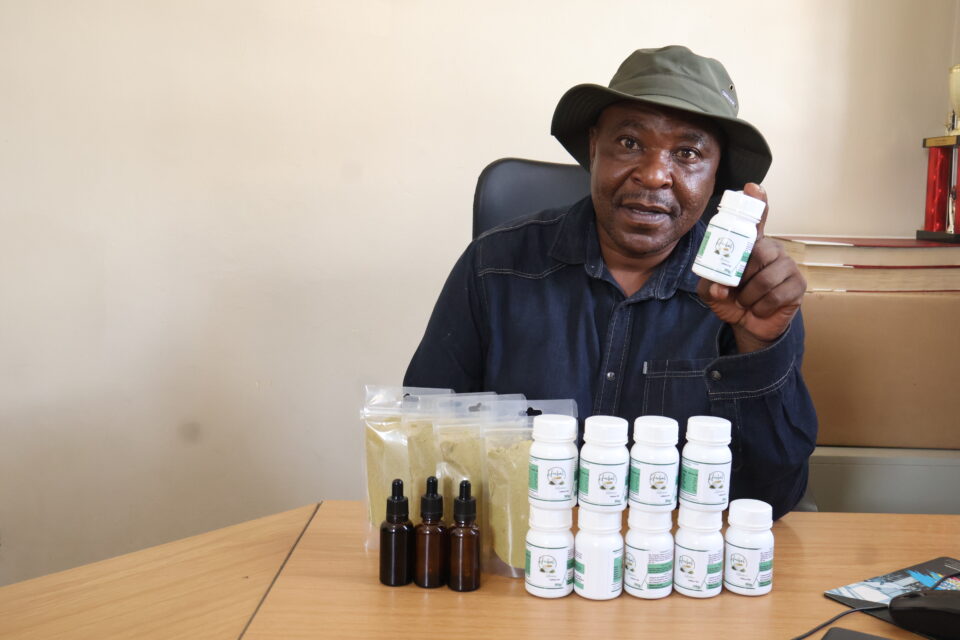
A pioneer in several emerging industries, Mr Matsipa is also known for his role in pioneering medical cannabis through his company Medi Kingdom, following Lesotho’s landmark decision to legalise its cultivation for medicinal purposes in 2017. Over the years, he has expanded into other areas, including Psilocyn Bin (magic mushroom), organic teas, supplements and plant-based oils.
Yet, he insists his core mission remains unchanged.
“My goal is to see Basotho healthy, using our own products to heal ourselves while creating jobs,” he said.
He added that achieving this vision will require deliberate policy choices, particularly prioritising local expertise and production over imports.
“The potential is there. If we invest in our people and our land, we can build a healthier, more self-reliant Lesotho,” Mr Matsipa said.
