
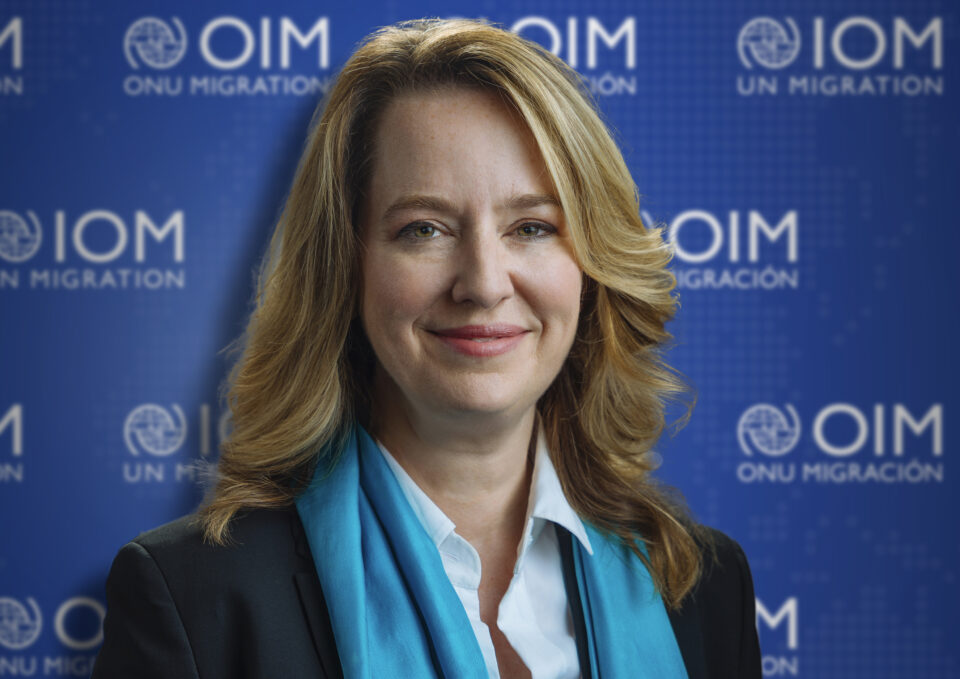
By Amy Pope, Director General, International Organization for Migration
Each year on Moshoeshoe’s Day, Basotho retrace a journey that is both physical and symbolic: the historic 1824 walk of King Moshoeshoe I from Menkhoaneng to Thaba-Bosiu. More than a commemoration, the Moshoeshoe Walk is a pilgrimage of memory, resilience and unity. It honours a moment when movement shaped identity, protection and the foundations of a nation.
As I join the people of Lesotho for this celebration, I am struck by how deeply this story mirrors the broader human experience of migration. Like the Moshoeshoe Walk, migration is often a journey driven by necessity and hope.
In 1824, amid a period of regional conflict and displacement, King Moshoeshoe I led his people from Menkhoaneng to the mountain stronghold of Thaba-Bosiu. From this natural fortress he offered refuge, forged alliances and brought together diverse communities under a shared vision of peace.
Today, people around the world migrate for many reasons: to seek opportunity, reunite with family, pursue education or find safety. This movement happens both across and within borders.
Movement within a country – such as from rural communities to towns and cities, or between districts in search of work, education or services – remains one of the most significant yet often overlooked forms of mobility. But whether internal or international, migration at its core is about the search for dignity, stability and belonging.
The story of Thaba-Bosiu reminds us that movement can strengthen societies. Migration is not only about departure; it is about arrival, adaptation and contribution. Under Moshoeshoe’s leadership, the Basotho nation was formed through the uniting of different groups. Today, when managed well, migration can similarly foster, social cohesion innovation and economic growth.
Lesotho understands this deeply. For generations, Basotho have moved across borders for work, trade and study – most notably to South Africa’s mines, farms and households as domestic workers, and increasingly to other sectors across the region. These movements have sustained families, supported livelihoods and created durable transnational connections. Internal mobility has likewise helped households adapt to shifting economic conditions.
Migration, in all its forms, is woven into Lesotho’s social and economic fabric.
Recent economic challenges, including the Government’s declaration of an unemployment crisis, have further underscored the role of mobility in people’s search for opportunity and security. In difficult times, both internal and international migration become essential pathways through which individuals seek income, skills and a more stable future.
In response, the Government of Lesotho has taken meaningful steps to expand employment opportunities. Domestic job-creation efforts are being paired with initiatives that support safe and regular labour mobility. Bilateral labour agreements and programmes preparing young Basotho for employment beyond the country reflect a proactive strategy to address unemployment while safeguarding the rights and wellbeing of migrant workers.
Lesotho has also shown leadership globally in shaping migration governance. Through its engagement in the International Migration Review Forum (IMRF) – the platform for assessing progress on the Global Compact for Safe, Orderly and Regular Migration (GCM) – Lesotho has contributed to the international community’s efforts to manage migration responsibly. As a GCM Champion Country, Lesotho’s IMRF report reflects a commitment to transparency, accountability and collaboration. It highlights both achievements and areas where continued work is needed.
This constructive engagement strengthens not only Lesotho’s own migration systems but also global cooperation. Migration is inherently both local and international in impact. No country can manage it alone. Platforms such as the IMRF allow states to exchange good practices and build partnerships grounded in mutual respect.
One area where Lesotho’s forward-looking approach stands out is its interest in creating a Diaspora Fund, a sovereign, sustainable diaspora bond. This initiative recognizes an essential truth: migrants are more than workers abroad. They are investors, innovators and ambassadors for their homeland.
Around the world, diaspora communities contribute significantly through remittances, skills and knowledge transfer. In Lesotho, remittances account for over 20 percent of GDP. Yet their potential extends far beyond this. Structured, transparent financial instruments can offer Lesotho’s diaspora meaningful opportunities to invest in national development while maintaining strong emotional and cultural ties to home. A well-designed Diaspora Fund could bridge generations and geographies, transforming solidarity into sustainable growth.
The spirit of such an initiative echoes the legacy of King Moshoeshoe I. Just as he united diverse communities at Thaba-Bosiu, a Diaspora Fund can unite Basotho at home and abroad in a shared mission: building a resilient and prosperous Lesotho.
The International Organization for Migration (IOM) stands ready to support Lesotho in advancing innovative approaches to diaspora engagement, strengthening migration governance systems and improving data for policymaking. Our role is to accompany governments and communities, to offer technical expertise, facilitate dialogue and ensure that migration policies put people first.
As we reflect on the Moshoeshoe Walk, we are reminded that movement is not an anomaly; it is a constant in human history. What matters is how it is guided. With foresight and cooperation, migration becomes a source of resilience, renewal and development.
Thaba-Bosiu remains a powerful symbol of protection and unity. It tells the story of leadership that transformed movement into nationhood. Today, we have the opportunity to harness migration as a driver of sustainable development.
On this Moshoeshoe’s Day, as Basotho retrace the steps of their founder, may we also renew our collective commitment: to ensure that every journey, within Lesotho or across continents, is marked by safety, dignity and opportunity. In walking forward together, we honour the past and shape a future worthy of its legacy.
