
…imposes nationwide restrictions
Makananelo Manamolela
THE Ministry of Agriculture, Food Security and Nutrition has launched Foot and Mouth Disease (FMD) containment measures, including restrictions on the movement of livestock in affected areas, following the outbreak of the disease.
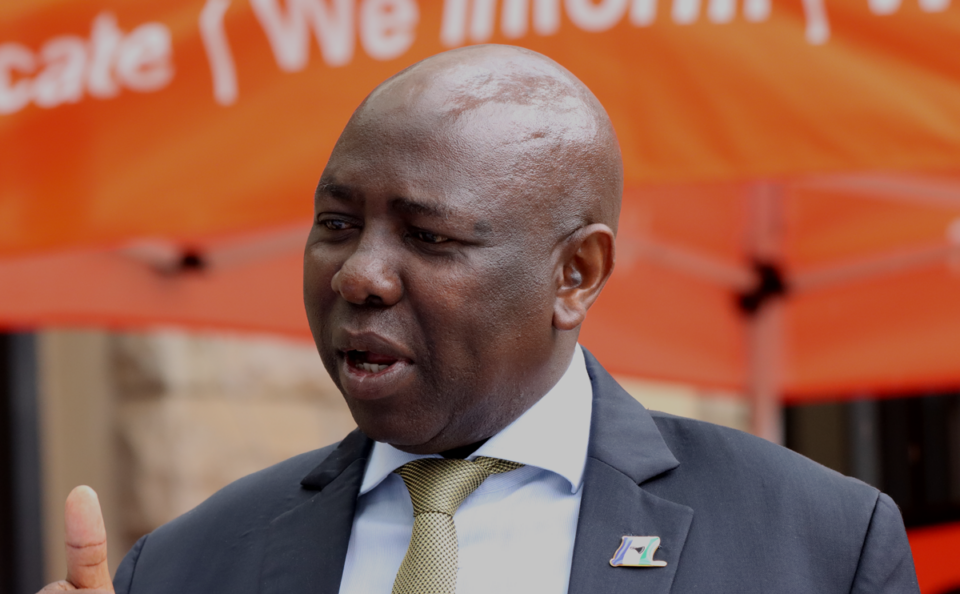
Agriculture, Food Security and Nutrition Minister, Thabo Mofosi, announced at a press conference this week at the ministry’s headquarters in Maseru, that the disease was first detected on 5 February 2026 at Letlapeng in Qacha’s Nek during routine veterinary inspections linked to an ongoing lumpy skin disease outbreak.
According to Mr Mofosi, six cattle were initially found exhibiting signs consistent with FMD at Letlapeng, with two cases later confirmed through laboratory testing. A second suspected outbreak was reported on 18 February at an animal post in Mahlasela, Mokhotlong, where veterinary officials found 17 cattle showing similar symptoms. Six of those cases were subsequently confirmed as FMD.
“From 2013, the World Organisation for Animal Health listed Lesotho among countries free from Foot and Mouth Disease without vaccination. Unfortunately, this disease, which has long been present in our neighbouring country South Africa, has now been detected in our country,” Mr Mofosi said.
He explained that while Lesotho had its own laboratory facilities for testing animal blood samples, samples had also been sent to a regional laboratory in Botswana to determine the specific strain of the virus. He said identifying the strain was essential to ensure that the correct vaccine was procured and administered.
Mr Mofosi said the ministry had anticipated the possibility of cross-border transmission given outbreaks previously reported in South Africa. He warned that the disease is likely to negatively impact livestock production and business, particularly in the wool and mohair sectors.
The Director General of Veterinary Services in the Department of Livestock, Dr Marosi Molomo, said the ministry had already put in place a budgetary plan to respond swiftly to such an outbreak. She said that while awaiting laboratory confirmation of the virus type to guide vaccine production, strict quarantine measures had been implemented.
“We have built a prevention wall whereby all infected animals are kept in quarantine to prevent the spread. A 10-kilometre radius has been established between affected and unaffected areas,” she said.
She emphasised that FMD was highly contagious and incurable, as it was caused by a virus. Farmers have been strongly urged not to attempt to treat suspected animals themselves but to immediately report cases to veterinary authorities.
Dr Molomo said as the country approached the new financial year, the ministry had already incorporated contingency plans into its budget, including intensified awareness campaigns and preparations for possible vaccination drives. Research on vaccine availability and associated costs had already been conducted.
Senior State Veterinary Officer for Public Health and Border Control, Dr Pabolo Nonyane, said additional preventive measures had been introduced, including a circular banning trade in cloven-hoofed animals and related products between Lesotho and South Africa.
“Besides this, a workshop was held for all border staff on how best they can tighten prevention measures. A simulation exercise was conducted involving different departments, including environment, agriculture and health,” Dr Nonyane explained.
Meanwhile, Senior Superintendent Boipuso Monne, Coordinator and Head of the Anti-Stock Theft Unit at police headquarters, assured the public that security forces were intensifying efforts to curb illegal movement of livestock. She cited the Stock Theft Act No. 57 of 1952, which regulates the importation and exportation of animals, warning that violations of the law will be dealt with decisively.
In a separate statement, the Department of Livestock Services announced immediate movement restrictions in line with Stock Diseases Proclamation No. 10 of 1986 and international disease control standards.
A restricted zone covering a 10-kilometre radius around Mahlasela has been declared. Affected areas within this perimeter include Mahlasela, Motete, Mapholaneng, Tšifa-li-mali, Pitseng, Motete cattle posts, Makhunoane, Pooshu, Ha-Khabele, Ha-Lebese, Mokotjela, Boithero, Makhunoane cattle posts, parts of Lephoi, Matsoaing and surrounding cattle posts grazing within the 10-kilometre boundary.
The department has prohibited all animal gatherings, livestock markets, shows, auctions and informal livestock trading nationwide. Within the restricted zone, no movement of cattle, sheep, goats, pigs or any other cloven-hoofed animals into, out of, or within the zone will be permitted without written authorisation from veterinary authorities.
Communal grazing movements across village boundaries have also been suspended until further notice, pending epidemiological assessment and laboratory confirmation of the full disease status.
Authorities have urged farmers, traders and the general public to cooperate fully with veterinary and security officials to contain the outbreak and protect the country’s livestock industry from further losses.
