
Hopolang Mokhopi
LESOTHO is making significant strides in promoting aquaculture in line with the UN’s Sustainable Development Goals (SDGs), particularly Goal 14 about Life Below Water, which aims to promote fish farming.
Aquaculture in Lesotho is poised to play a crucial role in enhancing economic stability, improving food security, and fostering rural development, making it a vital sector for the country’s future.
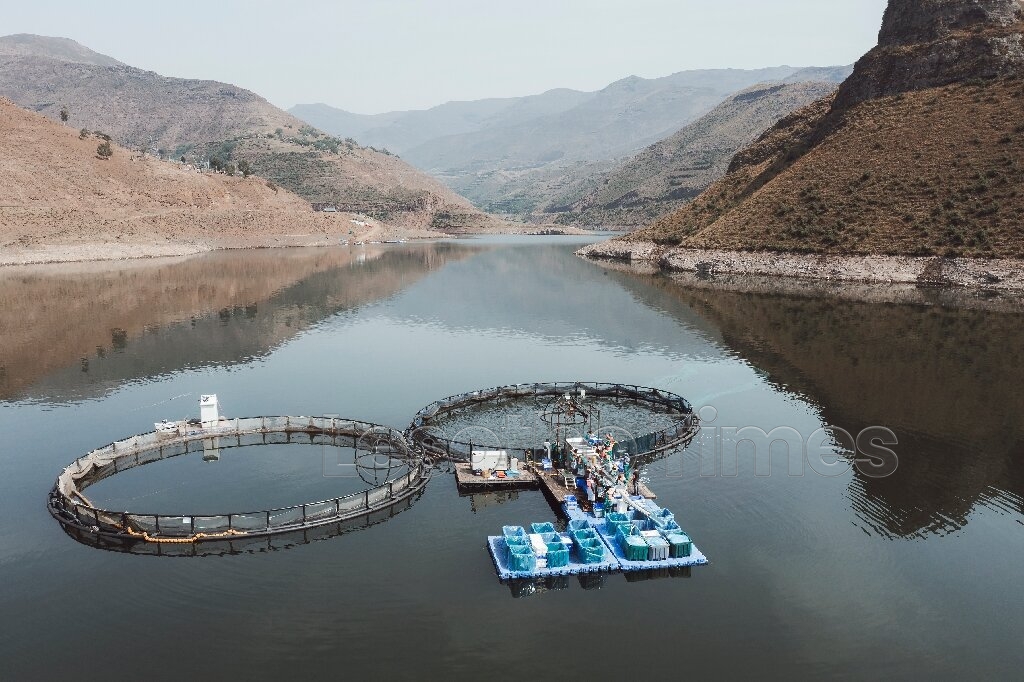
According to the Lesotho – Country Commercial Guide Report 2024, Lesotho holds considerable potential for aquaculture development due to its dams—Katse, Mohale, and the upcoming Polihali—constructed under the Lesotho Highlands Water Project (LHWP). Feasibility studies reveal that the water in these dams provides near-perfect climatic and environmental conditions for trout production.
Currently, two trout farms operate at Katse Dam: Katse Fish Farm (KFF) and Sanlei Premium Trout Lesotho (SPTL). KFF is licensed to produce 1200 tons annually, primarily supplying food service outlets across Southern Africa. Meanwhile, SPTL, licensed for 2500 tons annually, exports its premium trout mainly to Japan.
Aquaculture-related opportunities in Lesotho include fish processing, packaging, filleting, trimming, smoking, and omega oil extraction—sectors that could further boost the local economy.
The Ministry of Finance and Development Planning this week hosted a sensitisation workshop to prepare for the 2025 Voluntary National Reviews (VNRs) for the SDGs. Held at Lancers Inn, the workshop marked the first time Goal 14 has been included in Lesotho’s SDG initiatives, alongside other goals like Good Health and Well-Being, Gender Equality, and Partnerships.
The event brought together stakeholders from government ministries, the private sector, non-governmental organisations, civil society, academia, youth groups, and the media.
The ministry’s Chief Economic Planner, Thabiso Kompi, underscored Lesotho’s commitment to the UN’s 2030 Agenda, noting that the country had already conducted two VNRs, in 2019 and 2022, with the next scheduled for 2025.
“Lesotho is obligated to report on its progress towards achieving the 17 SDGs,” said Mr Kompi.
Malefu Khanyapa, also from the ministry, highlighted the importance of Goal 14, which focuses on conserving and sustainably using marine and aquatic resources.
“Although Lesotho is landlocked, its water resources support diverse aquatic ecosystems, including plants and animals critical to the country’s sustainability.”
Ms Khanyapa underscored the importance of preventing water pollution and maintaining the health of these ecosystems.
“Lesotho is exploring aquaculture, particularly in its large dams, to enhance food security and promote sustainable practices,” she explained.
The workshop encouraged collaboration across sectors to ensure that Lesotho advances its SDG commitments, particularly in water resource management and aquatic life conservation.
