
…seeks to appeal ‘ambiguous’ ruling
Hopolang Mokhopi
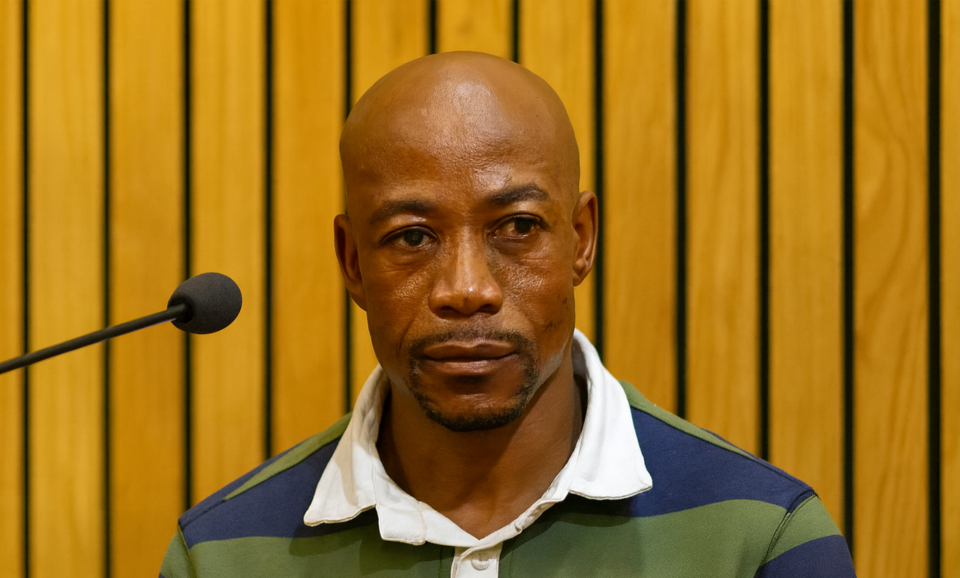
TŠENOLO Thamahane, the Directorate on Corruption and Economic Offences (DCEO) staffer, who was convicted of murdering his lover, High Court Assistant Registrar Advocate Tebello Mokhoema’s sister and attempting to kill Adv Mokhoema herself, is preparing to petition the Court of Appeal to overturn or clarify his sentence handed down on 11 December 2025.
Thamahane claims there is ambiguity in the sentence imposed by Acting High Court Judge Palesa Rantara.
According to him, the judge stated that she was sentencing him to “life”, which he interpreted as a “life sentence”, while the official court record reflects the sentence as “life imprisonment”.
Although the two terms typically mean the same thing, his lawyer argues they have different legal consequences.
On this basis, his lawyer, Advocate Katiso Nhlapho, has requested an “unfettered and unfiltered” audio and/or video recording of the sentencing proceedings from the Registrar of the High Court and Court of Appeal, Adv ’Mathato Sekoai.
In a letter dated 18 December 2025, Adv Nhlapho said the defence needs the full recording to establish the exact words used by the judge during sentencing, as the distinction between “life” and “life imprisonment” carries “different legal implications” under Lesotho law.
“This discrepancy creates ambiguity in the precise terms of the sentence imposed, which is critical for determining the appropriate appellate or remedial action,” Adv Nhlapho wrote.
He added that access to the full record would allow the defence to decide whether to file a notice of appeal or institute review proceedings before the Court of Appeal.
Adv Nhlapho stressed the urgency of the request, stating that statutory time limits apply to appeals.
However, he confirmed this week that he has not yet received a response from the Registrar, despite giving the court 72 hours to address the request.
Background of the case
Thamahane was sentenced to life imprisonment for the murder of Malechakane and to 30 years’ imprisonment for the attempted murder of Adv Mokhoema. The sentences are to run concurrently.
The court found that on 8 March 2025, Thamahane fatally shot Malechakane and seriously wounded Advocate Mokhoema at the Mokhoema family home in Berea. Adv Mokhoema testified that Thamahane shot them “in cold blood”.
Thamahane, however, claimed he acted in self-defence, alleging that Malechakane was reaching for a gun which he claimed Adv Mokhoema had previously “stolen” from court exhibits. The court rejected this version of events.
Sentencing reasoning
In delivering sentence on 11 December, Justice Rantara explained that punishment ought to balance three factors: the seriousness of the offence, the interests of society, and the personal circumstances of the offender. In murder cases, she said, courts must also consider whether extenuating circumstances exist—factors that reduce moral blameworthiness and may justify a lesser sentence.
Such factors can include youthfulness, intoxication, emotional conflict, provocation, lack of premeditation or diminished mental capacity. However, the judge emphasised that it is the accused who bears the burden of proving these circumstances.
Adv Nhlapho had argued that Thamahane acted during a sudden emotional outburst following a heated confrontation and had not planned the attack. He urged the court to find extenuating circumstances, pointing to Thamahane’s alleged remorse, his surrender to police the next day, cooperation with investigators, and his instruction to family members to convey condolences to the victims’ relatives.
The defence also highlighted Thamahane’s personal circumstances, describing him as a first offender, a high school dropout, a breadwinner for his minor daughter and his 85-year-old grandmother, and someone willing to compensate the Mokhoema family.
Crown counsel, Adv Lehlohonolo Phooko, had strongly opposed this argument. He said the crime was extremely serious and aggravated by the use of a firearm, noting that Section 109 of the Penal Code prescribes severe penalties for murder, particularly where firearms are involved.
Adv Phooko argued that Thamahane’s personal circumstances could not outweigh the gravity of the offence, adding that society expects firm sentences to deter rising violence against women and to maintain confidence in the justice system. He dismissed claims of provocation, saying evidence showed Thamahane had time to calm down but instead pursued his victims, demonstrating deliberate intent.
Court’s findings
In her analysis, Justice Rantara said the court had carefully examined whether Thamahane acted in rage or lost self-control. She found that the evidence contradicted the defence’s version on key points.
She said murder and attempted murder violate the constitutional right to life and often leave lasting trauma for victims, families and communities. In this case, she said, the violence occurred in the presence of young children who would carry the emotional impact for life.
Crucially, the judge pointed to evidence that Thamahane had publicly declared his intention to kill before the incident and later carried out that threat “in cold blood”. She cited previous court decisions emphasising the need for strong sentences to combat gender-based violence and protect women.
After weighing all the evidence, the court found that no extenuating circumstances had been proven. The murder was intentional, deliberate and committed with a firearm.
She therefore imposed “life imprisonment” for the murder of Malechakane Mokhoema and 30 years’ imprisonment for the attempted murder of Advocate Tebello Mokhoema, with the sentences to run concurrently.
